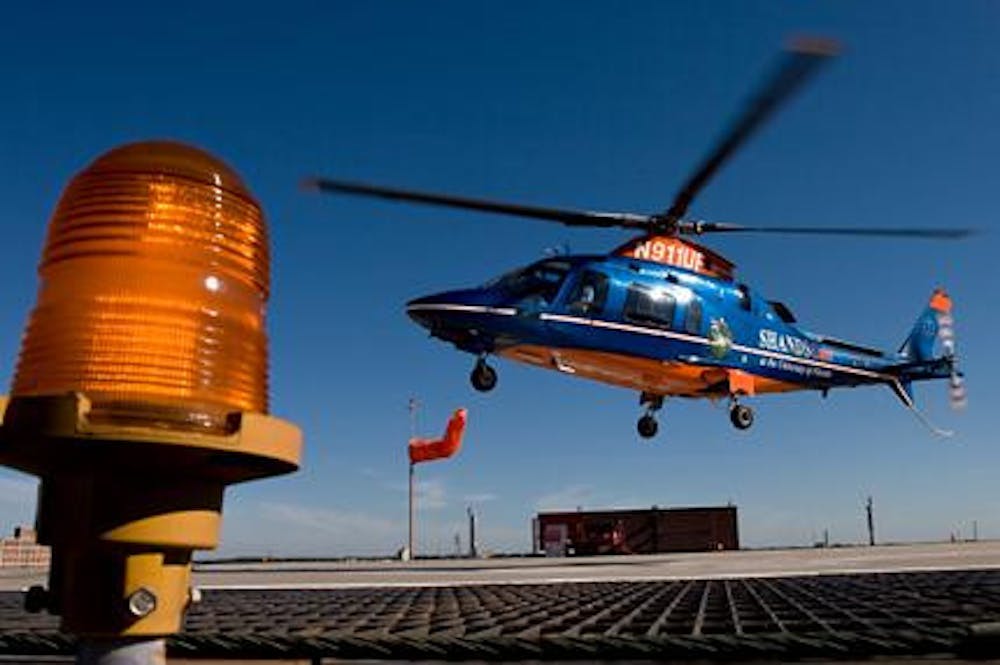
ShandsCair takes to the skies to help ailing people
It sounds like a lawnmower on loudspeakers. Blades whir at full speed, creating a frantic windstorm that spreads the smell of jet fuel.
No one flinches.
The ShandsCair aeromedical team is used to the loud noise, the vibrations, the chaos.
Everything else fades into the background when calm collaboration can determine a patient's fate aboard a ShandsCair helicopter.
ShandsCair is a Shands at UF hospital program that incorporates helicopter, jet and ambulance transport for critically ill patients.
It provides services to a large chunk of the Southeast, from Atlanta to Miami.
Dr. David Meurer, ShandsCair medical director and emergency room physician, said the ShandsCair team has what is considered the pinnacle job in Emergency Medical Services, also known as EMS.
"The reason we're in it is not just for the joy of flying but taking care of some really sick folks," Meurer said.
ShandsCair is split into the adult-pediatric team and the neonatal-pediatric team, which serves premature babies to 5-year-old patients.
ShandsCair communications takes calls and relays them to the crew.
John Brown, a communications transport specialist, said they receive a lot of scene calls, or incidents involving people who are seriously ill or have been in accidents.
In addition to being a dispatcher, Brown also serves as an ambulance driver and makes trips to the emergency room.
Enjoy what you're reading? Get content from The Alligator delivered to your inbox
Brown said he enjoys dispatching more because it makes him feel like he's in the heart of operations.
A little after 8 a.m. Tuesday, ShandsCair teams held a morning briefing, discussing the weather, scheduled maintenance and problems the outgoing shift had.
Shortly before the briefing, Brown received a call from Shands Lake Shore Hospital in Lake City.
Crucial Cases
A woman who was about 30 weeks pregnant went into pre-term labor and possibly needed helicopter transport.
Ambulances couldn't arrive for another 2 to 4 hours.
The orange and blue Agusta A-109 Power helicopter, which can go about 170 miles per hour, was wheeled out of the hangar by a tractor and placed on the launch pad.
As soon as team members were ready to take off, another call acknowledged that the patient was stable enough for available ground transport.
The mission was aborted.
Jim Howard, flight program coordinator, said the helicopter is saved for the most critical cases.
"The last thing you want to do is fly routine patients who don't really need it," Howard said.
The Independent Florida Alligator has been independent of the university since 1971, your donation today could help #SaveStudentNewsrooms. Please consider giving today.