
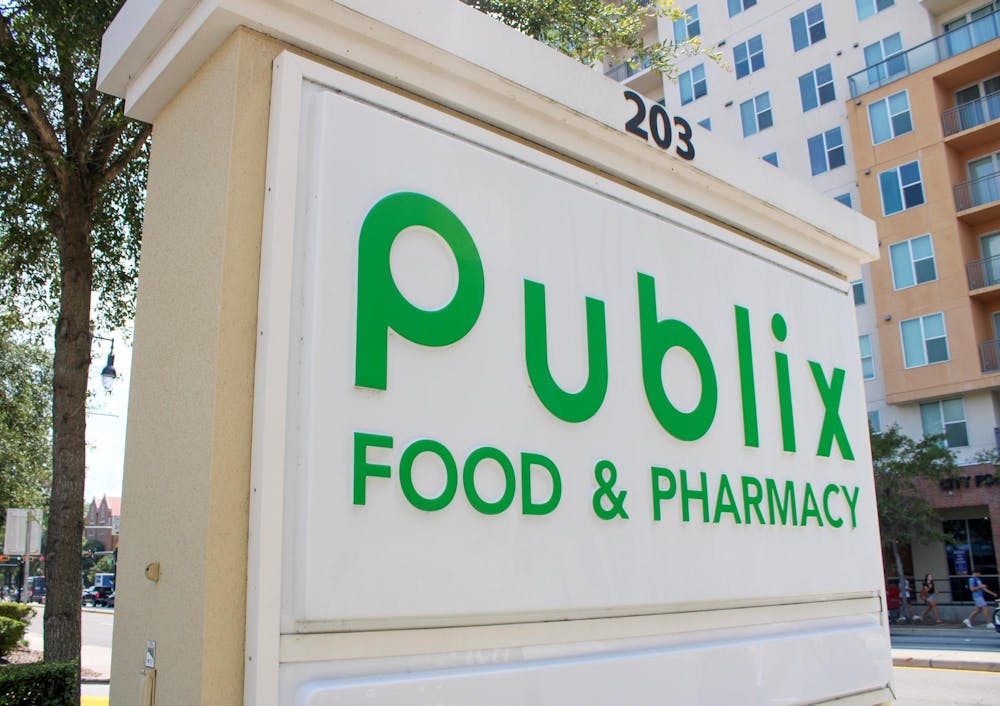
There’s a gap like a missing tooth in the frozen aisle of West University Avenue’s Publix. A shadow looms over the empty shelving between the coconut- and tangerine-flavored fruit bars where the grape and strawberry flavors used to be.
“Our apologies,” reads the green placard on the shelf. “We are temporarily out of this item.”
On Aug. 18, the U.S. Food and Drug Administration recalled five flavors of Outshine Fruit Bars for possibly containing pieces of glass.
The frozen treats are one bullet point on a list of over 1,300 food and beverage recalls issued by the FDA so far this fiscal year, which runs from October 2025 to September 2026. Recalls can be triggered for a variety of reasons, including physical hazards in food, undeclared allergens and foodborne illness contamination.
In August alone, the FDA opened four investigations into foodborne illness outbreaks of salmonella, E. coli and cyclospora, bumping the total number of investigations this year to 21.
Social media users have flocked to platforms like Facebook, Instagram and X to share the latest updates from the FDA’s Recalls, Market Withdrawals & Safety Alerts website.
“[I’m] frustrated and kind of scared,” said Kim Wollard, who shops for groceries at several different stores. “I feel like our administration isn't putting our health first.”
As shoppers turn a wary eye to the supermarket, one question remains: Is food becoming less safe?
Data says 2026 recall numbers aren’t out of the ordinary
The number of recalled products this fiscal year is currently at a five-year low. It only includes recalls classified by the FDA as Class I, II or III. Unclassified recalls are recorded in the FDA’s enforcement reports but aren’t included in overall recall data.
Class I, the most serious classification, labels recalls where consumption of the product can cause serious health problems or death. Class II recalls may cause temporary or reversible health problems. Class III recalls are not likely to cause health problems.
However, recall numbers can be misleading — and fewer recalls aren’t necessarily better. High recall numbers can indicate better surveillance and testing, and the recall of one product can lead to dozens of other recalls that use it as an ingredient.
Recall numbers also don’t show the impact of foodborne illness outbreaks, which are typically categorized as Class I recalls.
As the infamous cyclospora scare has proven, one recall could spell disaster for thousands.
The large-scale outbreak investigation into iceberg lettuce from central Mexico was first announced by the FDA July 16. Cases were initially linked to Taylor Farms-supplied lettuce served at Taco Bells in Indiana, Kentucky, Michigan, Ohio and West Virginia; the outbreak has since spread to 20 states, including Florida.
It has become the largest cyclospora-related outbreak in U.S. history, with over 11,000 cases, nearly 500 hospitalizations and two deaths reported by the Centers for Disease Control and Prevention.
Although the outbreak remains ongoing, the FDA has since announced the best-by dates of recalled lettuce have passed, so the potentially contaminated vegetables are no longer being sold in stores or served in restaurants.
Four other outbreaks of cyclospora from unknown food sources are also under investigation, bringing the total case count for this year’s cyclosporiasis season to over 18,000.
“This is a typical year, with the exception of cyclospora,” said Keith Schneider, a UF food sciences and human nutrition professor. “We have about 50 million cases of foodborne illness every year. The vast majority we never hear about.”
Foodborne illnesses affect one in six Americans annually. Many common illnesses, like salmonella, E. coli and listeria, will go unreported, especially in cases of mild symptoms where people skip a doctor’s visit altogether.
Some pathogens, like cyclospora, require warmer environments to develop, leading to a spike in cases during summer months. People may also eat more raw produce in summer and picnic outside, possibly increasing the risk of certain illnesses, Schneider said.
Recalls issued in June, July and August account for a third of all recalls in the 2026 fiscal year so far, according to FDA data.
Increased testing and new methods to detect cyclospora may have also contributed to a record-high case count, Schneider said. People are also more likely to visit the doctor for cyclosporiasis than they might for common foodborne illnesses, he added, because cyclosporiasis symptoms often can’t be treated with over-the-counter medication.
Detection methods aren’t foolproof — as evidenced by a false positive of cyclospora from Taylor Farms lettuce in July — but the multistate investigation remains ongoing, according to the FDA. The outbreak data continues to point toward Taylor Farms products as the origin of the outbreak.
Are FDA staff cuts responsible for outbreaks?
The recent recalls have drawn attention to funding cuts to multiple departments by the Trump administration under Secretary of Health Robert F. Kennedy Jr.
More than 20,000 workers have quit or been fired from the Department of Health and Human Services since January 2025, according to an HHS employee directory analysis by ProPublica. The HHS encompasses the FDA, CDC and 11 other divisions. This number doesn’t account for those with layoff notices on administrative leave.
The FDA, which supervises 80% of the nation’s combined domestic and imported food supply, has lost more than one in five workers.
ProPublica’s analysis found more than 400 laid-off workers from the FDA were responsible for inspections and federal regulations, despite HHS’ claim cuts wouldn’t impact workers in those positions.
But it’s too soon to tell if recent cuts have directly contributed to the number or severity of this year’s foodborne illness outbreaks.
“We’re losing a lot of great scientists,” Schneider said. “We’re losing a lot of ability. But correlation doesn’t equal causality, at least not yet. We won’t feel the ramifications for years down the road.”
A healthy medium
Food recalls can sound frightening, but the solution isn’t to cut out entire food groups.
Although the multistate cyclosporiasis cases have been linked to farms in central Mexico, domestic lettuce growers are still suffering due to the stigma caused by the outbreak.
According to data from the U.S. Bureau of Labor Statistics, the seasonally adjusted consumer price index for lettuce fell about 16% from June to July, indicating lettuce sales declined during that period.
“The entire industry was suffering, and that’s tough to overcome,” Schneider said. “We don’t want people avoiding fresh fruits and veggies because of one particular outbreak.”
When eating uncooked fresh foods like produce, risk is inevitable, he said.
But following basic food safety guidelines at home can stop many foodborne illnesses in their tracks. The U.S. Department of Agriculture recommends properly washing hands and surfaces, cooking food to recommended temperatures and storing food properly as the first lines of defense against harmful bacteria.
Using separate cutting boards can also prevent cross-contamination, especially between raw meat and produce.
Maddie Gerland, a UF philosophy, politics, economics and law freshman, said the food recalls have made her feel as though the government is not putting people’s health first. She’s been taking extra precautions to make sure she doesn’t get sick.
“I wash my hands, wash our dishes, wash all fruit,” Gerland said. “[I] make sure everything's cooked through.”
According to the FDA, if people find they have any recalled products in their home, they should clean all kitchen utensils and appliances that have been in contact with contaminated foods, including the walls and shelves of refrigerators and cutting boards. They may also be eligible for a refund if they return the product to its store. Retailers are advised to sanitize food display cases and appliances used in food preparation.
Shoppers may also choose to turn to local vendors for their groceries instead of chain stores. In place of regional or national distributors, local stores like Gainesville-based Ward’s Supermarket often source local produce and meats, shortening the journey between farm and table.
Contact Chloe Santiago at csantiago@alligator.org. Follow her on X @csant860.

Chloe Santiago is a junior journalism major with a focus on data and coding. She previously served as one of the Summer 2026 copy editors. Her idea of fun is a scary movie or video game at night with all the lights turned off.