
When Sherri McCormick saw a real estate listing advertising land for a potential data center, she said she wasn’t shocked.
“I just didn’t expect it to be a few miles down the road,” she said.
A growing number of large-scale facilities are appearing in rural areas nationwide. As of this year, 67% of planned data centers are in rural areas, according to a Pew Research Center study.
For residents like McCormick, speculation that one of the facilities would appear in Alachua never felt far-fetched. Whispers only intensified after a listing surfaced online advertising rural land as a potential site for large-scale technological development.
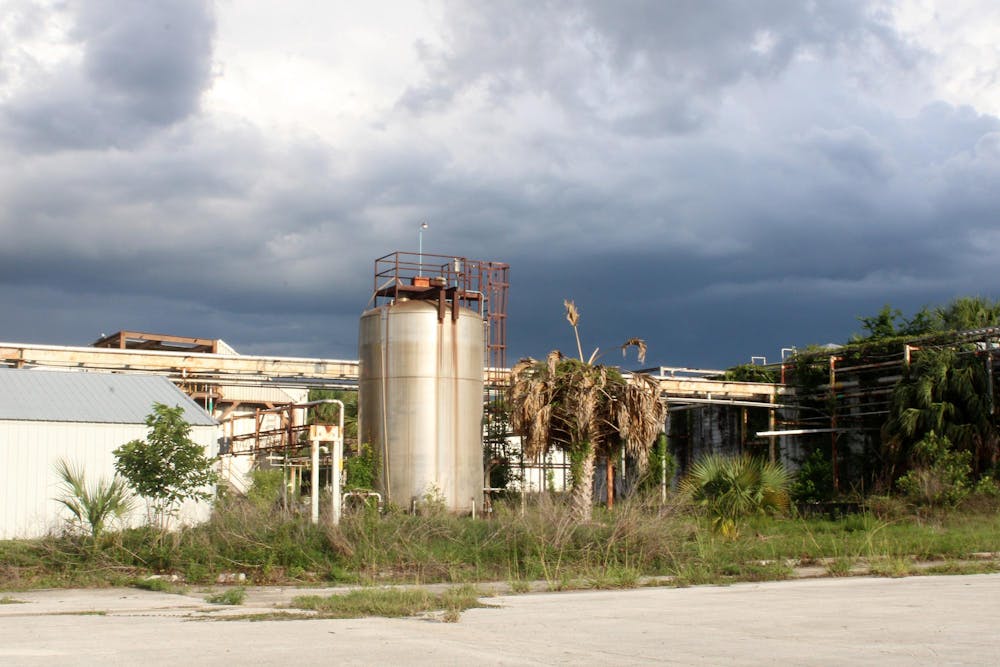
Though the listing now markets the 104-acre property as a manufacturing site, it previously labeled the land as a high-megawatt data center location — wording that remains visible in the website’s URL.
The site was formerly home to an Energizer battery factory.
The area is only a four-minute drive from 63-year-old McCormick’s house. She said she worries about the potential for excessive water use.
Research shows large data centers can consume up to 5 million gallons of water per day, raising concerns about strain on local resources.
McCormick was among the nearly 60 residents who packed the Turkey Creek Clubhouse in a neighborhood meeting May 14, seeking updates and ways to respond to the rumored project. McCormick led the meeting alongside Alachua City Commissioner Jacob Fletcher.
Throughout the meeting, residents spoke openly, expressing their concerns over how a data center would impact utility bills and the environment.
Data centers are shown to increase electricity bills because of their high resource demand. Some states may see rates increase by more than half by 2030, according to a study published in peer-reviewed journal Environmental Research Letters.
Loretta Shane, a 75-year-old Turkey Creek resident who helps manage the clubhouse, first learned of the listing when community members reserved a room for the neighborhood meeting.
Days later, after researching the site and spreading word through the homeowners’ association, she watched the room fill with concerned neighbors.
“We didn’t know about this until Saturday,” she said at the meeting held just five days later. “So it was impressive to see a room full of people.”
Shane said she’s concerned about the potentially constant noise a nearby data center would produce. People living near existing data centers in other areas have reported hearing a continuous hum from cooling systems operating day and night.
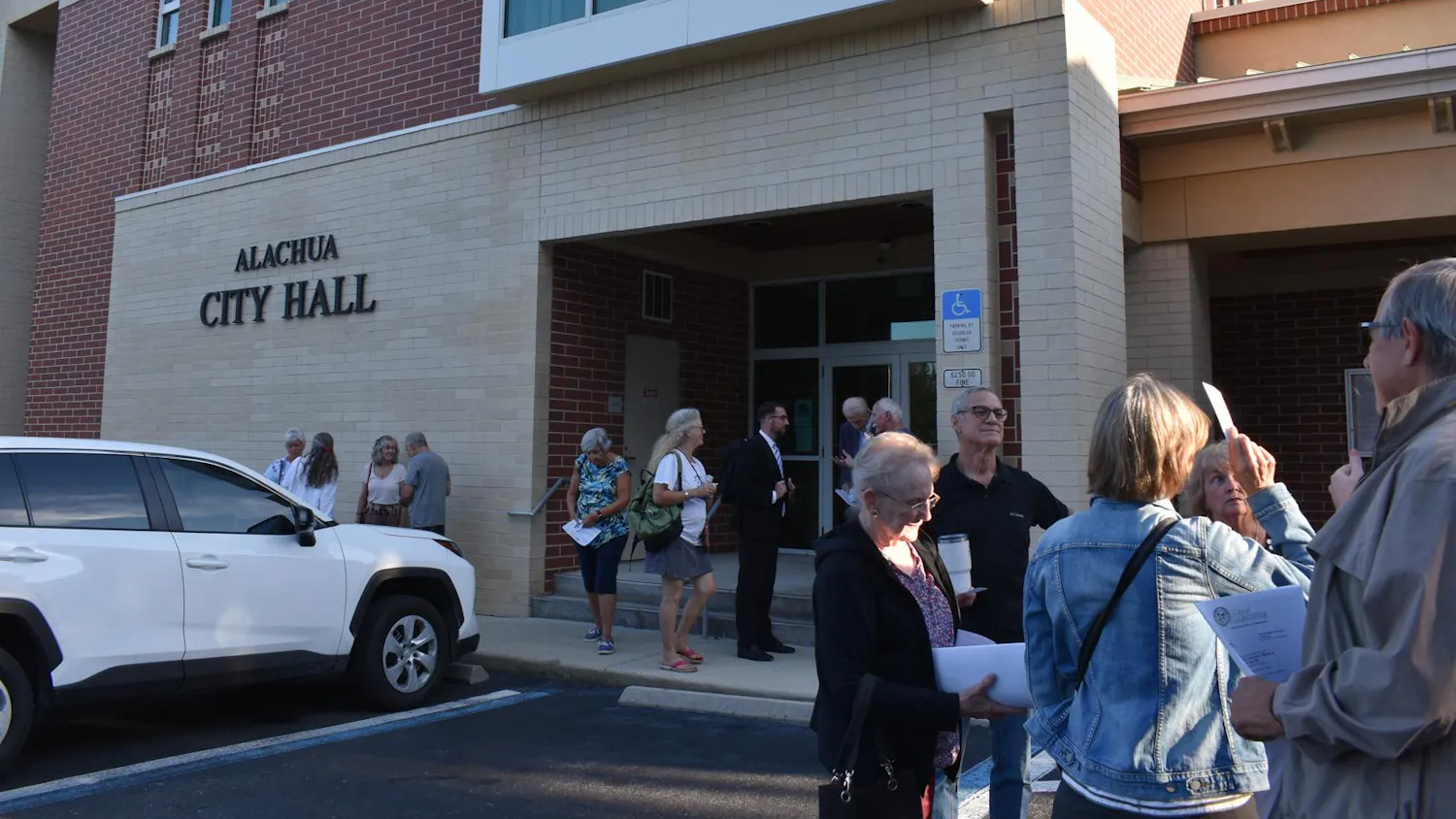
At the neighborhood meeting, Fletcher encouraged residents to attend the Alachua City Commission meeting on May 18 and workshop the evening of May 19. The workshop focused on evaluating Alachua’s comprehensive city plan, discussing the future of development in the area.
May 18 was originally scheduled as a joint city-county meeting, but county officials were unable to attend, leaving residents only able to address the city commission. During public comment, at least 15 people spoke against the possibility of a data center in Alachua.
Dahlia White, a 64-year-old customer service worker, was among those who took the podium at the meeting. She said the marketing of the land for a data center was especially concerning because the city remains in a drought.
“I just don’t think it’s a good thing for the community,” she said before the meeting. “I’m not for it, and I know several people that I speak to — they’re not wanting the data center.”
It’s unclear whether the rumored site is governed by the city or county commission. City officials have said the property falls under county jurisdiction, while county officials have pointed ownership to the city.
According to Alachua County Property Appraiser, the rumored site is listed in the city of Alachua.
However, City Manager Rodolfo Valladares said the parcel is located outside Alachua city limits at the commission meeting.
Meanwhile, Alachua County Commissioner Anna Prizzia wrote in an email May 19 that the county hasn’t approved any data center projects, and the property is under the city of Alachua’s jurisdiction.
Both the city and county said they want to preemptively strengthen regulations on data centers to make Alachua and the county less appealing to developers.
These desires have met pushback from a 2025 law that limits how local governments can regulate substantial repairs and redevelopment after storms.
The law prohibits local governments from adopting “more restrictive or burdensome” land development regulations or comprehensive plan changes after a hurricane emergency. It currently prevents local governments from making the changes until October 2027 due to 2024 storms like Hurricane Milton.
The law adds restrictions each time there is a hurricane within a 100-mile radius of the county.
Fletcher said the law leaves him and other city commissioners with little room to respond to community concerns.
“It does not support the residents of any place in Florida,” Fletcher said. “There are good things in Senate Bill 180 regarding emergency management, but this specific portion is way too broad, and it's detrimental to small communities.”
In Florida, where hurricanes are frequent, the law could continually extend the timeline preventing local governments from adopting stricter land development regulations, delaying efforts to address projects like data centers, Fletcher said.
Before 2025, the last Florida hurricane season without a hurricane landfall was 2015 — marking a decade of consecutive seasons when at least one hurricane hit the state.
Bryan Thomas, Alachua’s planning and community development director, repeatedly told residents at the workshop May 19 that the meeting was not intended to discuss data centers.
Several attendees from the Turkey Creek neighborhood meeting said Fletcher told them to attend the workshop to voice their concerns about the data center. But Thomas told the workshop’s crowd he was unaware Fletcher had advised them to do so.
Some residents left feeling frustrated and unheard, including 40-year-old Demetria McBride, who is originally from Texas. She has now lived in the area for 10 years.
“It's a little frustrating that on the one hand, they're saying ‘We're listening,’ but then you want us to stop talking,” McBride said. “Which is it?”
Though the county and city commissions have no plans to allow a data center in Alachua, commissioners said they will continue to work toward adopting stricter legislation restricting data center development in the community.
Contact Julianna Bendeck at jbendeck@alligator.org.
Julianna Bendeck is a first-year journalism student and the Summer 2026 criminal justice reporter. She previously worked as a contributing writer and race and equity reporter at The Alligator. Outside the newsroom, she enjoys reading, surfing the web and playing video games.