
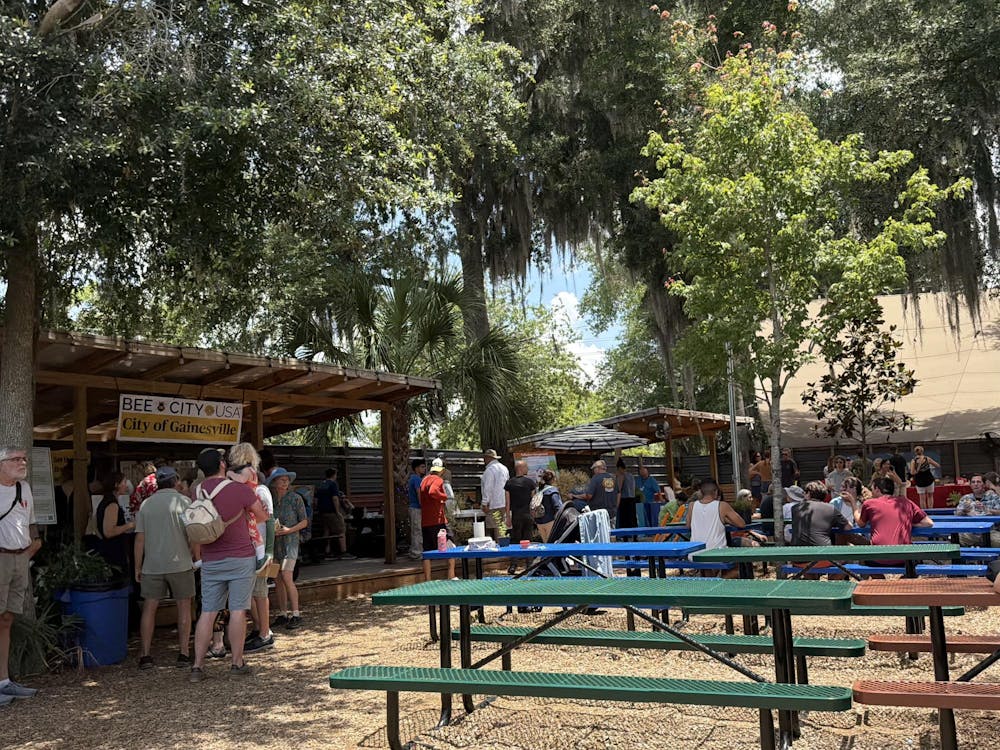
Daniels Lab at the Florida Museum of Natural History’s McGuire Center for Lepidoptera and Biodiversity returned to First Magnitude Brewing Saturday, bringing the community together to celebrate an underappreciated group of animals: pollinators.
Pollinator Palooza took place from 12 p.m. to 4 p.m and aimed to raise awareness about the animals that pollinate flowers.
Pollinators like bees, wasps, weevils, flies, butterflies, birds, lizards and a species of frog called the Izecksohn's Brazilian tree frog are vital to the health of both individual plants and their whole ecosystems.
Educational tables were set up by the Florida Wildflower Foundation, the FMNH Herpetology Collection, the FMNH Digital Imaging Division and the UF Institute of Food and Agriculture Science Extension Alachua County Master Gardener Program.
Jaret Daniels, the director of the Daniels Lab and interim director of exhibits and public programs at the FMNH, said Florida agriculture depends on pollinators.
“In a state like Florida, where we have a few 100 specialty crops,” Daniels said, “the great majority of them, like blueberries, watermelon, squash, are tied really tightly to insect pollination.”
Agriculture is the second-largest industry in Florida after tourism, he said. Without these crops, the state economy would suffer.
Jacqueline Belwood, who earned her PhD in entomology at UF and taught biology at Georgia Highlands College, said that while the world would not run out of food without pollinators, the foods available would lack flavor and antioxidants.
At her table, two plastic models sat side by side. One showed a colorful dinner with noodles, meatballs, veggies and bread, while the other showed a beige dinner of macaroni and cheese, peas and plain chicken.
The first plate was made up of foods that, in some way or another, relied on pollinators to produce them. The other plate consisted of wind-pollinated crops. Looking at them side by side, it was clear which dinner was more appealing.
Without pollinators, foods like fruits, most vegetables, herbs, vanilla, chocolate and coffee would all be things of the past. A third of food consumed by humans needs to be pollinated by animals, so only food like grains, corn and barley would remain.
In addition to learning about the importance of pollinators, attendees learned how they could help protect local pollinator populations.
“We’re out here to spread the message that you can make a difference, and what better way than to give away free plants?” said Sarah Steele Cabrera, a postdoctoral associate at the Daniels Lab.
By giving away native plants, event organizers hoped attendees could start their own gardens and provide habitats for native pollinators.
Native plants are also easier to grow than non-native plants because they are adapted to the southern climate and do not require pesticides or fertilizers, Cabrera said.
“If you're a brown thumb gardener, black thumb gardener and just don't have a lot of time,” Cabrera said, “native plants are fine with that.”
The 350 plants brought to the event were supplied by Green Isle Gardens, a plant nursery in Groveland, Florida. Attendees could choose from eight native plant species including Bushy Seaside Oxeyes that grow yellow, daisy-like blossoms, or Firebushes, large shrubs with vibrant, tubular flowers.
Belwood said these native plants are better for native pollinators because they’ve evolved alongside each other, with insects adapting to local species.
“They recognize certain smells,” she said. “They’ve got mouth parts that only fit certain flowers.”
Areas with only non-native or bioengineered plant species are considered a “food desert” for local pollinators, she said.
To help people with their new plants, the Florida Wildflower Foundation supplied handouts for each species with the name, native range, lifespan, preferred soil and light exposure, growth habits and other tips. The profiles of these plants can also be found alongside more information on the organization’s website.
Mya Maybank, an infection prevention coordinator at UF Health Shands Hospital, picked up an Atlantic St. John’s Wort at the advice of the volunteers from Daniels Lab.
It was recommended to her when she said she was looking for a plant that would do well in a moderately shady area. Maybank hopes to get more into gardening and learn more about plants.
“Events like this, where people are super knowledgeable,” Maybank said. “It's a social way to dip your toe into a new hobby.”
Joining local clubs or organizations, such as the UF Honey Bee Club — which also tabled at the event — or the Master Gardener volunteer program, is another way to learn more about the importance of pollinators and proper gardening techniques.
For those hoping to maintain their own gardens, director Jaret Daniels said to start small and then expand. Just one potted flowering plant can be a home and food source for a pollinator. Afterward, he recommends planting different species to attract different types of pollinators.
The event also featured two special beers: the Pollinator Palooza Hazy IPA and the Blue Bee Watermelon Mint Gose. The proceeds from the beers went toward butterfly recovery efforts in Florida.
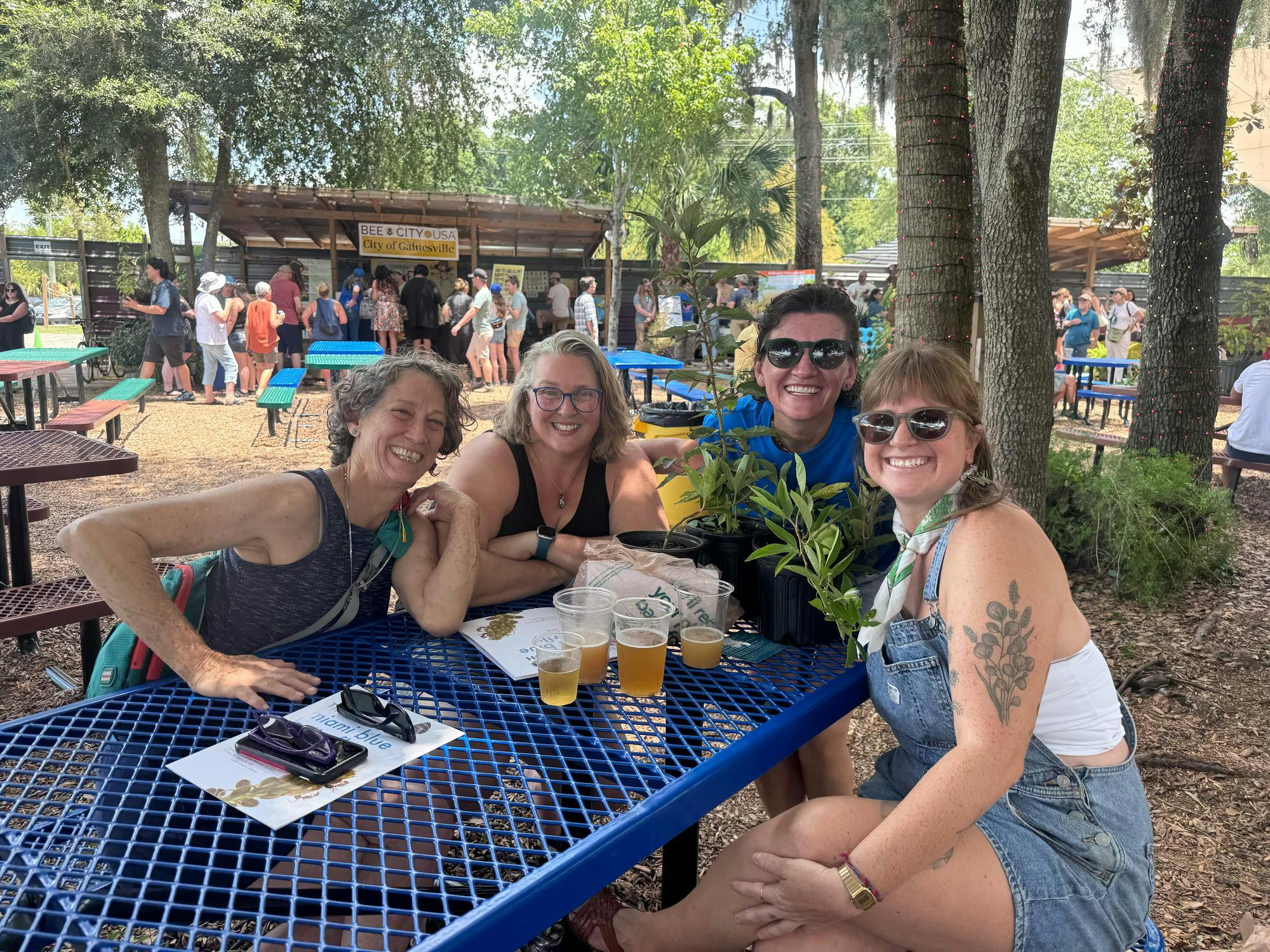
Ash Allen, a 43-year-old nurse at UF Health, and Sherie Becerra, a 65-year-old farmer, have attended the Pollinator Palooza together for the past three years. Both enjoyed the new beers and the event as a whole.
“It helps the native pollinators, it helps honey bees and it brings the community together,” Allen said.
Allen has been beekeeping since 2016 after watching a YouTube video and deciding to try it herself. She joined the local bee club, and “it just took off” from there, she said.
By the time they sat down at the picnic tables at First Magnitude Brewing after picking out their plants, they already had two pollinators happily crawling over the leaves of their Crimsoneyed Rosemallow and Passion Vine.
“I could have a beautiful flower, which I admire and stuff,” Becerra said. “But to have a pollinator that produces fruit as well for me is a bonus.”
Addison Gload is a contributing writer for The Alligator.