

“Fun fact! I talk A LOT.”
That was how Evan Moon began his pitch to be Gainesville’s next mayor. It’s not exactly the carefully curated answer we’d expect from someone asking for our vote. His description of his day job wasn’t, either.
Moon told voters he works in the deli at Walmart, helping customers before returning home to “plot to take over the city.” Moon’s plot involved expanding public transportation, increasing affordable housing and finding Gainesville a permanent fairground.
It’s funny. It’s strange. And it doesn’t sound much like a traditional political campaign.
But why is that a bad thing?
Moon lost Gainesville’s Aug. 18 mayoral election to incumbent Harvey Ward, winning only 20% of the vote. Ward entered the race after serving as mayor since 2023 and as a former city commissioner for two terms, while Moon had never held an elected position. Those differences alone gave voters legitimate reasons to prefer one candidate over the other.
Despite this, Moon’s campaign raised a question that outlived the election: What exactly makes someone look like a politician?
Moon works in the Walmart deli. He jumped between jokes, personal stories and policy proposals in his Mainstreet Daily News questionnaire. When asked about his previous elected experience, Moon initially said he had none before remembering his time in student government, where he would “run for everything,” he joked.
It would be easy to take one look at Moon and write him off. But doing so would mean ignoring what he was actually saying.
Moon advocated for 40% of new housing to be genuinely affordable, a vast increase from Gainesville’s existing 10% inclusionary zoning floor. He spoke about a stronger transit agreement between Gainesville and UF and a permanent fairground. He also campaigned explicitly as a member of Gainesville’s working class, according to a July Gainesville Ledger election preview.
His ideas to improve public transportation contrasted his more eccentric campaign statements. In a candidate questionnaire from the Alachua County Labor Coalition, Moon argued Gainesville’s Regional Transit System needs to be more “accessible, reliable and frequent.”
“If you cannot afford to take off work due to RTS not running, you cannot afford to Uber,” he wrote.
Suddenly, Moon’s “plot to take over the city” doesn’t sound quite as ridiculous. Taking the message away from the person delivering it demonstrates the value.
Maybe it’s worth examining why we feel the need to separate his delivery from the issues he advocates for. We like to think our political decisions come from carefully comparing policies, experience and qualifications. But we start deciding who looks competent before we know much about them at all.
A face can’t tell us whether someone understands affordable housing, transportation or a city budget. Yet we make assumptions anyway.
Those assumptions aren’t limited to faces. A 2020 study published in Nature Human Behaviour found people perceive subtle economic status cues in clothing when evaluating competence. That matters when our stereotypical image of a politician is already so specific.
We expect the suit. We expect a polished resume. We expect an answer that has been rehearsed enough to sound unrehearsed. Candidates are expected to appear serious before we even decide whether what they are saying deserves to be taken seriously.
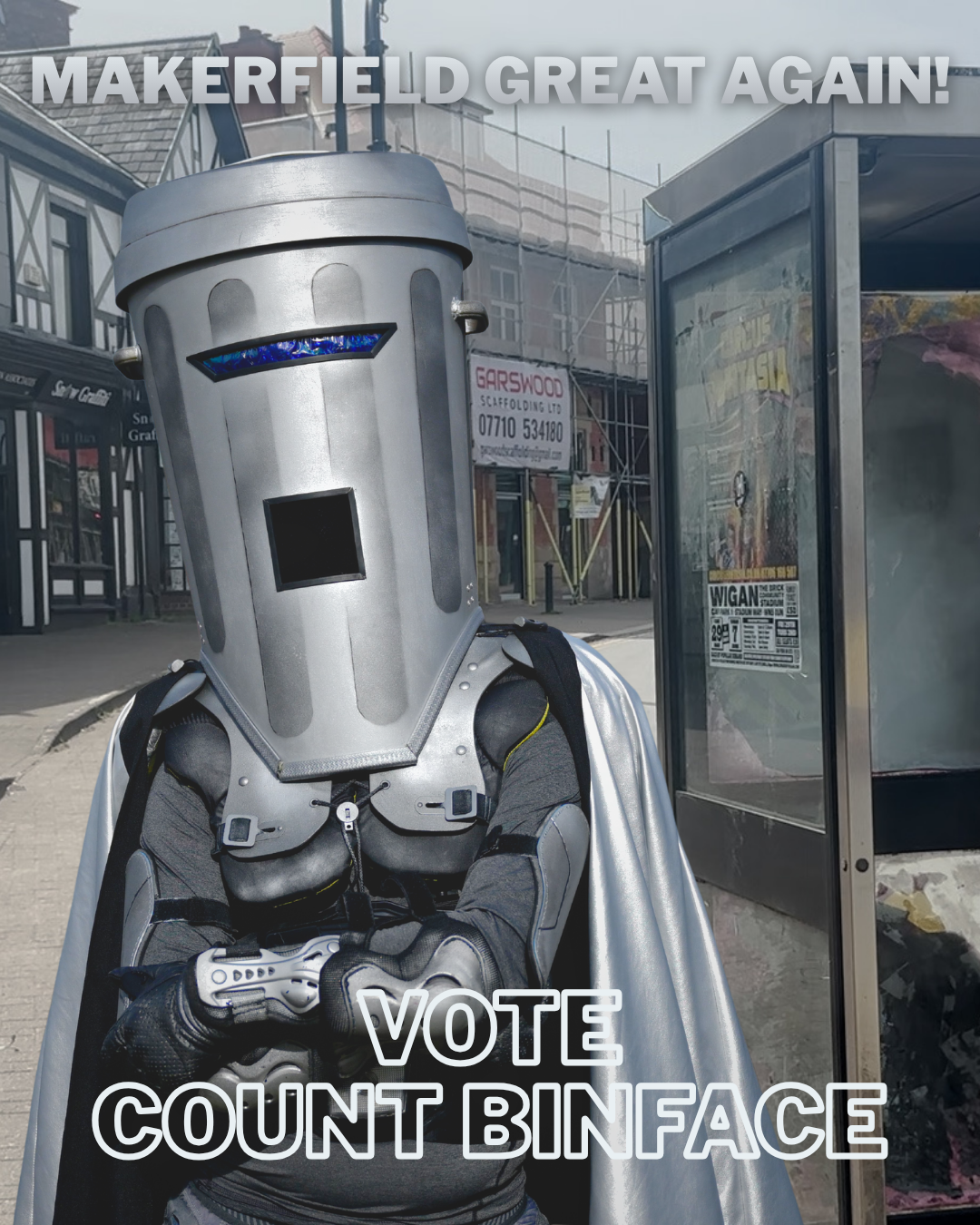
Political satire can make that performance even easier to recognize. In Britain, Count Binface — a self-described intergalactic space warrior — has repeatedly appeared on ballots against prominent politicians. His manifestos are intentionally ridiculous. Among his proposals has been a pledge to cap the price of a 99 Flake ice cream at 99 pence.
The joke works because we know what a politician is supposed to look like. Put a man in a silversuit of armor and a trashcan helmet next to candidates in suits, and we immediately know which one we’re supposed to consider unserious.
But there’s no reason to assume Moon’s candidacy was satire. His proposals on housing, transportation and Gainesville’s working poor suggest he was making sincere arguments about how the city should operate. His campaign existed in an interesting space between humor and earnestness.
He could joke about plotting to take over Gainesville in one second and in the next explain why someone relying on RTS can’t afford losing a shift because their bus never came. One statement doesn’t erase the other.
Of course, none of this means Moon should have won. His humor doesn’t tell us whether he could manage a city any better than another candidate’s appearance tells us. Experience, policy knowledge and judgment still matter.
But looking the part isn’t proof of those qualities, either. Sounding like a politician and being capable of governing are not the same thing.
Moon’s race may be over, but Florida voters will be back soon. The 2026 general election is Nov. 3, with races for offices ranging from the Florida Legislature to county government seats.
For the next two months, voters will see candidates in debates, advertisements and social media posts carefully construct their image.
How candidates communicate matters. Public officials need to communicate effectively, and one’s presentation can tell us something about their judgment, but it shouldn’t replace evaluating what they’re actually saying.
Read their policies. Evaluate their experience. Question whether their promises are realistic. Decide whether they understand the people they want to represent. Then decide whether they deserve your vote.
Evan Moon didn’t look much like the politician we’re accustomed to seeing — maybe that’s less revealing about him than it is about us.
Contact Shirin Khizzar at Skhizzar@alligator.org. Follow her on X @Shirinkhizzar.

Shirin Khizzar is a sophmore studying Public Health. This is her first semster working on the Alligator staff. In her free time, she enjoys reading, listening to music, and watching movies.