

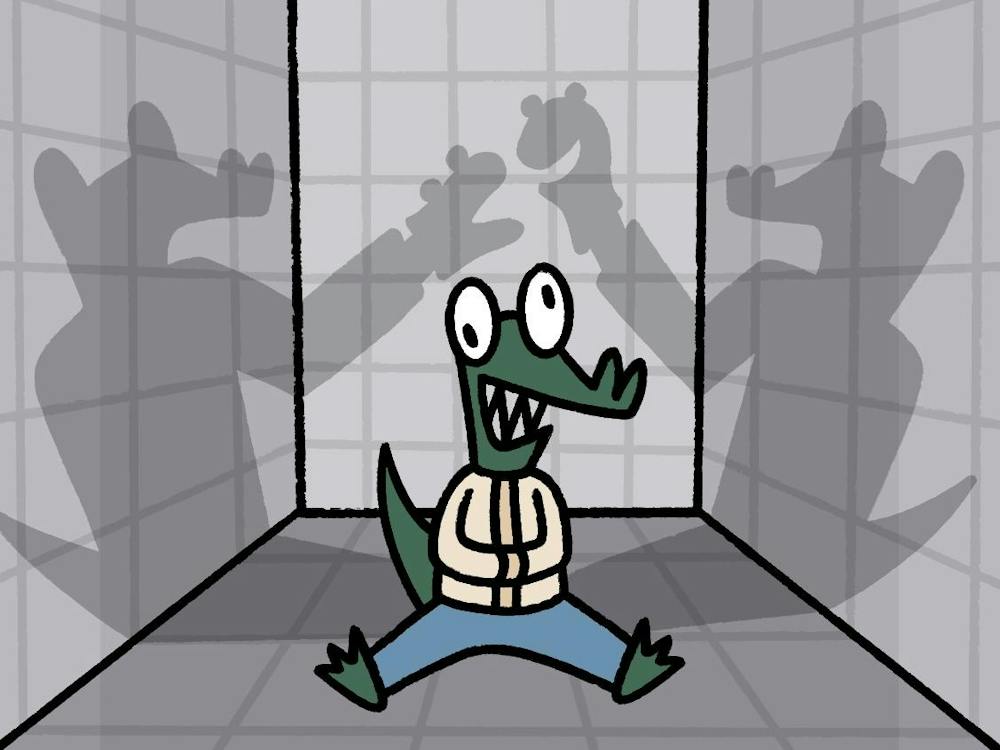
We all love our echo chambers. It’s not a personal flaw; it’s part of human psychology. In our current age of ultra-interconnectivity, it’s easier than ever to find ourselves in one.
Echo chambers are environments, typically online spaces, where beliefs are continuously reinforced, and conflicting perspectives are ignored or excluded. They arise due to “intertwined cognitive and social processes,” according to Psychology Today.
In simple terms, this means these “chambers” unite people through a shared perspective, the human desire to conform and an overinflated sense of agreement. For example, have you ever mentioned a TikTok controversy that was all over your For You page to someone, but they had no idea what you were talking about? That’s because they are in a different online space than you.
While these online spaces can create a sense of community and belonging, they also tend to be insular. Algorithms exacerbate that insularity because they promote the content that gets the most attention, which is often the content that confirms or reinforces the prevailing ideology of the echo chamber. Most people will stay in the spaces where people agree with them. The natural side effect is that these spaces become forums in which ideas go unchallenged.
Our perception of reality relies on how our ideas about the world are formed, challenged and shaped. Without pushback, people will only view reality through a limited lens, warping their perception of the world around them and stirring tension by blowing conflicts out of proportion.
Being in your own online community isn’t necessarily a bad thing. Everyone deserves to have a shared space where they can feel connected with people. But these spaces become a negative force when the information bubble around them morphs into a solid, insulated wall. It’s important to recognize when you’re in a space that excludes or ignores outside perspectives.
Echo chambers have allowed fake news to become pervasive online, promoting the polarization of political discourse. While political echo chambers are perhaps the most common and most damaging, echo chambers can form in any community. Any time outside perspectives are ignored, the risk of misunderstandings and misinformation rises.
By ignoring outside ideas, all the information you receive is unchecked and typically affirms previously held beliefs. The rise of artificial intelligence has made this threat even more potent. It’s easier than ever for people to manufacture false information — and it’s harder than ever for people to catch it.
It’s important to proactively round out the information you receive and the perspectives you hear. Firstly, so you don’t waste time and energy debating or worrying about a subject that doesn’t actually matter. And secondly, so you don’t accidentally spread misinformation or harmful assumptions.
So, how do we break out of our echo chambers? Here are three steps I recommend.
1. Read alternative information sources than you typically rely on.
If you typically read CNN news articles, read The Associated Press or a Fox News piece next. This is especially effective if you read them back to back and figure out how they differ in wording, framing and perspectives.
2. Talk to people who have different beliefs, perspectives or backgrounds than you.
Discussing what these different people believe and how they formed those opinions forces you to critically examine your own beliefs and the internal logic behind them. Diversifying your social circle allows you to naturally absorb different perspectives and strengthens your internal, belief-making process.
3. Fact-check people within your personal spaces.
Ask them questions that dig deeper into the information they are passing off as fact. Oftentimes, misinformation and fake news will fall apart under scrutiny.
These steps aren’t easy, but they are simple. They require additional effort, but they can vastly strengthen your attachment to reality.
We are all within our own echo chambers; it’s simply how our psychology interacts with internet algorithms. But we could all use a little self-reflection to realize the gaps in our information diet.
Contact Evan Dressel at edressel@alligator.org. Follow him on X @EvanD_Alligator.

Evan Dressel is a senior studying Political Science and Criminology. He plans to go to law school. He loves Gator basketball and football as well as the Green Bay Packers. This is Evan's first semester writing for The Alligator.