
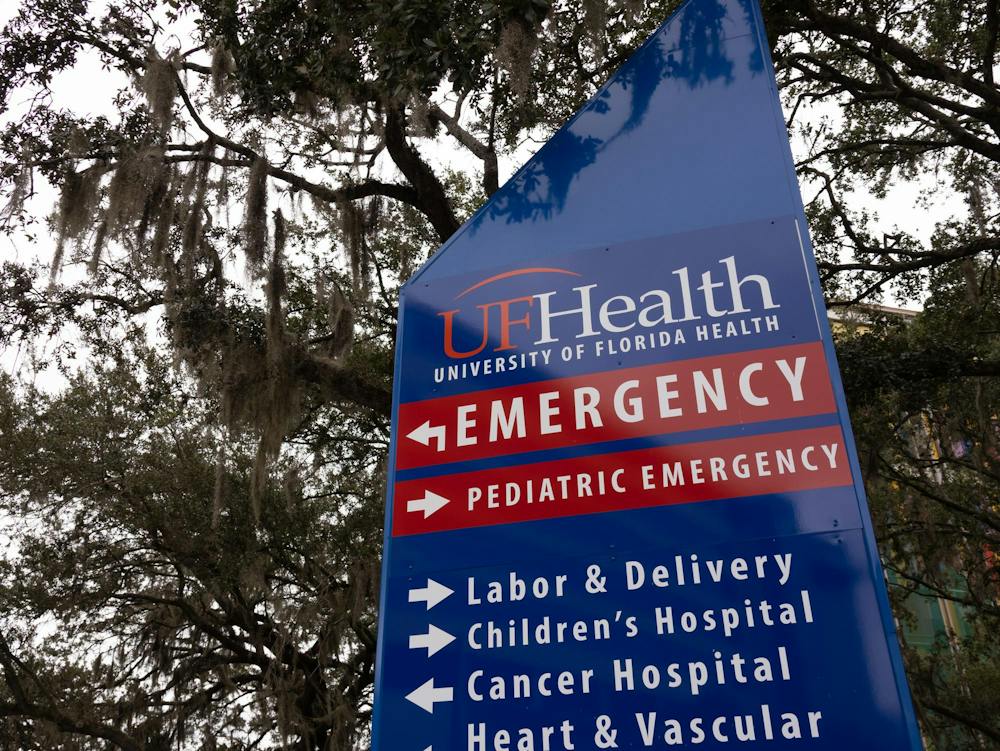
Nonprofit healthcare system UF Health opened a 99-bed hospital in northern St. Johns County Sept. 22, about 60 miles from its home campus in Gainesville.
UF Health Durbin Park Hospital is the newest hospital in a system that has grown well beyond UF Health Shands Hospital, its first facility. Before the new addition, the UF Health hospital system had six licensed hospitals, about 2,900 beds, more than 280 physician practices and more than 27,000 employees, generating more than $6.5 billion in annual net revenue, according to a UF Health fact sheet for fiscal year 2025-26.
UF Health’s hospitals include Shands in Gainesville, UF Health Jacksonville, UF Health North in Jacksonville, UF Health Flagler Hospital in St. Augustine, UF Health Leesburg Hospital and UF Health Spanish Plaines Hospital in The Villages.
Whether that growth is good for patients depends on who’s asked, and there’s a distinction between buying an existing hospital and building a new one.
UF Health’s growth
In December 2019, UF Health announced it would acquire Central Florida Health's hospitals in Leesburg and The Villages, a 660-bed system serving Lake, Sumter and Marion counties. In 2023, it acquired Flagler Health+ in St. Augustine.
UF Health also has clinical affiliations with Halifax Health in Daytona Beach and Deltona.
The system reports more than $320 million a year in charity care and community investment. That includes care for patients who couldn’t pay for it, the gap between what Medicaid pays and what it costs to treat Medicaid patients, community health programs, education and donations.
Durbin Park, the newest addition, is different, because UF Health built it. The first phase sits on 42.5 acres off State Road 9B and features a 24-hour emergency department and six operating rooms, according to a UF Health news release.
"As communities grow, the need for healthcare must grow with them," said Wayne Marshall, the president of UF Health St. Johns, in the release.
But after the Florida Legislature passed a law in 2019 no longer requiring general hospitals to get state approval before construction, it was easier for projects like these to take off.
"Growth is never an end in itself"
In an emailed statement to The Alligator, UF Health spokesperson Greg Harrison said its growth is guided by one goal: giving more patients access to high-quality care close to home.
Hospitals that join the larger UF Health system gain access to specialized physicians, technology and resources, Harrison wrote, and as a nonprofit, it reinvests what it earns in patient care, research and education. He didn’t say what UF Health paid for the hospitals or whether they’re profitable now.
As of September, UF Health employs about 12,900 people in Alachua County, up from about 10,300 in September 2021, Harrison wrote.
Some research has found that hospital prices rise after mergers, but Harrison wrote the rates insurance companies and the government pay UF Health are "competitive with most community hospitals."
He added that for now, UF Health is focused on investing in the areas it already serves in North Central and Northeast Florida. He did not say whether more acquisitions are planned.
"Growth is never an end in itself," he wrote.
The other system in town
UF Health is not the only health system growing in Gainesville. HCA Healthcare, a for-profit hospital company, opened a 90-bed hospital attached to the HCA Florida Gainesville Hospital emergency room earlier this year, wrote Gabe Bullaro, the CEO of both HCA hospitals, in an emailed statement to The Alligator.
"We are fortunate to be in a region where people have a choice of healthcare providers and where there is a high concentration of clinical experts and advanced treatment capabilities," Bullaro wrote.
As a taxpaying hospital, HCA Florida North Florida Hospital paid nearly $92 million in taxes in 2025 and provided more than $38 million in charity and uncompensated care, he wrote.
"The same or even worse"
Aaron Plotke, the associate director of healthcare financing and pricing at Families USA, a consumer health advocacy group, said large systems use their size and market power to charge insurers more — a cost that can be passed down to patients.
A system that owns hospitals in different parts of a state can negotiate with insurers on behalf of all of them at once, Plotke said, which gives it more leverage than any one hospital would have alone. He’s seen the trend in both for-profit and nonprofit systems, he said.
Evidence shows larger systems are generally “charging higher prices” while maintaining the same or “even worse" quality, he said.
In a May 2026 analysis, Plotke found Florida hospitals charge commercial insurers more than three times what Medicare pays, among the highest rates in the country.
Nationally, system-owned hospitals averaged about $27.7 million in annual net income from 2018 to 2023, while independent ones only earned about $3 million.
Patients pay for higher prices through premiums, deductibles and medical debt, Plotke said, and employees pay through wages because employers spend more on health benefits.
Hospitals' costs have risen, he said, but the largest systems earn enough to lower prices and still sustain their operations.
"All parties generally benefit"
Mary Mayhew, the president and CEO of the Florida Hospital Association, the state's hospital trade group, said it’s “extremely common” for hospitals to join greater systems.
Costs are the pressure behind it, Mayhew said. Over the past several years, hospitals' labor costs rose by more than 28%, medical supplies by 34% and drugs by 25%, she added, while insurance companies have only given hospitals payment increases of 3% to 5%.
Nationally, hospital expenses grew by 7.5% in 2025 — more than double the 3.3% growth in hospital prices, according to the association's annual cost report.
Hospitals that agree to be acquired are often struggling financially and looking for help, Mayhew said. Joining a system also gives a small hospital access to specialists it couldn't hire itself and to the larger system's medical research, she added.
UF Health’s expansion could affect Gainesville by improving medical research, training more physicians and allowing clinicians to share knowledge, she said.
"All parties generally benefit," she said.
What the research can and can't say
Christopher Garmon, an associate professor of health administration at the University of Missouri-Kansas City and a former Federal Trade Commission economist, said buying a hospital and building one can affect prices differently.
When a system buys a hospital in the same state, studies have found prices tend to rise, said Garmon, who earned his doctorate in economics at UF.
A 2019 study in the RAND Journal of Economics looked at hospital mergers between 1996 and 2012. When a system bought a hospital in another part of the same state, prices at the system’s existing hospitals rose about 8%. When it bought one in another state, prices didn’t rise significantly.
A newly built hospital is a different case, Garmon said. When a completely new hospital opens where there’s demand for care, it gives patients an option they didn’t have before and adds competition, which can lead to lower prices.
Mergers can bring benefits, he added. Combining systems can lower costs, and a larger system can perform complex surgeries often enough for its teams to maintain their expertise, which research links to better outcomes.
“You don’t want a small hospital doing open-heart surgeries,” Garmon said.
Judging what the growth does to prices, quality and access requires detailed data on what patients paid and how they fared before and after each new acquisition, he said. So, it’ll take a few years before the benefits or costs of UF Health’s most recent venture can be determined.
Contact Jessica Yang at jyang@alligator.org. Follow her on X @jessie_yang_22.

Jessie Yang is a sophomore studying statistics. She's interested in business, technology, and finance, and is a member of the Caimanes Student-Managed Hedge Fund, where she researches companies and develops investment theses. She's currently exploring a career in investment banking. Outside of The Alligator, she enjoys playing tennis, golfing, and pretending not to struggle on hikes in pretty places.