
Following sweeping rollbacks of U.S. Environmental Protection Agency regulations on carbon dioxide emissions, Florida activists and energy experts have raised concerns about the potential ramifications on climate change.
The repeals
The Trump administration revoked power plant limits on greenhouse gas emissions Sept. 14, rolling back policies set by former President Joe Biden requiring coal-and gas-fired plants to reduce CO2 emissions starting in 2030.
The rules enacted under Biden required plants to install carbon-capture technology to reduce carbon pollution by 90% in 2032.
CO2 emissions make up roughly two-thirds of global greenhouse emissions and are the largest contributor to greenhouse gas and carbon emissions, according to the EPA.
In an email to The Alligator, Carolyn Holran, an EPA spokesperson, wrote power plants help provide reliable, affordable energy for schools and homes and support national security.
“The Trump EPA’s repeal of the majority of the Biden administration's greenhouse gas requirements … will benefit all Americans,” she wrote. “The Obama and Biden administrations worked to destroy coal and natural gas, threatening our energy security and driving up costs for everyday Americans.”
The EPA projects the repeals will help the economy save $370 billion in compliance-related costs and make energy more affordable.
Legal challenges
As of Oct. 1, more than 20 states and four cities have sued the Trump administration over the rollbacks. Florida isn’t involved in the joint lawsuit.
The lawsuit was filed in the U.S. Court of Appeals for the District of Columbia and is led by the state of New York. Democratic-led states like California and Massachusetts have also joined the lawsuit.
Environmental organizations like the Sierra Club’s national chapter and the Natural Resources Defense Council are also planning to challenge the repeals.
States and environmental organizations plan to challenge the EPA’s interpretation of the Clean Air Act, which gives the EPA power to regulate air pollution and precedents set by the 2007 landmark Supreme Court case Massachusetts v. EPA. The ruling established greenhouse gases are air pollutants and gave the EPA the authority to regulate them.
The concerns
Some experts have raised concerns about how the repeals will impact families in Florida if they survive expected legal challenges.
Ted Kury, UF’s director of energy studies, said any costs saved by the repeals will be felt elsewhere.
While the rollbacks will provide relief on electricity costs, he said, people could pay more in insurance premiums and stormwater damage because increased carbon emissions contribute to rising sea levels and more intense hurricanes.
Under the Clean Air Act, he said, the government will still be responsible for regulating carbon monoxide, nitrogen dioxide and other air pollutants released by power plants.
The debate on the repeals centers around whether the EPA considers CO2 harmful, he added, because it’s not named as a common pollutant in the act.
“The EPA is pretty much assuming that the cost for [climate repercussions] is zero,” he said.
Other energy experts have similar qualms with the rollbacks and what they mean for Florida communities.
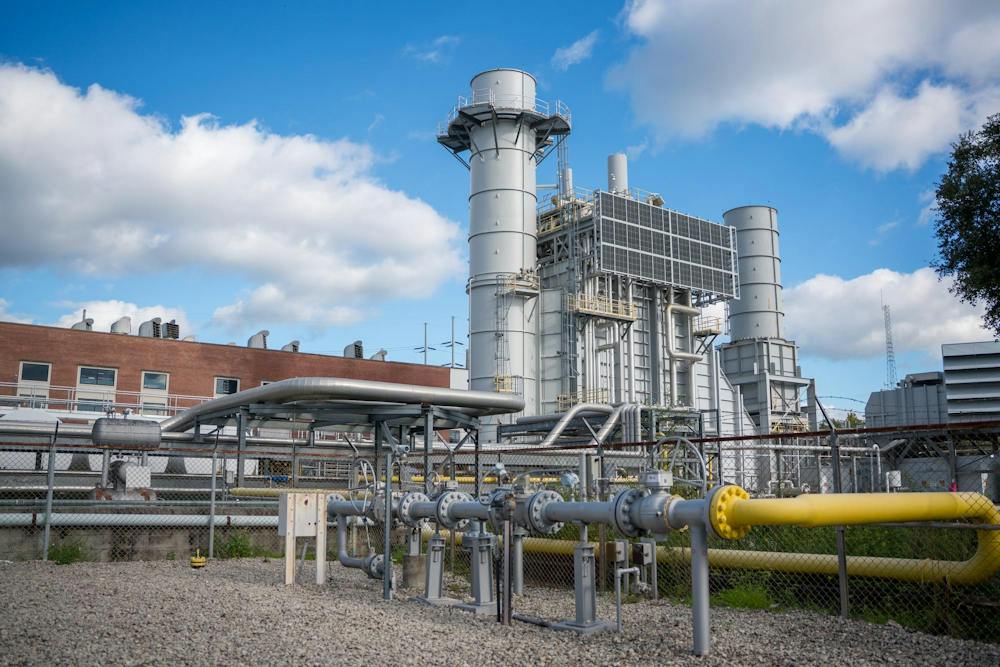
David Hastings, the chair of the energy committee for the Sierra Club’s Suwannee-St. Johns group, said the move is expected to significantly impact Florida because it’s home to natural gas power plants that can now release greenhouse gases with fewer regulations.
According to data collected by the U.S. Energy Information Administration in 2023, Florida is the fifth-largest consumer of natural gas, accounting for 5% of all natural gas consumption in the U.S.
Hastings challenged the EPA’s estimate that rolling back previous CO2 regulations will save over $300 billion. The savings will only apply to power plants, he said, while energy from fossil fuels continues to become more expensive for consumers and contributes to pollution.
“The price of natural gas is very highly variable, and we've seen the prices go up, prices go down,” he said. “This variability is really challenging for businesses, and it's challenging for the power sector, the folks who are producing it.”
People who live near power plants will be especially vulnerable to the new rollbacks, he added. Increased carbon emissions will impact air quality, he said, leading to health concerns.
According to a 2012 study, power plant emissions have contributed to an 11% increase in hospitalization for asthma among individuals who lived near power plants.
Brooke Alexander-Goss, the organizing manager for the Florida chapter of the Sierra Club, said the EPA hasn’t considered the long-term financial and health impacts of the rollbacks and what it could mean for Florida.
“In Florida, we’re already seeing air quality issues,” she said. “I’m concerned now that if these EPA regulations no longer exist, utility companies are certainly not going to be willing to put those restrictions in place.”
Residents have until Nov. 2 to share their opinions on the repeals.
Ray Garcia contributed to this report.
Contact Olivia Lofaso at olofaso@alligator.org. Follow her on X @OLofaso77652.

Olivia Lofaso is a senior journalism student at UF and the Fall 2026 City and County Commission reporter, a role she previously held during the summer. She enjoys gushing about her cocker spaniels to anyone who will listen and playing the cello in her free time.