

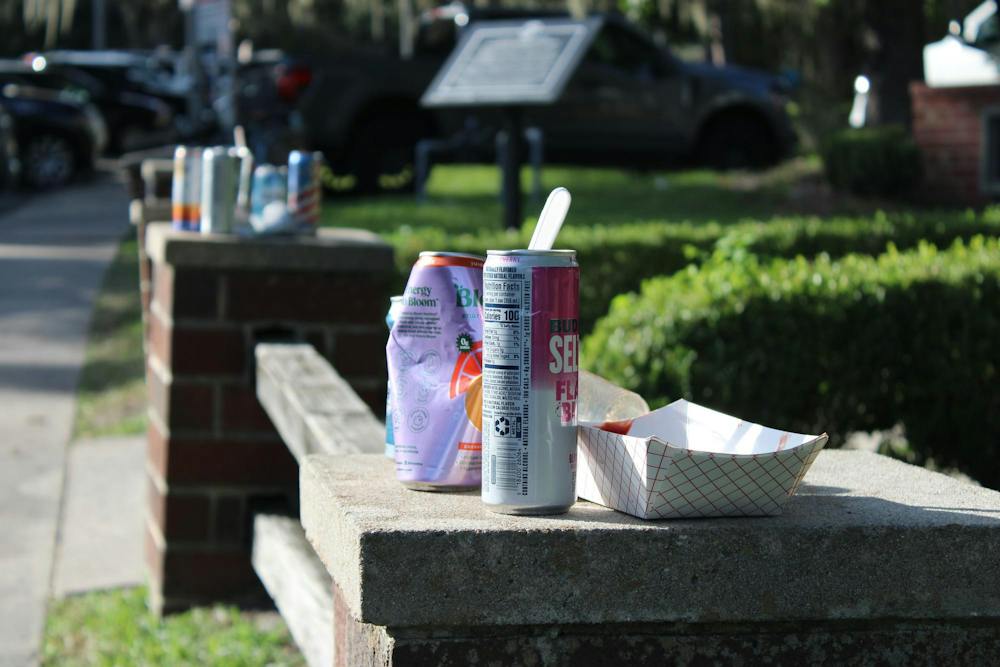
Home games in The Swamp typically draw over 90,000 attendees. Such large influxes of people packing relatively small spaces can present significant burdens to its surrounding environment, according to Randy Penn, a UF/IFAS waste reduction agent.
The environmental impacts of hosting large sporting events, he said, can be broken into two parts: inside and outside the stadium.
Measuring the environmental toll of Florida football outside its stadium accounts for travel and tailgate carbon emissions and the waste Ben Hill Griffin Stadium generates.
Transportation has the largest impact and is the hardest to manage, Penn said, because nearly eight in 10 non-student season ticket holders travel from outside Gainesville to attend each game.
To mitigate some of the impacts of transportation-related emissions, UF’s Sustainability in Gator Athletics page encourages fans to buy locally sourced food, carpool to tailgating sites and use public transportation.
Waste is another large contributor to the sports’ environmental impact, Penn said, so many sports organizations start their green efforts by managing trash and recycling.
UF aims to recycle or compost at least 90% of its waste, according to its recycling page. Since 2013, all products sold at Ben Hill Griffin Stadium have been recyclable or compostable, according to Gator Athletics’ sustainability page.
These steps are part of what many college sports organizations across the country, including UF, have coined “zero waste” goals, Penn said.
“They want to recycle it,” he said. “They want to compost it.”
Despite waste management efforts, Gainesville’s solid waste department collects up to 200 60-gallon garbage bags — enough to fill a 60-foot-long dumpster — in midtown after every home game, the department wrote in an email to The Alligator. That means the six or seven home games every season produce about 90,000 gallons of waste total in midtown alone.
The waste Gainesville’s solid waste department collects is then taken 8 miles northeast to the Leveda Brown Transfer Station, the department wrote. It’s later brought to the New River Regional Landfill in Union County, according to Alachua County Volunteers.
While waste management is important outside of sports venues, Penn said, managing energy and water consumption are two big factors in reducing environmental harm inside them.
UF’s Facilities Services measured Ben Hill Griffin’s energy use and campus-wide electricity and water consumption on game days compared to the following day, the department wrote in an email to The Alligator.
The stadium uses roughly 10% more energy on game days, driven mostly by lighting, AC and scoreboards, the department wrote, and campus-wide water demand increases by about 18%. All of the water used is directed to UF’s wastewater treatment facility, which has the capacity to process and recycle over 3 million gallons a day.
Recycling wastewater allows it to be reused for irrigation and drinking water or be stored for later use or as an environmental buffer, according to the U.S. Environmental Protection Agency.
Despite the increase in stadium energy consumption, total campus electricity use falls on game days because most on-campus buildings are unoccupied, Facility Services wrote.
Mayor Harvey Ward said he feels the solid waste team sufficiently manages game day waste. Still, he said he acknowledges the environmental toll of tens of thousands of fans “enjoying themselves for multiple hours,” he said.
While UF and its concessions have made efforts to minimize waste by selling recyclable and compostable products, he said, businesses and visitors don’t always think about where to dispose of them. Eliminating waste isn’t always as simple as popping something in the right bin, he added.
“It isn’t just Gainesville,” Ward said. “It doesn’t just disappear, and most of it goes to a landfill and is not recycled, and even a lot of recycling isn’t necessarily recyclable.”
Alachua County doesn’t recycle lids of any kind, black plastic, Solo cups, takeout containers, Styrofoam or many other products commonly mistaken as recyclable.
Cleaning up after fans costs the city, Ward said, but any expenses are offset by “enormous” economic impacts and “celebratory mood[s].”
Summer Smith, a 21-year-old UF natural resource conservation senior who co-directs Unlitter UF, said environmental damages can be alleviated in just a few steps.
She encouraged gameday fans to buy beverages in cans instead of plastic bottles, properly dispose of waste like uneaten food and pick up trash left behind, she said.
“Keep it simple, keep it easy,” she said. “As long as you’re [making] consistent efforts, then it does add up and it does make a difference.”
Contact Christian Haas at chaas@alligator.org. Follow him on X @ChristianH58745.
Christian is an environmental reporter with The Alligator, and studies journalism at the University of Florida. He is a fourth-year student who prefers to spend his free time trying new and random things, cooking, reading, watching TV, or hiking.


