

Hockey, since I was 9 years old, was the center of my universe. The sport pushed me past a decade-long fight against obesity, created lifelong friendships (shoutout Luke, Felix and Plano Senior Hockey) and gave me purpose during times when I wasn’t invested in academics.
One thing is for certain: For many kids in this country, regardless of gender, this sport can be a much-needed escape from the real world.
So why does a brutishly sexist joke made by President Donald Trump and the men’s hockey team after the Olympics matter? Because it points out the truth that most male hockey fans, parents, players and even coaches don’t usually consider.
Women can play the sport that they love, but they very often aren’t allowed to celebrate.
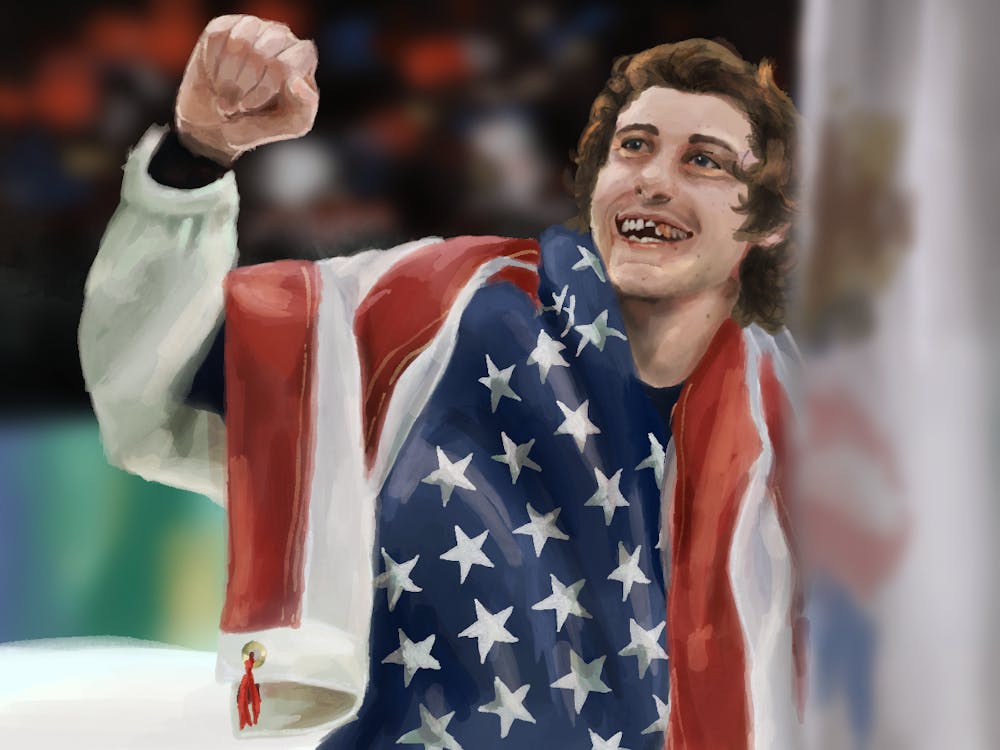
On Feb. 26, the U.S. men’s Olympic hockey team took home the gold medal for the first time in over four decades. Directly after the win, the team spoke with Trump on the phone, and the president facetiously claimed he would be forced to invite the women’s team to celebrate alongside the men. If he didn’t, Trump said, they would “impeach him.”
The joke, caught on a widely shared video, was followed by hollering laughter.
What Donald Trump remarked and what the U.S. men’s team — filled with many of this sport’s biggest role models — had found hilarious cuts deep because it’s true. “Having to invite” the women’s team to the White House is a simple continuation of male dominance in a sport so near and dear to many of our hearts.
Through videos from that locker room, Americans got to bear witness to what I would consider a typical hockey celebration.
Back on my mostly male hockey team, even winning high school hockey tournaments would send our team into a state of absolute chaos. We may not have been pouring champagne, but filling up trophies with water and drinking out of them was still par for the course. We would throw our gear everywhere, blast obnoxious music from our one massive speaker and take countless photos.
But these celebrations were never equal. There were always one or two girls on our team who weren’t allowed to change in our locker room. Women change in the “Women’s Locker,” which at my home rink meant a key-locked, dingy room at the other end of the rink.
Athletes, especially men, cannot avoid talking about politics while still demanding media coverage and million-dollar wages. When male hockey players demand political silence, people view female players as complaintive and whiny by comparison. This “political privacy” dismisses the role athletes play in shaping the world they live in, silencing needed conversations on gender equality.
The male-dominated narrative in my sport consistently denies political privacy for women. As our governments try to define a “female athlete” and our business leaders justify lower wages, women in sports can’t look away from politics.
When U.S. ice hockey player Jack Hughes wants to hide from public backlash because he laughed at a sexist joke, he hides in a space designed only for male athletes.
On my high school team, the girls sometimes received scholarships to play college hockey and often played second- or third-line minutes on ice. But locker room regulations forced them to celebrate as if they had been cut the night before.
This is why the push for women’s solidarity in hockey has been so massive. In a physical sport where girls and women usually become disadvantaged due to disparities in size, weight and speed by the age of 10, not being able to have a women-only hockey community means they struggle for play time. And the few that get the opportunity won’t get the rewards.
The U.S. women’s Olympic hockey team, which also won gold this year, declined Trump’s invitation to the State of the Union address. I’m not surprised. Why would women fight to enter the men’s locker room instead of fighting to have their own space?
This nation is slowly becoming a hockey locker room. As the men’s team chanted “USA, USA, USA” during the State of the Union address, that comparison became poignant. It’s a locker room similar to the one I knew, where if you weren’t physically “fit,” and a man, you had no place to celebrate.
Defenses such as “politics and sports don’t always belong together” are masqueraded versions of “I don’t care that women, LGBTQ+ and disabled athletes don’t get to celebrate, because I also agree that men simply deserve more celebration.”
If we fail to recognize that the normative culture of our country spreads into youth and adult sports at every level, we fail to protect those who use sports as an escape from the real world, a world that so often pushes us down for reasons we can’t control.
As we celebrate victories exiting Milan, the conversation needs to shift toward not simply celebrating gold medals but toward the struggle it took for many female athletes to call themselves athletes in the first place.
So it’s time we celebrate a massively ephemeral win for both women and for our country, because the struggle won’t disappear after the champagne stops flowing (Kash Patel will not be invited to this locker room).
Financially supporting the development of women’s hockey ensures they have equal resources. It also provides a first step towards closing other gender disparities in sports, like the pay gap.
Donations to organizations such as the Brianna Decker Endowment Fund or the Grindstone Foundation have expanded access for decades. As they’ve grown, so has respect for women in hockey. Donations can be made at www.usahockeyfoundation.com/donatenow and grindstoneaward.com/donate/.
Contact Sasha Morel at smorel@alligator.org. Follow him on X @BySashaMorel.
Sasha Morel is a sophomore at the University of Florida studying Politics, Philosophy, Economics, and Law, as well as Anthropology. His returning column focuses on policy analysis surrounding domestic, global, and local politics, with a focus on targeting root causes of common issues and highlighting unrepresented perspectives. Outside of the Alligator, Sasha is a nationally recognized debate coach for high schoolers across the US.


