

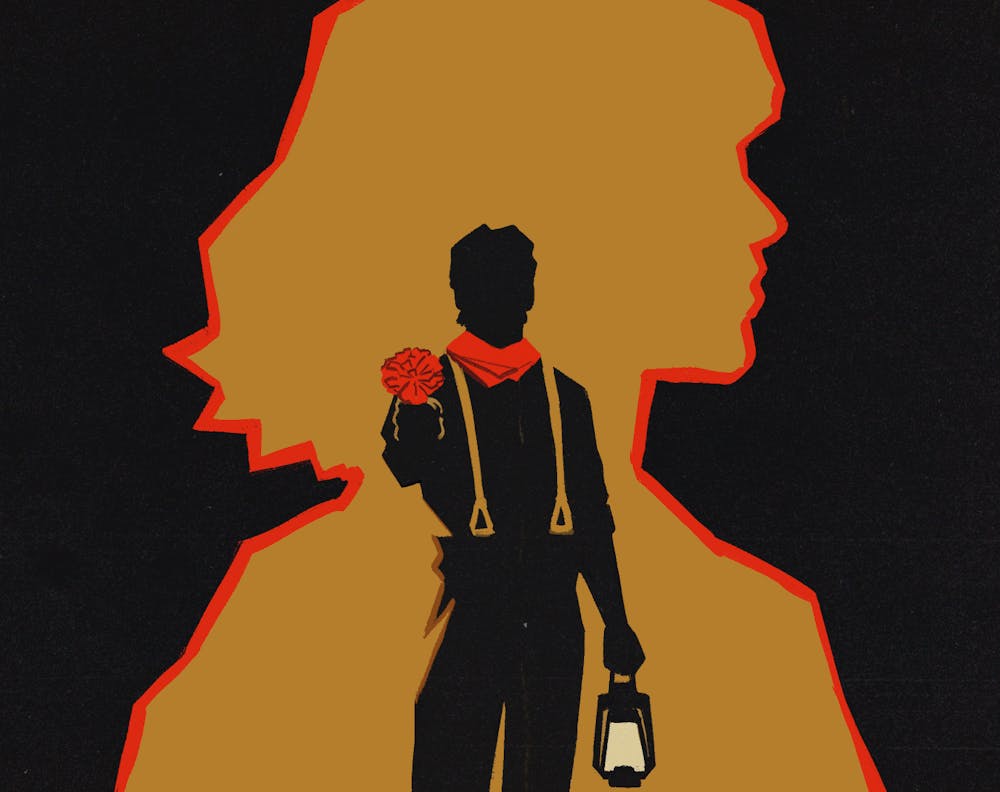
Following the release of “The Odyssey,” it seems the perfect moment for another adaptation of Greek mythology to hit theaters. However, “Hadestown: The Musical” brings a fresh face to the old myths, much different than Nolan’s “The Odyssey.”
“Hadestown: The Musical,” a live theater capture film of the production, was released July 24. The movie will be shown in theaters for a limited five-night run.
The Tony Award-winning musical, written by Anaïs Mitchell, premiered on Broadway in 2019, where it’s still running.
The film adaptation was directed by Brett Sullivan and features the same main cast as the original Broadway production, minus the Fates — three sisters who guide the characters’ destinies.
The recording was filmed in London in 2025, a little over a year before its theatrical release.
The musical combines elements of the myth of Hades and Persephone, played by Patrick Page and Amber Gray, as well as Orpheus and Eurydice, played by Reeve Carney and Eva Noblezada. Both myths are stories of love and sacrifice, but neither is particularly happy.
Anyone familiar with Greek mythology knows the story of Orpheus and Eurydice, in which musician Orpheus walks to the underworld to save his lover, Eurydice. Orpheus is permitted to bring her back under one condition: He can’t turn around at any point in the journey to check if his love is still behind him.
The myth is most famous for its ending, when Orpheus fails Hades' test by looking back at Eurydice, sending her back to the underworld.
For many stories, knowing the ending might make it less enjoyable, but Hadestown plays into its audience’s awareness. The first song of the musical, “Road to Hell,” reiterates that the song of Orpheus and Eurydice will be sung again and again even though it will always end in tragedy.
As someone familiar with the musical, I still found myself hoping throughout the movie’s entire run that maybe Orpheus would keep his eyes forward this time around. I was still completely crushed when he didn't.
Despite pulling from ancient Greek myths, the musical doesn’t feel ancient Greek beyond the names and presence of the gods. The setting feels timeless, with costumes that don't seem to come from any particular era and no references to modern technology or current events.
The lack of a specific setting works in the musical’s favor. A major part of the musical's theme is repetition, and it's implied the characters will keep performing this tragedy throughout time. The lack of a timeframe in the musical helps with this feeling; the story will remain relevant whenever it’s told.
The genre of the musical, however, helps contextualize it for American audiences. The songs take inspiration from American folk, jazz and blues, making them feel distinct from the “show tunes” of many other musicals.
The film version of Hadestown managed to tell the story in ways a stage production alone couldn’t.
Certain camera angles and focus in the recording made elements of the story feel very different from when you can see the entire stage.
During “Doubt Comes In,” while Orpheus is traveling back from the underworld, the camera works to make him feel completely isolated on stage, adding to the nerve-racking feeling the song already places in the viewer.
Hadestown is about love, music and the magic they create. As a stage show rather than a classic film, the production has to be creative with how it makes its magic.
Sound and lighting design make it feel as if Orpheus’ music really is magic, like Hermes says at the beginning of the show. Songs he sings alone often utilize harmonies to make them feel more powerful, and lights are used to make him almost appear to glow.
By the end, I believed the song he was singing — and his love for Eurydice — really could bring the world back into tune.
One of my favorite parts of the film was how it maintained the feeling of watching a theatrical production rather than a movie. Many shots included the audience or showed the actors backstage.
For audiences who haven’t had the chance to see the production in person, “Hadestown: The Musical” works to bring the Broadway experience to life for everyone.
Contact Brandy Sumner at bsumner@alligator.org.

Brandy Sumner is an anthropology and English junior at UF and the music and reporter for Fall 2026. This is their second semester on The Avenue. Brandy enjoys reading, going to shows with friends, and writing in their free time.