

It’s about time
(05/22/23 10:00am)
This is The Alligator’s first edition dedicated to Asian American and Pacific Islander Heritage Month.
Use the fields below to perform an advanced search of The Independent Florida Alligator's archives. This will return articles, images, and multimedia relevant to your query.
1000 items found for your search. If no results were found please broaden your search.
This is The Alligator’s first edition dedicated to Asian American and Pacific Islander Heritage Month.
When I started working at the Alligator in the summer of 1986, reporters were still typing their stories out on manual typewriters. The clickety-clack of those ancient machines always made it seem like we were in some black-and-white 1950s movie instead of on the verge of the digital age.
About once a month, Elaine Hargrove drives down the road from her house in Chiefland, Florida, to Tri-County Nursing Home in Trenton, Florida. Along the 15 minute drive, she responds to honks from other vehicles and stares from strangers with a jolly wave and a beep from her hand-painted 1978 Volkswagen bus.
Are you interested in growing your career in media and communications? Are you ready to join a network with alumni at organizations like the New York Times, Washington Post and Wall Street Journal? The Independent Florida Alligator is looking for its next team of reporters, editors, photographers and more for the Summer semester.
Goodbye. Bye, bye, bye. See ya later.
The Independent Florida Alligator is a choice. You either make it fully conscious of how much it will demand from you or maybe because you’ve heard it’s what you’re meant to do — without necessarily knowing the ins and outs of taking part in a student newsroom.
A career at The Alligator is one hardly measurable in semesters, editions or manic episodes.
When you’ve kept a journal for 13 years, you rack up a lot of entries you don’t remember writing.
The thing about working at The Independent Florida Alligator is that it sucks. It sucks a lot. The only semester at UF I didn’t work at The Alligator, I got straight A’s and my professors liked me.
Since I transferred to UF almost two years ago, all I’ve ever wanted was the ceremonial photo in the recycled newspaper dumpster — that was my primary reason for applying to The Alligator. It was on everyone’s Instagram, and in my mind, that was the emblem of a successful journalism student. I needed to be in that dumpster.
UF’s first resident wasn’t a person, but a tree. Sprouting before the university was founded, a longleaf pine near Keene-Flint Hall has watched UF grow into what it is today. In April, the tree was declared dead.
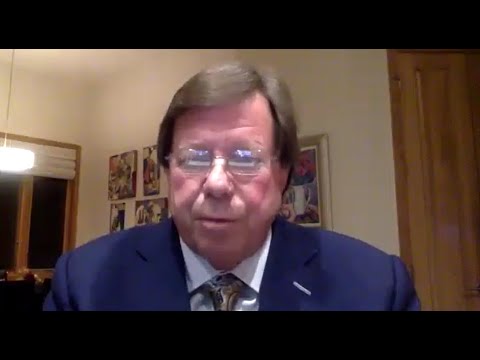
The Alligator has a long history of fighting for First Amendment rights and protecting free speech and the public’s right to know. Fifty years ago, then-editor Ron Sachs was at the forefront of the controversy that forever changed the newspaper—and its name. Hear from Sachs and retired UF journalism professor Jean Chance on why one of the Alligator’s most prominent stories is about the paper itself and the student journalists who fought for, and won, editorial independence. Moderated by Master Lecturer Mike Foley. As you heard in yesterday’s webinar, the Alligator is printing one day per week and our online content is stronger than ever. We are adapting to the world around us to continue serving as an accurate, reliable news source for UF students, Gainesville residents and beyond. Can you help make that possible? Please consider making a secure donation through our website at: https://www.alligator.org/page/donate
The Alligator has a long history of fighting for First Amendment rights and protecting free speech and the public’s right to know. Fifty years ago, then-editor Ron Sachs was at the forefront of the controversy that forever changed the newspaper—and its name. Hear from Sachs and retired UF journalism professor Jean Chance on why one of the Alligator’s most prominent stories is about the paper itself and the student journalists who fought for, and won, editorial independence. Please join us in Wednesday, December 1st at 6 p.m. by visiting http://alligator.org/webinar
In a place like north central Florida, our connection to the environment is everything. It surrounds everyday life no matter who you are — a UF student here to get your degree and leave or a longtime Alachua County resident.
In the classroom of an environmental science teacher one will see many things. Lab coats. Goggles. Maps. Skeletons of animals tangled in nets.
For most students, Gainesville is only a four-year blip in their lives.
Every morning before heading into the orange groves for his shift, Marjorie Kinnan Rawlings State Park tour guide Rick Mulligan reads one of the titular author’s letters. He tries to pick a letter that was written on the date he’s going in, to get a sense of how she was feeling that day.
Around 8 p.m. April 6, a call was made to the UF University Police Department, claiming a potential shooter was on their way to campus. Police increased patrol presence, including around Marston Science Library and Library West. But by 9:15 p.m., there were no officers in sight.
The Gainesville Police Department deployed caution tape, swept crime scenes and ordered confused onlookers exiting the Main Street clubs to leave downtown in the aftermath of two shootings that occurred within minutes of each other early Monday morning.
Florida is exceptional, different, sometimes a bit quirky.
 Solutions by The State News