

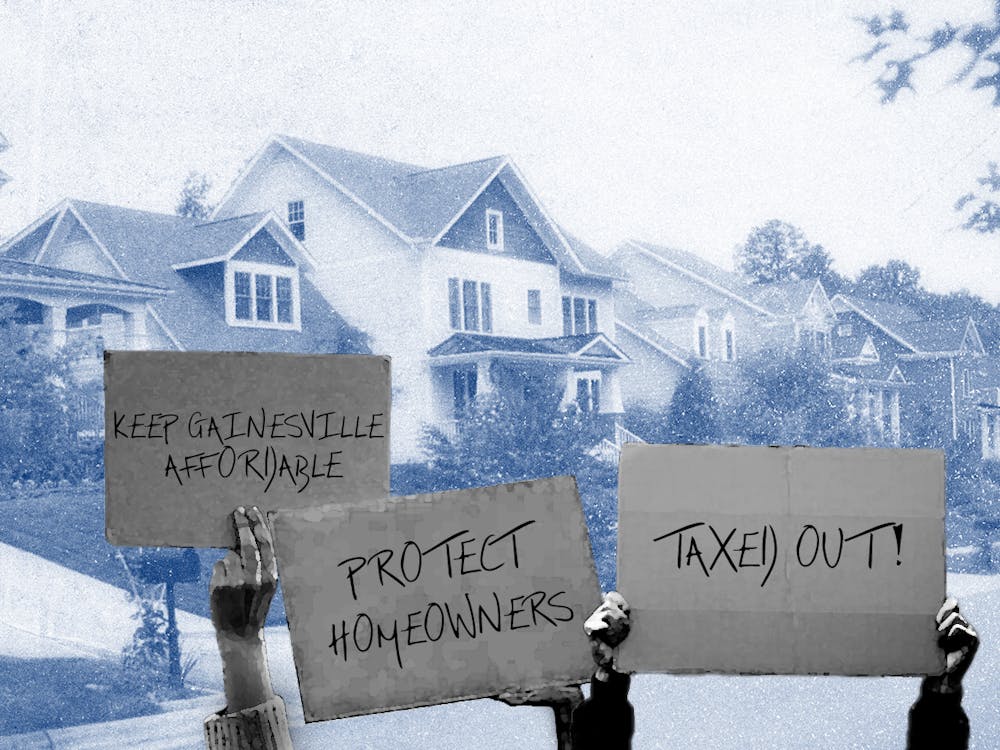
Funding for cities and counties across the state may be impacted by a bill that would provide property tax relief to Florida homeowners.
The Florida House of Representatives passed a bill Feb. 19 that would make homestead properties, or main residences, exempt from all ad valorem taxes other than those going toward the school district. Ad valorem taxes include taxes collected for law enforcement, fire rescue, emergency medical services, waste management and road maintenance.
Those in favor of the bill argue a reduction in property taxes would save homeowners money and pressure local governments to find money within their budgets to cover services.
Opponents argue lowering ad valorem taxes could lead to an increase in state sales tax, state appropriations, higher local taxes on nonhomestead properties and higher rent to make up for the money lost.
While the Senate didn’t file its own companion bill, it still has time to assess and pass the House bill. If the bill passes through both houses, the resolution would be on the ballot for Florida voters in November.
Local effects
Some in the Alachua County government are already bracing for impacts from the legislation. County Communications Director Mark Sexton said the bill will negatively affect county residents.
“There's lots of conversation about getting rid of taxes, very little conversation about taking care of the services that people need in a civilized world,” he said.
During the session, an amendment passed that eliminates a “phase-out” period for ad valorem taxes. This means the changes would be implemented immediately if the bill passes.
“If the legislature was successful in this, on our first budget, where we have to deal with the aftermath of this, we would start with a $24 million deficit,” Sexton said.
Unfunded mandates impact local spending, Sexton added, and the state requires counties to pay for things they have no jurisdiction over. He worries there won’t be enough money left over to substantially fund public services after the county funds the required offices.
In Florida, unfunded mandates include the medical examiner’s office, the court system and Medicaid.
“The whole funding model that the state has handed down to counties and cities is based on property tax,” Sexton said.
City governments within Alachua County are also expressing reservations about the legislation. Ross Ambrose, a 62-year-old former High Springs city commissioner, said he thinks this bill would significantly impact county programs.
“Police and fire are dramatically affected. … Funding for the courts might be impacted; support for different social service programs might be impacted,” he said. “People need to really understand where the monies come from and then how they are redistributed to the services citizens want.”
Ambrose serves on the Alachua County Infrastructure Surtax Citizen Oversight Board. The board tracks local spending of surtax revenues, which is money that localities receive from state taxes, to ensure the money is used responsibly.
Ambrose strongly encourages citizens to do their research on the county budget to make an informed decision. While eliminating property taxes may seem like a good thing, he said, it could have significant negative impacts.
“This is a radical change that's being proposed that hasn't been well-thought-out,” he said. “While it sounds good, while it might be getting some political traction in Tallahassee, I think the implications to citizens would be horrific if it actually came down to implementation.”
Homestead property taxes have been a hot topic in Florida for a while. In 2024, voters passed an amendment to increase homestead property tax exemption each year with inflation. Since last March, Gov. Ron DeSantis has been vocal about getting an amendment for property tax relief on the ballot this November. Regardless of whether the bill passes the Senate, it would still need a 60% majority approval by Florida voters.
In Ambrose’s opinion, the bill won’t make it to the ballot.
“I don't know that it would pass if it was on the ballot,” he said. “Which in some ways makes me feel it's a very politically good move to do, because it looks good like you're trying to lower taxes coming into an election year. But then the hope would probably be that it doesn't pass and they don't have to deal with the aftermath.”
Richard Fulmer, a 55-year-old Melrose resident and state-certified general contractor, wrote the bill “broadly aligns” with his principles in a Facebook message to The Alligator. If it makes it on the ballot as written, he wrote, he’ll vote in favor.
“The potential positive people see in that approach is that it can strengthen long-term housing stability for residents who own and live in their homes,” Fulmer wrote. “Especially in a state where property values and tax assessments have risen rapidly.”
According to data from Redfin, property values in Florida rose 36% from 2021 to 2024. Over the same period, median household income has increased by 18% since 2021, according to the U.S. Census Bureau.
Fulmer said homeowners should be able to feel secure that their home remains affordable to keep. He would rather evaluate the policy based on the actual legislation than projected outcomes.
“My view is that voters should begin by examining the amendment’s written language and provisions, and then weigh potential outcomes carefully rather than treating predictions about the future as settled facts,” he wrote.
Perspectives from the legislature
Rep. Monique Miller, R-Palm Bay, sponsored the property tax bill. It was the only one out of six almost identical bills filed by other members during the 2026 session to pass the House, doing so with 80 in favor and 30 in opposition.
During the House floor session Feb. 19, Miller said many local governments across Florida are misusing funds. Eliminating ad valorem taxes won’t reduce funds from local governments, she said, but instead force them to reevaluate their preexisting funds to cover their costs instead of raising taxes.
”We're going to have to figure out how to live within our means,” Miller said.
During the session, Rep. RaShon Young, D-Orlando, asked Miller what programs local governments are expected to cut.
“ I don't expect that they'll have to cut services; I think we're going to all have to sit down and have some hard discussions,” Miller said. “ I'm expecting that this is going to stimulate a culture of thrift across our great free state.”
Although the bill has been referred to the Senate, it hasn’t been placed on a committee agenda, and a hearing date has not been scheduled. The Senate regular session will end March 13.
Contact Kaitlyn McCormack at kmccormack@alligator.org. Follow her on X @kaitmccormack20.
Kaitlyn McCormack is a senior journalism student serving as the County Commission Reporter for The Alligator's Spring 2026 metro desk. In her free time she enjoys journaling and drinking too much coffee


