

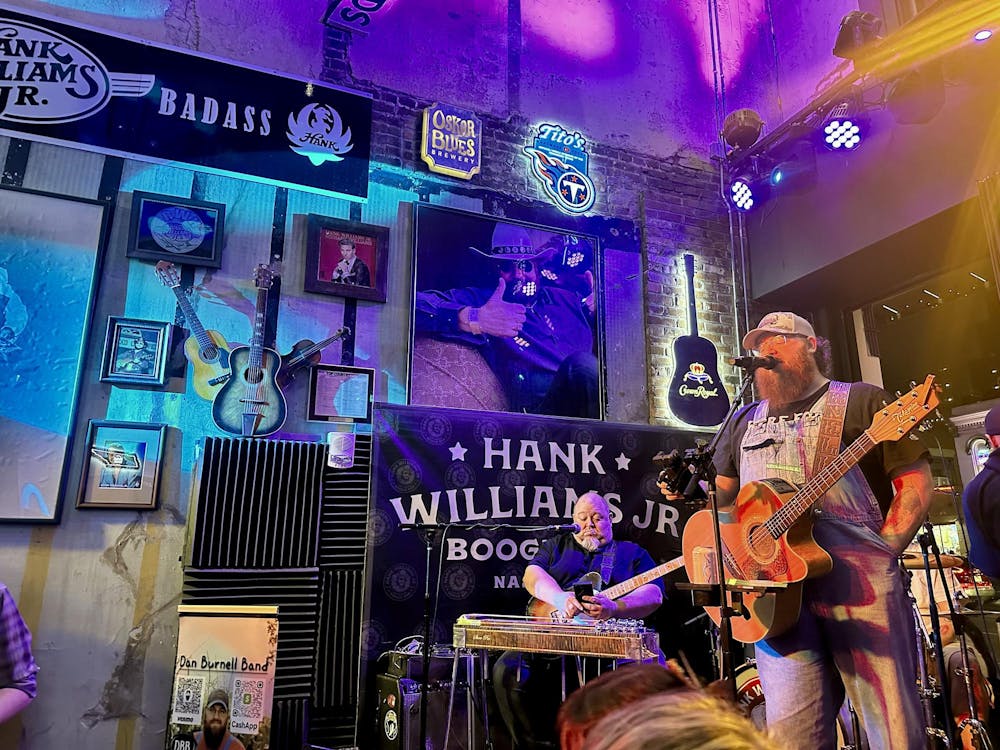
This past weekend I visited Nashville, and one of the most interesting parts of the trip was seeing the difference between Irish and American cultural nationalism up close.
In Ireland, nationalism has become a much more loaded word recently. It can carry a negative tone because of the rise of far-right, anti-immigrant rhetoric and the use of national symbols in ways that feel exclusionary rather than welcoming.
In some settings, the Irish flag can feel less like a symbol of shared identity and more like something used to mark who “belongs” and who does not. That’s what makes it so ironic, because the green, white and orange tricolour was meant to represent peace and unity, especially between Roman Catholics and Protestants.
The flag was supposed to hold differences together, not weaponize them. At the same time, in most contexts it’s still a symbol of pride and love for the country, and that matters too.
What struck me in the U.S. — at least from what I saw — was how public and normalized nationalism feels in everyday life. It’s everywhere, not just in political spaces. You see flags outside homes, in bars, in shops, on clothing, in classrooms and woven into sports and country music culture.
Even when it is political, it also feels routine. Especially in Nashville, patriotism seemed to work almost like a shared language. People expressed pride in the country very openly, and it felt celebratory.
This difference becomes even clearer when you look at cultural nationalism. In Ireland, it often feels local and less loudly branded. It shows up through language revival, Gaelic games, traditional music, Irish dancing, local history and a strong attachment to place.
Because Ireland is so small, the town you come from can shape how people read you. Irish cultural nationalism often feels tied to preservation, memory and identity, which makes sense given colonialism and the long struggle over Irish self-definition. Much of it is about holding on to what was once devalued.
American cultural nationalism, by contrast, feels bigger, louder and more commercial. It’s tied to huge industries like music, sport and tourism, and it’s often exported as part of America’s global image.
Nashville was the perfect example. There is a strong local identity there, but there is also a performance of “Americana” that people travel to experience. People packed the streets and bars to hear their favourite country singers, and dance floors were full of cowboy hats.
What surprised me most was how familiar parts of it felt. The live music in every bar was honestly the most at home I have felt in a bar since arriving in the U.S. In Dublin, we have lots of pubs with live singers — often with a country sound — playing guitar while the crowd dances and sings along.
In that sense, Nashville did not feel completely foreign at all. It felt like a louder, more scaled-up version of something I already recognized. I left the city thinking less about whether one version of nationalism is better than the other and more about how much history shapes the way a country presents itself.
In Ireland, national identity often feels like something to protect. In Nashville, it felt like something to project. Seeing this difference up close made me think more carefully about what nationalism looks like when it moves from politics into everyday culture.
Contact Evelyn at eocarroll@alligator.org. Follow her on X @evelynocarroll.
Evelyn O’Carroll is a junior Political Science and Social Policy student from Trinity College Dublin, currently on international exchange for this semester. She writes a column documenting her experiences of studying abroad at the University of Florida.


