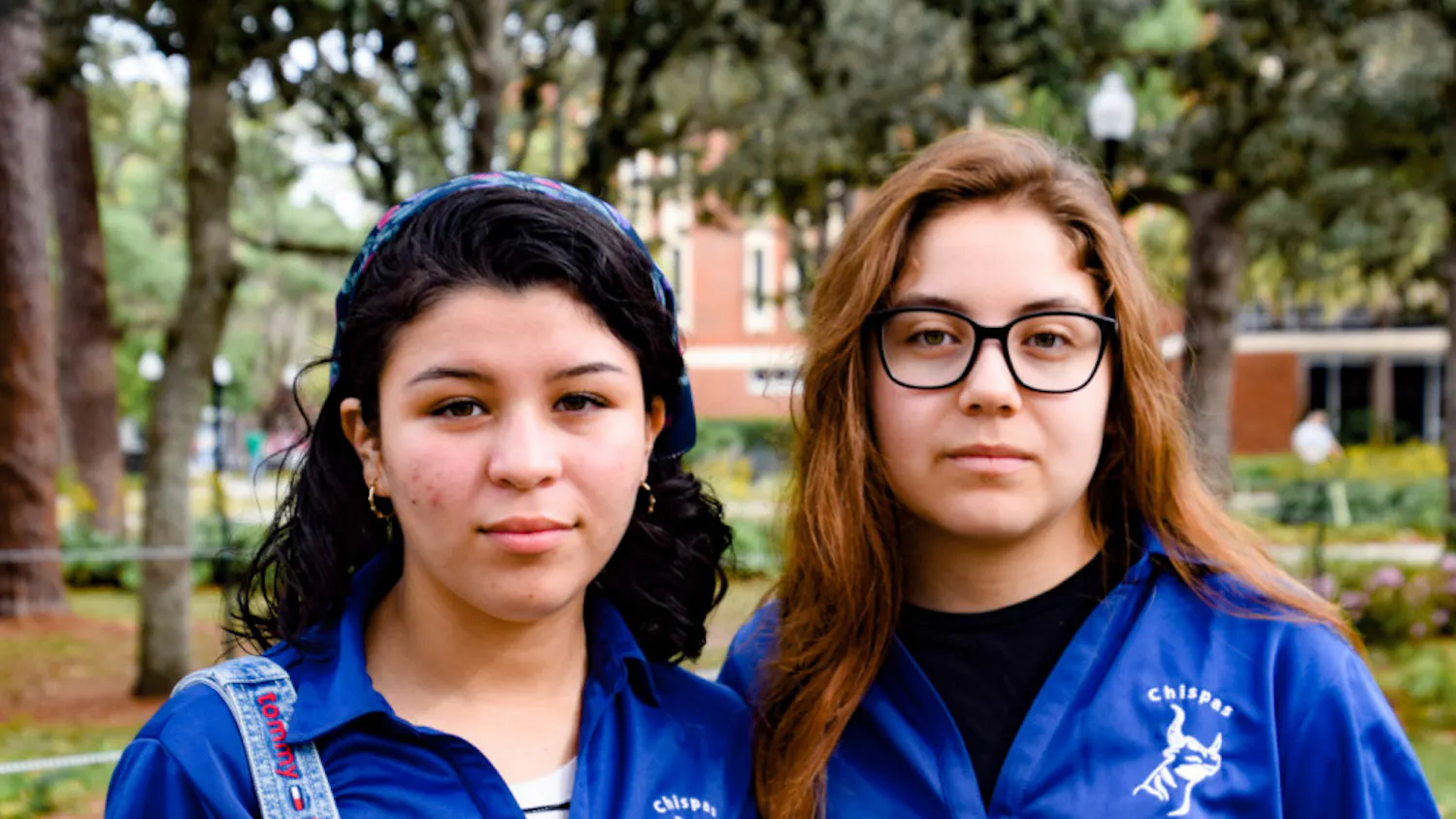


Madison Cannady graduated from UF with her bachelor’s degree in civil engineering and a master’s degree in water systems in fall 2025. She applied to jobs on LinkedIn, researched specialized careers in her field, attended career fairs and waited for replies from hiring managers that never came.
It took the 24-year-old UF alum months to find a job opportunity in her career field, despite graduating with her master’s degree.
Cannady’s experience reflects a broader reality for college graduates in 2026 who are entering a competitive job market where internships are harder to secure and essential in job applications and networking often plays a decisive role in hiring.
Unemployment among recent college graduates aged 22 to 27 lies around 5.6% in 2025-2026, reported the Federal Reserve Bank of New York. The national average of unemployment across all age groups is 4.2%.
In Alachua County, the unemployment rate was 5.4% in February, a small increase from last year.
Cannady got an internship with the U.S. Army Corps of Engineers during her master’s studies. However, she said she was unable to get a job with the Army Corps after her graduation due to a federal hiring freeze.
Freezes and budget cuts in the environmental field made the process particularly difficult, she said.
Despite applying for multiple jobs on LinkedIn, Cannady said she received no responses to most applications, and budget cuts in the environmental sector further narrowed available opportunities.
It was only after she attended a UF career fair that she was able to secure a job post-graduation. To Cannady, it’s just another sign the job market is getting harder to enter — especially for those without graduate degrees.
“I definitely think it’s gotten tougher within recent years,” she said, “It seems like people are saying the master’s degree is the new bachelor’s because everyone is so highly educated.”
A 2025 research report by The Burning Glass Institute said the job market has reached a point where, for the first time in modern history, a bachelor’s degree is no longer enough to secure a reliable job.
Cannady said she’s found herself in a strange limbo of experience level.
She applied to several internships after graduation, she said, and would receive calls from hiring managers asking why someone with a master’s degree would be applying for an internship.
However, many entry-level jobs required up to five years of experience, she added.
“I obviously can’t get that without getting the experience from somewhere,” Cannady said.
Internship experience is often the deciding factor when employers are deciding between two otherwise qualified candidates, according to the National Association of Colleges and Employers.
But last year’s internship postings tracked by Indeed, a job listing website, had shown the largest decrease in posted internship opportunities in the last five years.
While some grads have spent months applying to jobs and hoping they’ll stick, others have taken a different approach. Daniela Barrantes, for example, has decided to focus on networking and making connections.
Barrantes, a 22-year-old UF political science and international studies alum, said she was told by her mentors and internship hirers during her time at UF that work experiences would likely come from connections she made with people in the field.
At UF, Barrantes interned in D.C through UF’s Washington Internship Program. Through a friend she met there, she secured a post-graduation job, which she is set to begin in Miami mid-May.
“I applied for one, and I got one,” she said. “But it was really a matter of networking and knowing who I know.”
But Barrantes acknowledged the market can be a gamble. She said she has friends who applied for over 100 jobs and internships and never heard back or only received one offer.
“It’s very competitive,” she said. “You’re probably competing in an applicant pool of about 400 for a slot of maybe no more than 20.”
Career platform Handshake reported approximately 109 applications for each internship posting in 2025, a statistic that doubled the previous year’s figure.
During her senior year, Barrantes’ professors and internship employers often mentioned the difficulty of breaking into the current job market.
“It’s something that people who are 10 years older than us and went through the job market 10 years ago have told us or are telling us now, ‘I wouldn’t want to be in your position,’” she said, “I think that weighs heavier than what I could tell you.”
For international students studying in the U.S., the internship and job landscape looks a little different.
Only about one in four international students complete off-campus internships, compared to nearly half of domestic students, according to a report by Interstride. International students are also 30% less likely to get a job offer from an internship employer.
H-1B immigration hurdles may compound the existing pressures of the current job market for international students.
Yipin Wei, a 33-year-old UF alum who graduated with her master’s degree in education, said she recently resigned from her role as an instructional designer within UF’s College of Education.
Wei left her role due to Florida’s public university system issuing a temporary freeze on new H-1B hires through January 2027.
She said many employers have become more reluctant to hire international employees because of the recent increase of H-1B visa fees. However, the fees don’t apply to employees who were previously on an F-1 student visa.
“When I started looking for a job, I found out six out of 10 [employers] don’t provide sponsorship,” she said. “That made me feel really upset because two years ago when I started to find internships or full-time jobs, it wasn’t like that.”
Wei said the current internship market is just as difficult as the job market. She’s seen her friends apply on LinkedIn and attend UF career fairs but still not manage to find an internship experience.
“I feel like right now, finding a job as an international student or international employee, it’s been an uphill battle,” Wei said.
Contact Swasthi Maharaj at smaharaj@alligator.org. Follow her on X @s_maharaj1611
Swasthi Maharaj is a political science and politics, philosophy, economics and law (PPEL) junior at UF. This is Swasthi's fourth semester at The Alligator, and her third semester on the university desk. She's also reported on the enterprise desk. Swasthi loves coffee, reading, going to concerts, baking and taking long walks.