

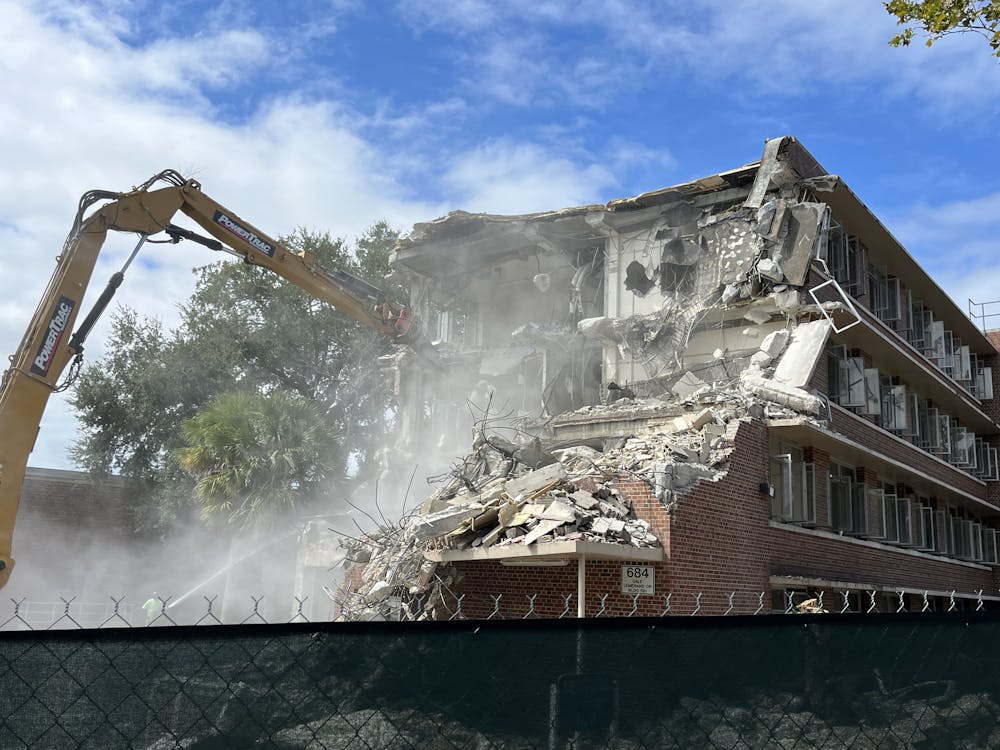
UF is moving forward with one of its largest residential construction projects in recent years: a new multi-phase student housing complex that would add approximately 2,200 beds to campus by 2029 and a new facility for the Disability Resource Center.
In an email statement to The Alligator, UF’s spokesperson Cynthia Roldán said the DRC serves more than 8,000 students annually and has seen a 350% increase in registered students seeking services over the past decade.
The university’s new DRC facility, which will occupy the ground floor of one of the buildings, is intended to address growing demand for disability accommodations and provide a more accessible, centralized location for students seeking support.
The center is currently located at Reid Hall, but accommodated testing services take place at Cypress Hall.
The DRC’s greatest need is accommodated testing, Roldán wrote.
The DRC facilitates an average of 100 to 150 exams a day and more than 250 during peak exam times. During fiscal year 2024, the center administered more than 18,000 accommodated exams — 4,000 more than the previous year.
“An expanded facility would allow the DRC to meet the ever-expanding needs of students with disabilities,” Roldán wrote.
Sierra Carter, a 29-year-old UF alumna who graduated in 2018, said the project’s focus on expanding accessibility services make it a worthwhile investment.
Carter’s best friend has a traumatic brain injury after a car accident, she said, so she believes in expanding UF’s accessibility services for people who need them.
“I’m definitely a big advocate for accessibility,” Carter said, “and student housing that allows people with injuries and disabilities to have access to affordable housing.”
The project will also replace the 622 beds formerly housed in Graham, Simpson and Trusler Halls, which were demolished last year. Four new buildings will total an estimated 679,000 square feet.
To Carter, whose parents also studied at UF and both lived at Graham Hall, her initial reaction to hearing of the building’s demolition and planned replacement was sadness.
However, after learning more about the project, Carter said she understood the need to replace aging facilities while adding new housing.
“I think the more housing they have, the more affordable it’ll be for freshmen to live on campus,” she said.
Carter lived at Lakeside Residential Complex during her first two years at UF, she said, and she believes the on-campus living experience is important, especially for first-year students. She hopes the additional housing capacity will allow more students to experience living on campus, she added.
At a June 11 Board of Trustees meeting, Vice President of Student Life Heather White said she believes the housing project, which is now underway after the demolition of the Graham area, will be an important addition to UF’s campus.
“This will really change the landscape of the institution when the housing master plan is done,” White said.
The project consists of four eight- to nine-story residence halls designed primarily for first-year students with a mix of single- and double-occupancy rooms, community spaces and a grab-and-go dining area. The housing project is estimated to cost $443 million.
Ethan Wu, a 20-year-old chemical engineering junior and a member of UF’s Inter-Residence Hall Association, said renovating and rebuilding older dorms is ultimately beneficial for students.
Wu said expanding on-campus housing is especially important because many students rely on university housing as a more affordable alternative to off-campus options.
He also believes living on campus is an integral part of the college experience, he said. After living on campus during his first year, Wu said residential life helped him build lasting relationships and adjust to college.
“It helped me make connections with a lot of people that I still hang out with today and overall just get a sense of life in college, especially for the first year,” he said.
The project has received approval from both the Board of Trustees and the Board of Governors.
A university study done between 2023 and 2024 found more than 70% of first-year students live on campus, although UF has no “live-on-campus” requirement for freshmen.
However, UF’s general housing assignment policy prioritizes returning students for building and room selection, limiting the number of first-year students who can access on-campus housing. UF data states the university has a persistent annual waitlist of over 1,000 students seeking on-campus housing.
By building about 2,200 beds designed for first-year students, UF Board of Trustees documents say this project aims to increase residential capacity while expanding access to on-campus housing and disability services as student demand continues to grow.
Contact Swasthi Maharaj at smaharaj@alligator.org. Follow her on X @s_maharaj1611.

Swasthi Maharaj is a political science and politics, philosophy, economics and law (PPEL) junior at UF. This is Swasthi's fourth semester at The Alligator, and her third semester on the university desk. She's also reported on the enterprise desk. Swasthi loves coffee, reading, going to concerts, baking and taking long walks.