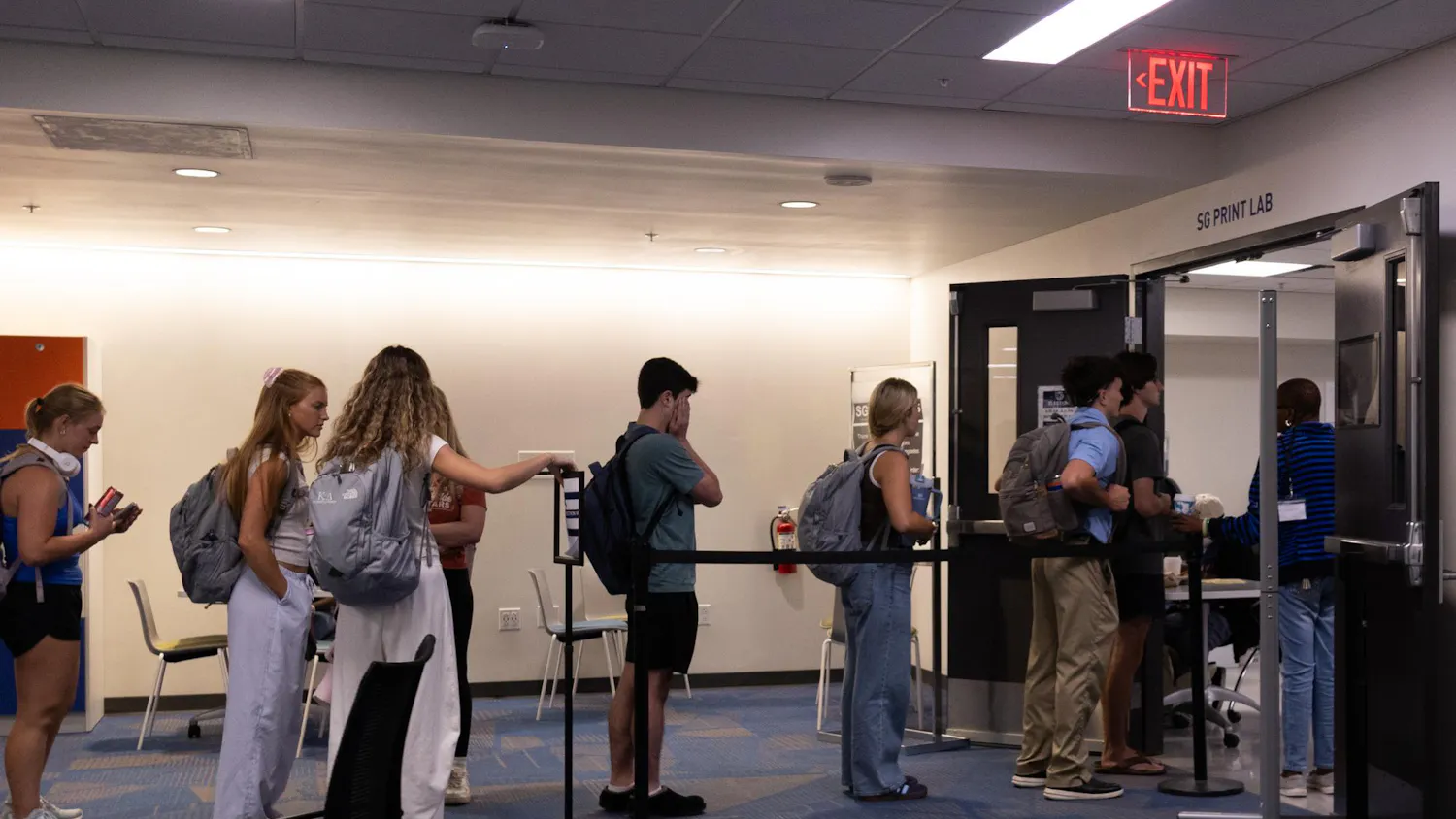


After an Aug. 7 notice changed the disbursement process at the college, Santa Fe College students are receiving reduced loans tied to their enrollment status.
The notice named the federal loan reductions contingent with part-time enrollment as the cause of the change. The One Big Beautiful Act now requires aid to be calculated based on enrollment intensity, especially for the Pell Grant, according to the announcement. The Pell Grant, which previously looked into a student's general amount of credit hours, now looks at the precise amount a student takes through college reports on enrollment information. While students previously had a six-credit-hour minimum, loans weren’t reduced because of part-time status.
The announcement included a data table showing how the number of credit hours a student takes affects student loan eligibility. For each credit hour below 12 credit hours, a student will receive 8- to 9% less funding from their full allotment. For example, if a student has an accepted loan amount of $1,500 and is only taking nine credits, their loan will reduce to $1,125.
Lucas Collada, a 20-year-old journalism junior at Santa Fe, said he believes the change was sudden, and it will have a lasting impact on students — especially those who rely on loans.
“From what I've heard from other people, it was affecting them,” he said.
Collada said he pays tuition through a scholarship and has worked to save money for textbooks and extra expenses that may arise during his college career. Though not personally impacted by the new provision, Collada expressed curiosity for its reasoning.
"It's a little odd to me,” he said.
Collada said he wishes he understood the knowledge behind the implications of the law changes.
What does this mean for students?
This isn’t the first time Santa Fe students have been left confused by financial aid. Students have raised similar concerns in recent years regarding delayed aid disbursements and inconsistent communication when attempting to contact the financial aid office. Previous delays were caused by FAFSA processing issues affecting the disbursement of aid and grants. In 2024, students reported waiting anywhere from a few weeks to a few months to receive refunds from grants or scholarships like Bright Futures.
Other universities like UF and the University of Central Florida faced the same issues, resulting in extended enrollment deadlines until students received their payments.
Kylee Hunt, an 18-year-old animal science Santa Fe freshman, said students should research the possible effects to determine whether they will be impacted.
”Depending on the student's financial situation, an increase or decrease in loans could affect their overall payment,” Hunt said.
How is Santa Fe responding?
Lisa Bronsky, Santa Fe’s associate vice president of marketing and communications, said the school encourages students affected by the new provision to apply for Santa Fe’s available scholarships. Santa Fe’s announcement recommended the same thing.
While Santa Fe has outlined how student loans will be disbursed based on enrollment levels, the actual effect on students remains unclear, she said.
“At this point in the semester, it’s difficult to know how many students might be affected,” Bronsky said.
Contact Lilyanna Collado at lcollado@alligator.org. Follow her on X @lilyannacollado.
Lilyanna Collado is a junior journalism student and this is her first semester at The Alligator! This semester she is the Santa Fe reporter. When she's not writing she either reading, going to theme parks and spending time with her four dogs.