
Under a new Florida ruling, undocumented students will lose access to 28 state colleges.
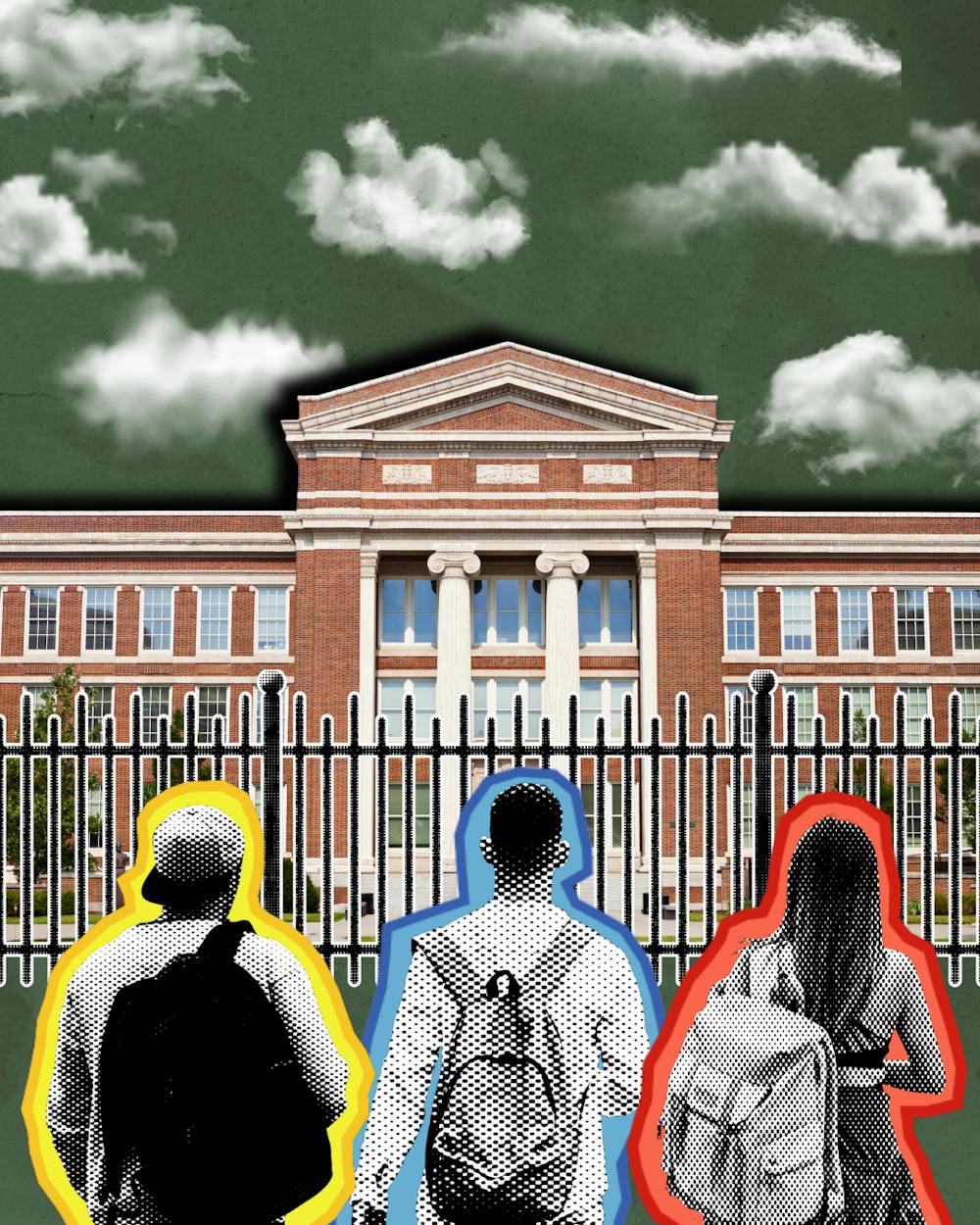
On June 30, the Florida State Board of Education ruled public colleges must verify an incoming student's immigration status prior to admission. The same will apply to Florida’s general education programs like second language classes or GED preparation courses. It does not impact Florida’s 12 public universities, such as UF.
Previously, state college admission primarily required a standard high school or GED diploma and transcripts. Now, students will be required to show evidence of their documentation status to be offered admission into the state's higher education system and GED programs, marking a big hit for undocumented students pursuing higher education in the state.
Roughly 50,000 undocumented immigrants participate in Florida’s higher education system, with around 8,000 undocumented students graduating from high school annually.
This isn’t the board’s first ruling restricting undocumented students’ access to education. Last year, the board ruled undocumented students could no longer receive in-state tuition, eliminating a 2014 bill signed by then-Florida Gov. Rick Scott, which provided undocumented students access to in-state tuition. Out-of-state tuition and fees at UF and Santa Fe College are consistently at least triple the price of in-state costs.
In-state tuition promised by the 2014 bill was a relief for many undocumented students who lacked work authorization and were unable to access federal financial aid.
Following the June 30 decision, Florida joins Georgia, South Carolina and Alabama in limiting undocumented students’ access to higher education.
The move could have a significant impact in the state, which was home to 1.6 million undocumented immigrants in 2023.
Kathy Hebda, the chancellor of the Florida College System, said the ruling adds new requirements for associate degree programs and addresses career certificate programs.
"This includes a procedure for students to provide an attestation of their status prior to admission and to provide documentation of such prior to enrolling in the institution,” Hebda said.
In Alachua County, the ruling could impact Santa Fe, which hosted roughly 900 foreign-born students and over 3,000 Hispanic students in the 2024-25 academic year. It is unclear how many students are undocumented.
Santa Fe currently encourages undocumented students to apply as international applicants, and if admitted, they are classified as international students. The college also outlines methods for undocumented and Deferred Action for Childhood Arrivals students to apply for in-state tuition waivers and state or college financial aid.
DACA refers to an immigration policy that protects eligible undocumented immigrants brought to the United States as children from deportation.
According to the Florida Policy Institute, Santa Fe could lose over $277,000 in tuition under this ruling. Total losses across all 28 state colleges could surpass $15 million.
Santa Fe officials were unavailable for comment after several phone call and email requests.
For Lairalee Ramos, a UF student and president of Chispas, a student organization focused on immigrant rights and advocacy, the changes represent a concerning trend in higher education.
Chispas hosts several events in support of immigrants around the community, Ramos said, such as volunteering at citizenship classes hosted by the Latina Women’s League and creating community IDs for immigrants who may not be able to obtain an official ID.
Ramos said the role of educational institutions shouldn’t be to serve as immigration enforcement. She’s been disheartened to see individuals unable to pursue an education in the state, she said.
“We’re losing out on students who are really motivated, regardless of their status, who deserve an education,” Ramos said. “It’s just pushing people out of Florida if they want to get an education.”
Ramos hopes public institutions continue to maintain opportunities for students regardless of their immigration status, she added.
In Alachua County, nearly 15,000 of the county’s roughly 285,000 residents currently lack citizenship.
According to Jackie Johnson, the spokesperson for Alachua County Public Schools, the county does not request immigration status from its students. It’s unclear how many K-12 students in the district will be impacted by the recent ruling.
ACPS offers immigrant family services and English for Speakers of Other Languages programs to support immigrant students.
Alexis Vivanco, the press secretary for UF’s Hispanic Student Association, which often contains members who attend Santa Fe with intentions to transfer to UF, said he hopes HSA can serve as a beacon to Hispanics and Latinos across the Gainesville community.
Roughly 76% of undocumented United States residents are of Hispanic origin.
“We’re not discouraged by the challenges that have been circulating in the last few years,” Vivanco said. “We’ve been through hard times. We’ll continue to persevere and work past them.”
He encourages students to continue getting involved in activism to make their voices heard on immigration issues, he said.
The ruling will take effect in the 2027-28 academic year.
Contact Logan McBride at lmcbride@alligator.org. Follow him on X @logandmcbride.

Logan is a senior journalism student and the Alligator's Fall 2026 Enterprise Politics reporter. He previously served as a reporter on the Alligator's Metro Desk, covering K-12 Education and the City/County Commissions. In his free time, he enjoys watching sports, movies, or spending time with his cat and girlfriend.