
Gainesville Mayor Harvey Ward set a goal of conserving an additional 1,000 acres of land before he leaves office in 2031.
Ward said he and his colleagues are always looking for new land to conserve. The city has acquired nearly 2,000 acres over the past nine years, but finding another 1,000 could prove challenging as Gainesville simultaneously tries to address housing shortages.
Ward wants Gainesville to add 1,000 new affordable homes during the same period.
About one in four Gainesville households are severely cost burdened, meaning they spend more than half of their income on housing, according to data from the UF Shimberg Center for Housing Studies.
Ward hopes to relieve that burden by adding more affordable units to the local housing market.
Gainesville’s most recent affordable housing development inched toward completion Jan. 15 when the city commission approved $1.4 million in contributions for new affordable housing units in the Heartwood community.
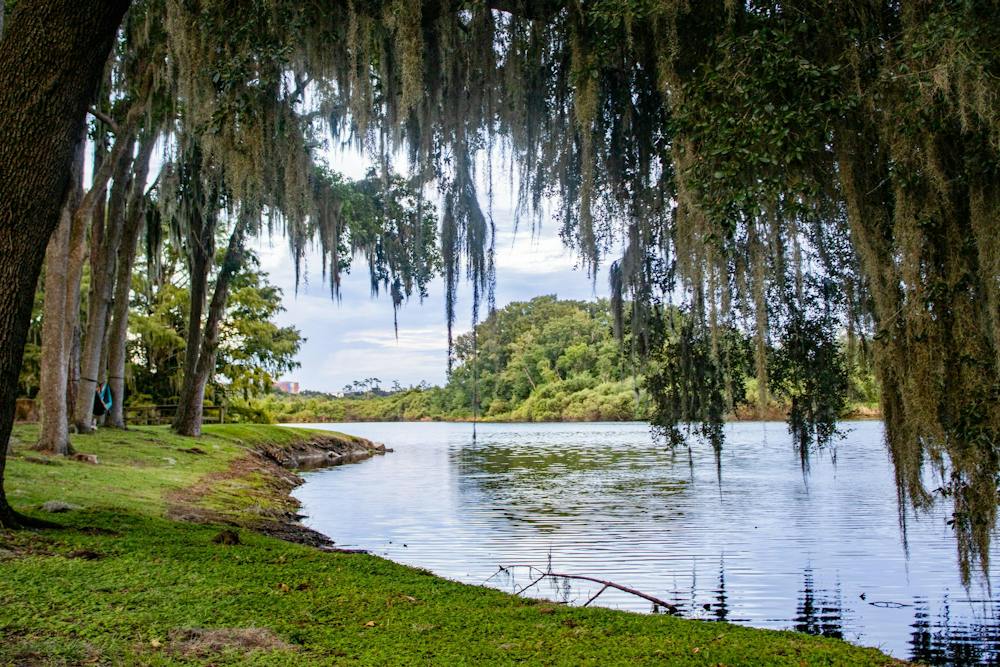
Urban developments like these housing units make smaller pockets of land easier targets for conservation than large swaths. So, the city is targeting pieces of land in and near the city’s creek system, where smaller parcels remain available, Ward said.
He wants to complete the Hogtown Creek greenway, which has been a long-standing community proposal, before leaving office, he added.
Beyond providing opportunities for recreation, transportation and physical activity, acquiring properties along creeks — many of which are privately owned — would allow the city to improve stormwater systems and reduce flooding.
“It’s a long-term vision for resiliency, but it’s something that we can actively work on,” Ward said.
The money to purchase the additional 1,000 acres would come from funds generated through Gainesville’s tree ordinance, he added, which requires property owners in certain circumstances to pay fees before removing regulated trees.
Conserved green spaces along Gainesville’s creeks can also protect city infrastructure by reducing erosion and absorbing stormwater. Native vegetation helps stabilize soil and slow runoff.
Hickory Sink land acquisition
In June, UF’s School of Forest, Fisheries and Geomatics Sciences assumed management of Hickory Sink, a 2,600-acre forested property four miles west of I-75.
The property has been historically used for timber harvesting, cattle grazing, quail hunting and wildlife observation.
UF purchased the property to provide more space for research and education, which will help public agencies manage, protect and restore important land, said Cully Lord, Hickory Sink’s land manager.
Hickory Sink more than doubled the amount of forestland managed by the school, joining the Austin Cary Forest, a 2,000-acre research property northeast of Gainesville.
An opportunity to use the land for research came Thursday, when invasive Australian Beardgrass was found on the property. The invasive plant was originally identified in Alachua County in the 1970s and can grow nearly 5 feet tall.
Giving students, researchers and community members opportunities to learn more about invasive vegetation, which often outcompetes native plants, is part of why actively managed conserved land is so important, Lord said.
Since becoming Hickory Sink’s first land manager in June, Lord said he and his team have been busy lighting prescribed burns, treating invasive plant growth and organizing community engagement activities.
The benefits of conserved land in Gainesville extend beyond flood protection and research, Lord said.
How people benefit from conserved land
“People go to green spaces to decompress,” Lord said. “They go to reconnect.”
Spending time in green spaces has been shown to strengthen social connections and lower rates of anxiety and depression, according to the U.S. Environmental Protection Agency. Green infrastructure can also improve air quality and reduce noise pollution in urban areas.
Lord said he saw the value of land conservation every day while working with the city of Gainesville and saw residents take advantage of the green spaces around town. A report by the National Recreation and Park Association found that local parks in Florida generated over $15 billion in economic activity in 2021.
“God, it’s immeasurable,” city commissioner Bryan Eastman said of the benefits green spaces provide to Gainesville residents.
The city is integrated into the nature of the Gainesville community and residents love the great tree canopies, creeks, parks and trails, he added.
Some of Gainesville’s largest and most popular green spaces include Newnans Lake, Morningside Nature Center, Paynes Prairie, Alfred A. Ring Park, Lake Alice, Sugarfoot Prairie, Sweetwater Preserve and Split Rock.
“Very rarely do you have cities that you can ride your bike and see the wetlands of Paynes Prairie and the trails of Alfred A. Ring Park,” Eastman said. “If you ask anyone in Gainesville what it is they love about the city, those are the two big things.”
Eastman said the commission wants to make sure Gainesville’s urban growth doesn’t come at the cost of beloved trails and parks. But balancing development with conservation can create friction between the city and developers.
The Weyerhaeuser Company’s 2017 zoning proposal was an example of when growth and conservation can be at odds, Eastman added. Initial proposals would’ve added over 7,000 homes to a 1,778 acre property in northwest Gainesville.
After roughly six years of revisions, rejections and tabled proposals between the city and company, the city ultimately approved the development in 2023.
The revised proposal requires the development protect the Murphee Wellfiend, Rocky Creek, Hatchett Creek and Turkey Creek; permanently conserve a swath of over 1,000 acres; ensure stormwater management mimics natural water flow and protects water quality; and keep at least 5% of units permanent affordable housing.
Contact Christian Haas at chaas@alligator.org. Follow him on X @ChristianH58745
Christian is an environmental reporter with The Alligator, and studies journalism at the University of Florida. He is a fourth-year student who prefers to spend his free time trying new and random things, cooking, reading, watching TV, or hiking.