

Student-athletes spend years striving to excel in their sport, dedicating hours to practices, conditioning and competition. But for many, one question looms over their head: What comes after sports?
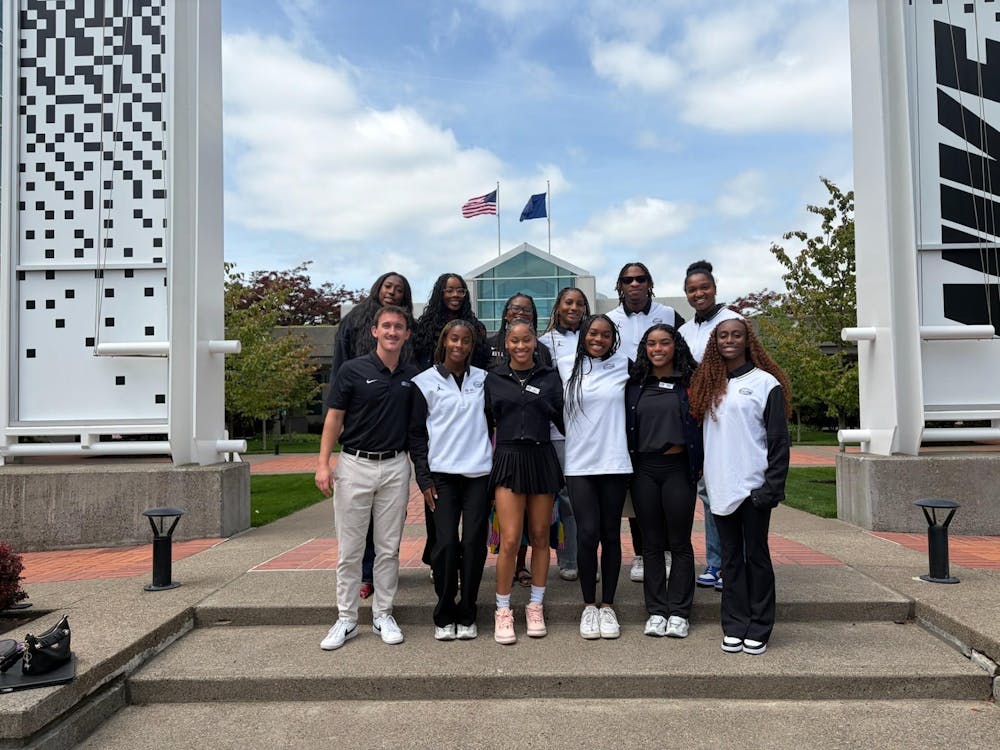
University of Florida students attended this year’s Black Student-Athlete Summit, exploring possible answers to that question. From May 20-23, students across the nation gathered at the University of Oregon for the annual conference.
The event, founded in 2015, reprises every summer, giving students the chance to attend workshops, bond with athletes from different schools, hear from former athletes and network.
For some students at the University of Florida, this program is not unfamiliar. This year marked several UF athletes’ return to the conference, including sophomore Florida gymnast Jayla Booker.
For Booker, the event was more than just an opportunity to travel across the country. She was given the chance to explore her passions and feel more confident in her future.
Booker’s passions include gymnastics, but go far beyond that. Diagnosed with epilepsy, Booker explored careers that will allow her to use her voice: writing a book, speaking on a podcast or sharing her story at events.
The 19-year-old gymnast faces a choice that many teenagers and young adults struggle with. She is uncertain of her future path, but walks away from the summit feeling more prepared for life after college.
She said the second class she attended, titled “I Don’t Know What I Want to Do Yet,” reinforced the idea that many truly do not figure out their career paths until their 20s.
“That really made me feel a little bit calmer because I feel like, okay, I finished my freshman year, now I'm going into my sophomore year, and I still don't know what I want to do,” Booker said.
The summit allowed students to not only grow professionally, but also socially. Booker said she does not describe herself as a social butterfly, but felt an instant connection with those around her at the BSAS.
“When I first got there, I feel like I clicked with everyone because we’re all Black,” Booker said. “We all understand how we kind of had to fight sometimes, how it wasn’t the same with us.”
Booker said she plans to continue attending the annual BSAS until she graduates. She said in future conferences, she wants to learn to continue using her voice to speak up for herself and others.
The gymnast is not the only one who walked away with a sense of peace surrounding the future. Several said the event better equipped them for life beyond competition.
Redshirt senior goalkeeper Jayden Emmanuel was also at this year’s BSAS, making it her third time in attendance.
While the soccer player said the workshops have remained similar over the years, her mentality has evolved. Now, in her final year of university, she said her mind is focused on life after sports.
A materials science and engineering student, Emmanuel said she knew what she wanted her future to look like before attending this year’s conference, with her sights set on designing her own sporting apparel and goalkeeper gloves.
Attending the conference gave her the chance to network and build relationships with athletes who once stood in her shoes.
The day before the summit, University of Florida athletes were given the opportunity to tour the Nike headquarters in Washington County, Oregon, before flying to Portland for the BSAS.
“That, for me, was actually a really good experience, because then I was able to meet people and make connections,” Emmanuel said.
Additionally, she said the conference allowed students to hear the stories of athletes who faced various challenges and provided students with comfort in the thought of life after sports.
“At any split second, your athletic career could end,” Emmanuel said. “You could have a career-ending injury, so you also have to know, ‘what things can you do outside of your sport?’”
The preparation for a possible career-ending experience is something athletes continue to keep in mind. Emmanuel said her decision to attend the University of Florida was influenced by the possibility of an injury or anything that stopped her from being able to play sports. Outside of athletics, she said when deciding on a college, she considered the campus, student life and its ability to build her as a human being.
Student athletes are not defined by their sports – a lesson reiterated throughout this year’s BSAS. Workshops honed in on the challenges athletes face when their time in athletics comes to an end and how to combat them.
Redshirt senior Amaya Thomas plays as a middle blocker for UF volleyball. She attended the conference once before, the summer after her freshman year. Three years later, she returned to the summit.
“It shaped the way that I don't think of myself as just a student-athlete; I'm so much more than that,” Thomas said. “It also led me to realize the platform that I have as a student-athlete, and being able to kind of utilize that as a way to push for certain things that I believe we should have on campus, networking as a way to make the University of Florida better for not just Black student-athletes, but Black students and students in general.”
Thomas graduated in the Spring with a bachelor's degree in biomedical engineering, and said she hopes to work toward her Ph.D. after her eligibility expires.
She also said lessons she took away from the summits shifted her view of herself as a student-athlete and gave her a better understanding that she was not alone.
Many students shared similar experiences.
Thomas’ teammate Aniya Madkin attended the conference this year as well. The redshirt junior outside hitter also went to the 2024 conference held in California and said in comparison to that conference, this year’s was tailored more toward thinking about the future.
Madkin hopes to pursue her master’s degree, but said she still has a foggy picture of what her future will actually look like.
“I got a lot of different feedback from a lot of professionals, and I’m still trying to figure out what I'm going to do, but I have a lot more insight into what that would look like,” Madkin said.
Nonetheless, college athletics brought students from around the nation and from different backgrounds to the BSAS, with shared interests and experiences unifying them.
Students left the summit equipped with tools and perspectives to carry beyond the event and their final seasons as athletes.
“I could see any walk of life, Black or not, that could benefit from something like this,” Madkin said.
Contact Nicole Scura at nscura@alligator.org. Follow her on X @NicoleScuraa.

Nicole Scura is a junior journalism student in her third semester at The Alligator. She is currently a volleyball beat reporter and previously served as hockey beat and enterprise reporters. In her free time she enjoys figure skating, traveling and watching football (Go Bucs!).


