
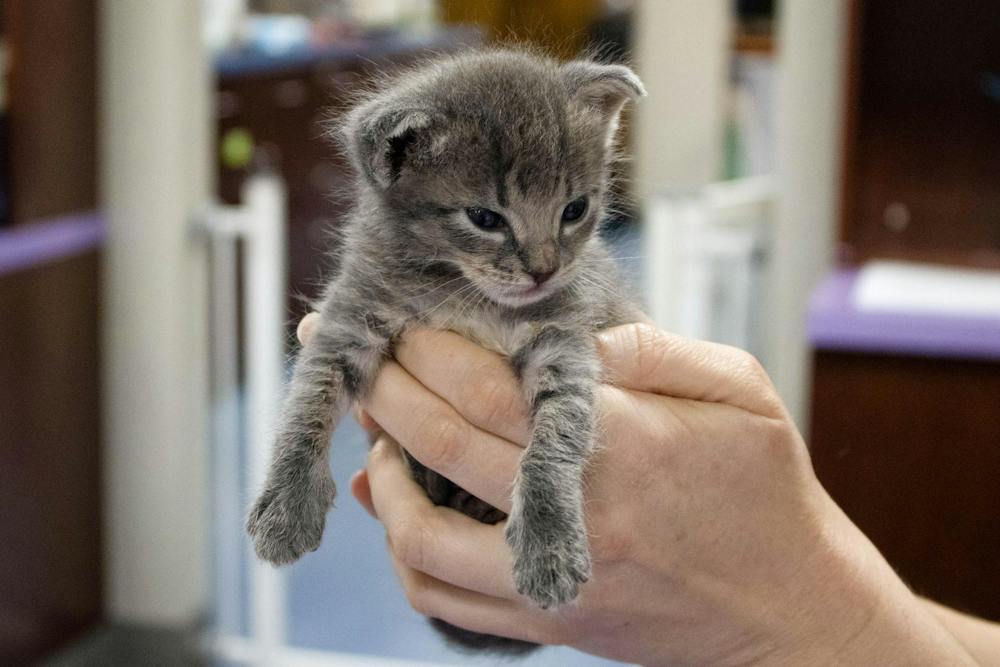
Robin Tjiong has been rescuing animals for 12 years. As the owner of private animal rescue House of the Happy Cats and Dogs, Tjiong’s phone rings 10 to 20 times a day with requests to take in more cats.
With only a couple of volunteers to help her, she said the rescue is struggling to get animals into forever homes. As animal rescues continue to battle the stream of requests to take in animals, with 5.8 million dogs arriving to shelters across the United States last year, Tjiong’s experience isn’t a unique one.
“I'm wearing out, getting tired,” she said.
Rising pet care costs are among the pressures contributing to shelter overcrowding. Average costs for veterinary visits have risen by nearly a third since 2020, and unaffordable care can lead some owners to surrender their pets.
The Humane Society of North Central Florida is also facing those pressures, even as it celebrates a yearly milestone. The organization announced on Instagram it reached its 1,000th adoption of the year Sept. 26.
Although the milestone is an annual goal for the shelter, director Franziska Raeber said staff still celebrated the achievement.
“It was extra special this year,” she said.
Part of the 1,000 adoptees were dogs that had spent years at the shelter, she said.
But hundreds of animals remain in its care, Raeber said. Fostering and volunteering helps shelters maintain these animals and keep up with their individual needs.
The humane society sees about 100 animals adopted each month, she said, and medium to large dogs tend to be in its care for longer than smaller animals.
Overcrowded shelters can harm animals’ well-being, Raeber said, because constant stimulation can cause stress and behavioral changes.
“Their emotional needs are not being met,” she said.
Placing animals into foster homes where they receive more individualized attention can help reduce that stress. Increasing foster placements is one of the shelter’s priorities, she said.
The humane society operates under a managed-intake system, accepting animals based on available space. Other shelters, such as Alachua County Animal Resources, don’t have the same flexibility to limit intake.
ACAR is a municipal shelter that takes in any and all animals brought in.
Having a veterinarian provider also makes it a prime space to house animals, especially those that need emergency care.
When too many animals are concentrated in one space, one is bound to be incubating a kind of illness that is contagious, according to Dianne Sauve, ACAR’s interim director.
The county-run shelter announced a temporary closure Thursday, saying it will deny new animal intakes because of a pneumonia outbreak among animals in the overcrowded shelter. One dog has died from the infection, and the rest of the animals are now on antibiotics to get ahead of the spread.
The shelter is now asking residents to help slow the spread by fostering animals and keeping healthy strays instead of turning them in.
ACAR has been struggling for months with getting animals out faster than it is taking them in, Sauve said.
At an Alachua County Commission meeting in January, ACAR said it brought in nearly 3,000 intakes in 2025 and had under 2,000 adoptions.
Even with about 200 animals in foster homes, Sauve said, ACAR is struggling to keep up with the overcrowding, and many have immediate medical needs such as puppies infected with parvo or other viruses. It is harder to take in animals in need of special treatment when the shelter is already drowning in intakes, Suave said.
The shelter doesn’t have the capacity for more than 90 dogs and 70 cats at a time, she said, but it currently holds roughly 120 of each.
Overcrowding can introduce chronic stress and behavioral deterioration to the animals adding concerns to their welfare when in over capacitated shelters
“[The dogs’] emotional status is declining in the shelter to the point that it's no longer humane to keep dogs like that in a shelter,” she said.
Contact Lilyanna Collado at lcollado@alligator.org. Follow her on X at @lilyannacollado.
Lilyanna Collado is a junior journalism student and this is her first semester at The Alligator! This semester she is the Santa Fe reporter. When she's not writing she either reading, going to theme parks and spending time with her four dogs.