

The voices of students outside the entrance of the New College of Florida cried “racist, sexist, anti-gay Ron DeSantis go away,” as Gov. Ron DeSantis arrived to sign papers to approve of the removal of diversity, education and inclusion programs.
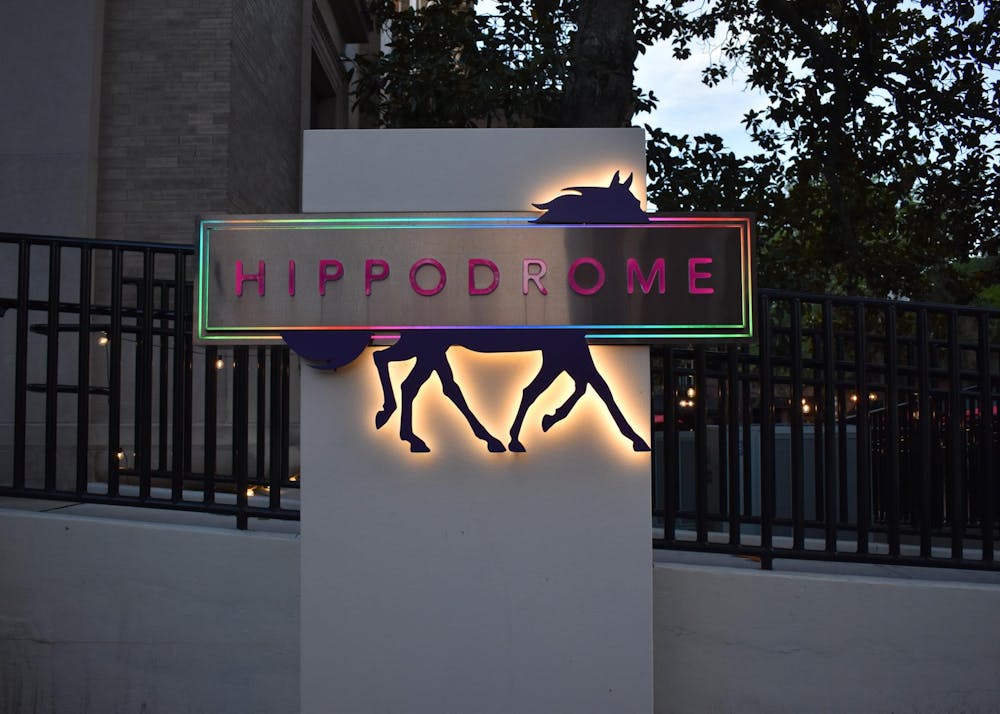
The scene is captured in “First They Came for My College,” a film that began its theatrical run Sept. 17 at the Hippodrome Theatre, where it showed until Sept. 26. It aims to teach the general public about the “hostile takeover” of New College of Florida after DeSantis’ 2023 Florida Board of Governors appointments.
Patrick Bresnan, who directed the film, said it’s meant to document how professors, students and the institution were impacted by the new trustees. Filmmakers collected 300 hours of footage, he said, which were compiled into just under two hours that showed how students found joy under challenging circumstances.
After the appointments, Bresnan said, New College’s campus was a “war zone.”
“The goal of this film is that people see it, and they become activated to what’s happening at their own universities,” he said.
Students were vital to the process, he said. Steven Walker, who led news coverage of New College’s DeSantis-led transformation in his reporting for the Sarasota Herald, was a “real inspiration” for the film because he helped tell the stories of people impacted by the new policies.
“I really saw the students as my colleagues working on this project,” said Bresnan.
Before DeSantis stepped in, New College of Florida was known for its progressive policies, DEI efforts and LGBTQ+ identifying students. But after the governor’s appointments and subsequent ban of DEI funding, the school’s retention rates fell from nearly 80% in 2022 to 65% in 2023.
Other controversial moves followed, including the removal of the gender studies program and campus police’s adoption of the 287(g) agreements, which allow officers to act as U.S. Immigration and Customs Enforcement agents.
Students didn’t remain silent. They protested by creating signs and chants, ultimately grabbing the attention of filmmakers like Harry William Hanbury, a New College alumnus who produced the film.
Hanbury came to New College as a conservative student from a Catholic all-boys military high school. But during his time at New College, he gained the courage to come out as LGBTQ+.
“I felt like New College saved me from living a lie because it was such a welcoming place to come out,” Hanbury said.
But when the DeSantis administration started implementing changes, Hansbury said he felt personally attacked and inspired to take action.
“Far-right education reformers in states are trying to erase LGBTQ people,” he said.
The title was inspired by a poem titled “First They Came,” he added, which is inscribed in the U.S. Holocaust Memorial Museum by Pastor Martin Niemoller. Centered on the consequences of staying silent in the face of persecution, the poem describes the gradual takeover of social groups, and eventually the speaker, because they didn’t speak out.
Hansbury similarly likened the Nazi’s book burnings with the thousands of library books thrown away at New College, saying the changes made under DeSantis are reminiscent of 20th-century Germany.
“It’s just outright state censorship,” he said.
Hansbury described the changes made to the school as “a disaster unfolding before my eyes,” he said, which sparked his conviction to share student voices.
“I think every American should see this film,” he said.
Audiences react
Viewers at the Hippodrome in Gainesville felt strongly about New College’s changes, too.
Martha Kern, who attended the Sept. 26 showing, said the book removal felt “intentional and appalling.”
Kern’s sister works in higher education, and she felt the need to see it because the film revolved around college students. Seeing UF enact state mandates, including the removal of DEI funding, encouraged her to learn more about educational freedom and rights, she said.
“I’d love to see what happened to those students that were so deeply affected by this,” she said. “Have they taken this experience with them? And where are they now?”
The film’s ending echoed her complaints as students’ boos overtook the voice of Joe Ricketts, an American businessman, as he took the stage. Students were made further uncomfortable when Ricketts encouraged his audience to find a spouse who will support their post-graduate adventures.
Ricketts’ speech was cut off by student jeers that pressured him offstage.
“[This] billionaire addressing our student body feels like salt in a wound,” said Gabby Batista, a former New College student and protest leader, in the film. “Despite all of that, we’re going to celebrate our accomplishments.”
Contact Alana Nguyen at anguyen@alligator.org. Follow her on X at @Alana_Nguyen12.

Alana Nguyen is a first-year journalism major at the University of Florida. She is a General Assignment writer for The Alligator. When she's not writing, she enjoys running and reading travel magazines.