

The Florida Fish and Wildlife Conservation Commission held a public meeting Thursday that drew about 75 community members to the Sun Retreats Ocala Orange Lake’s recreation hall in Citra.
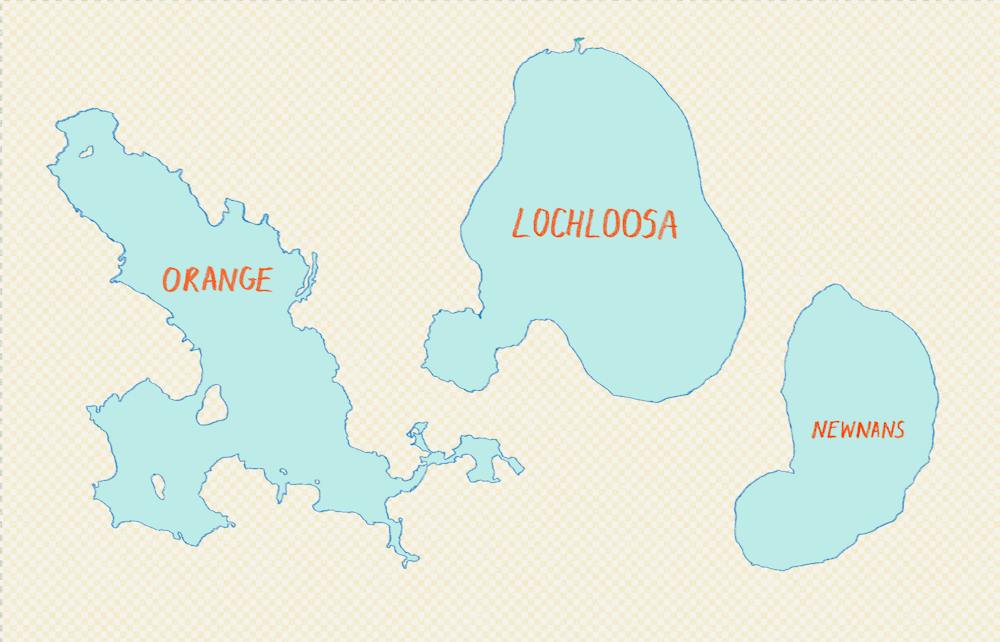
A joint presentation by the FWC and Florida Department of Environmental Protection provided updates on the conditions, habitat management and wildlife of Orange, Lochloosa and Newnans lakes.
Water level and invasive plants
Steve Beck, an FWC freshwater fisheries biologist, presented updates on wildlife and habitat conditions within the three lakes, which have seen many changes because of prolonged drought.
Boaters have had issues accessing Orange Lake, particularly its southwest region, because of hydrilla growth, he said. Hydrilla, an invasive aquatic plant that can grow up to an inch per day, depletes dissolved oxygen levels in water and produces bird-killing neurotoxins.
About 80% of Orange Lake’s surface was covered by hydrilla as of last month, according to FWC data. In 2019, just 19% of the surface was covered.
Water management scientists aim to keep Orange Lake’s hydrilla coverage below 58%, Beck said.
Severe drought and low water levels have exacerbated the hydrilla’s growth, he said. The Orange Creek Basin, which encompasses Orange, Newnans and Lochloosa lakes, is experiencing its lowest water levels in over a decade, according to the FWC.
Droughts are known to cause algal blooms, Beck said, because water nutrients become highly concentrated.
If blooms die off too quickly, oxygen levels plummet, according to FWC, which can kill fish. A major fish kill occurred in Newnans Lake in August, and two minor fish kills occurred from June to August in Orange Lake.
While drought conditions can produce stressful conditions for wildlife and vegetation, other organisms have adapted to dry stints, Beck said. Droughts expose lake bottoms, reducing muck and bolstering plant growth.
Natural water level fluctuations improve lake health and biodiversity, according to a written slide in Beck’s presentation.
As of Tuesday, the entirety of Alachua County remains under abnormally dry conditions. But for the first time since Jan. 27, severe drought conditions have subsided, according to the U.S. Drought Monitor.
In August 2024, the FWC installed temporary buoys in Orange Lake’s southwest region to control boat traffic and create a path through hydrilla patches, allowing boaters to navigate the lake without the need for herbicides.
“It’s cheap, it’s easy,” Beck said. “A lot of folks don’t realize we’re trying methods besides herbicides.”
Eric Cassels, the owner of Cassels Mobile Bait, alleged the corridor’s opening took more than boaters to form, though.
“They did bring a harvester through there,” Cassels said, interrupting Beck.
Beck denied Cassels’ claim and continued his presentation. About 8%, or 34 acres, of Lochloosa Lake’s shoreline was treated for hydrilla on April 22.
“The whole purpose was to knock back the hydrilla and let the eelgrass expand,” Beck said.
The herbicide’s active ingredient is combined with pellets released into targeted areas, he said. The pellets dissolve after about one day, while the ingredient stays active for up to 10 days and treats weed growth for three to five weeks.
The treatment successfully declined hydrilla coverage, Beck said, but eelgrass hasn’t grown back as fast as desired.
“Things visually don’t look great right now, but it’s things that are expected when there’s a drought,” Allen Martin, the FWC’s north-central regional fisheries administrator, said.
Meeting interruptions
Just over halfway through the meeting, Martin was answering a question about algal blooms in the lakes before being interrupted by a man questioning algae treatments.
Martin told the man he was going to be asked to step outside if he couldn’t maintain order, before questioning the man’s right to have a dog in the building.
“You can’t deny if it’s a service dog,” he responded. He was then approached by two officers, who walked away after talking about his dog for about one minute.
After the officers left, the presentation went uninterrupted for about ten minutes, then a question triggered another emotional reaction from the man.
“Why do you tell so many lies?” he said. “That's what I wanna know.”
He then stood up and grabbed his dog’s leash, heading to the exit, saying “corporate bitch boys” as he left.
Outside, he took his shirt off and continued shouting to himself.
“We like when people are passionate about the resources,” Martin said. “They care, but we want to have civil conversations and work with people.”
Wildlife updates
Orange Lake’s bass spawning has been “really good,” this year, Beck said, despite declines in growth rates since 2018. Beck encouraged anglers to keep small bass and release large bass to manage overcrowding, he said.
But while bass benefited from prolonged drought, Beck said, it hurt other species. Birds had a “pretty bad” year in the Orange Creek Basin because low water levels decreased the amount of trees surrounded by water, which are common nesting sites for wading birds.
“Those habitats did not exist this year, so they nested elsewhere,” Beck said.
Some species of shorebirds, like stilts and sandpipers, thrived in the drought conditions because new mudflats were exposed, he added.
Alligator hunting on Orange and Newnans lakes saw large increases compared to 2025, Beck said, with 340 harvested on Orange Lake and over 100 on Newnans Lake this year. Lochloosa Lake, however, decreased slightly to 29 alligators hunted, he said.
Florida’s 2026 alligator hunting season began Aug 15. and will last until Nov. 1 across four periods, according to the FWC. Harvesters are required to apply for permits and follow regulations for safe, responsible hunting.
Alligator reproduction showed signs of drought interference, Beck said, with newly recorded nests dropping from over 200 in 2025 to 15 so far this year.
Contact Christian Haas at chaas@alligator.org. Follow him on X @ChristianH58745.
Christian is an environmental reporter with The Alligator, and studies journalism at the University of Florida. He is a fourth-year student who prefers to spend his free time trying new and random things, cooking, reading, watching TV, or hiking.