
Last weekend I travelled to London for a wedding, and somewhere between the airport lines and the slow shuffle toward passport control, I got hit with a memory I didn’t expect: the visa process that brought me to UF in the first place.
As an Irish student, the whole process was tedious in the way paperwork always is, but also genuinely nerve-wracking.
I was probably more on edge than most because I’d already had a letdown with visas last summer. I was meant to work in New York on a J-1 visa, and then the U.S. embassies shut down for a couple of weeks while new screening processes were introduced. On paper, it was just a delay. In reality, it felt like my plans were being put on hold by something I couldn't control, with no clear timeline and no real way to fix it myself.
So when it came time to apply again — this time to study — I didn’t have the luxury of being relaxed about it.
One of the new parts of the process is a social media screening. I understand the logic behind it, but it still felt oddly personal. I remember making my Instagram public and feeling strangely exposed, like I was opening up my life to be judged. I also had to list out every username I’ve ever had, which is harder than it sounds. It’s the sort of small requirement that makes you paranoid you’ll forget something.
Going to the U.S. Embassy in Dublin was its own experience. Entering felt like airport security, except you’re not leaving the country. You queue outside, get checked, line up and watch people take turns at the counters explaining themselves. And that’s essentially what the whole process is: explaining yourself.
It was hard not to listen in. You had people renewing passports, people applying for work, people travelling and then people like me trying to sort a visa for study. Some sounded calm and prepared, and a few were clearly overselling their job titles or telling stories that didn’t quite add up, which was both entertaining and stressful.
When my turn finally came, everything was straightforward. They checked my documents and asked a few basic questions, and it moved along quickly. I walked away feeling lighter than I had walking in, but I wasn’t excited yet. I was relieved to have completed my documentation correctly.
When my passport came back in the post two weeks later, I opened it immediately. Seeing the visa inside was a huge relief. It’s just a sticker, but it felt like permission, and it made everything feel real.
That’s also why I was nervous travelling back through London. I’d never gone through immigration in the U.S. on a visa before, only on an ESTA, which allows citizens from countries who participate in the Visa Waiver Program to visit the U.S. for up to 90 days. Because of pre-clearance in Dublin, you usually land in a domestic terminal and skip the whole immigration desk.
But arriving in Orlando from London surprised me. It was basically the same as what happened before I departed from Dublin. The officer was friendly, asked a couple of questions and then smiled and chatted about what I was bringing in. The most intense part of my U.S. immigration experience was a conversation about Irish chocolate. Which I should have brought more of. No offense, but American chocolate doesn’t compare, and it’s genuinely one of the small things I miss most.
What stuck with me is how uneven the whole process feels. You spend weeks stressed over forms, interviews and whether you’ve forgotten a username from 2016, and then the actual border moment can be normal. You spend months proving you belong somewhere, and then you’re waved through with a smile. After all that build-up, you almost don’t know what to do with how ordinary it is.
Contact Evelyn at eocarroll@alligator.org. Follow her on X @evelynocarroll.
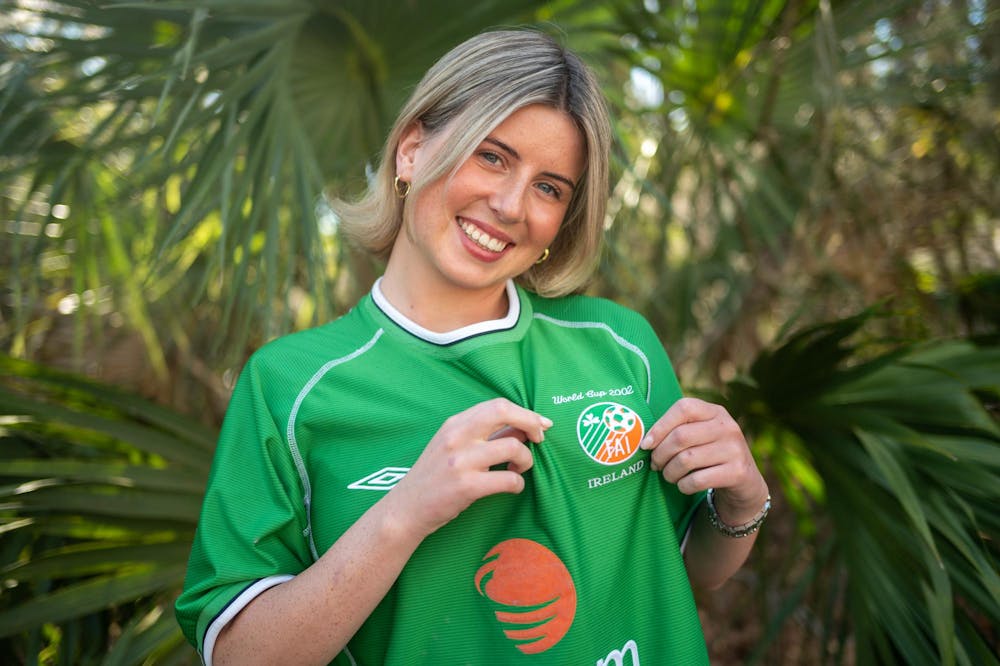
Evelyn O’Carroll is a junior Political Science and Social Policy student from Trinity College Dublin, currently on international exchange for this semester. She writes a column documenting her experiences of studying abroad at the University of Florida.