

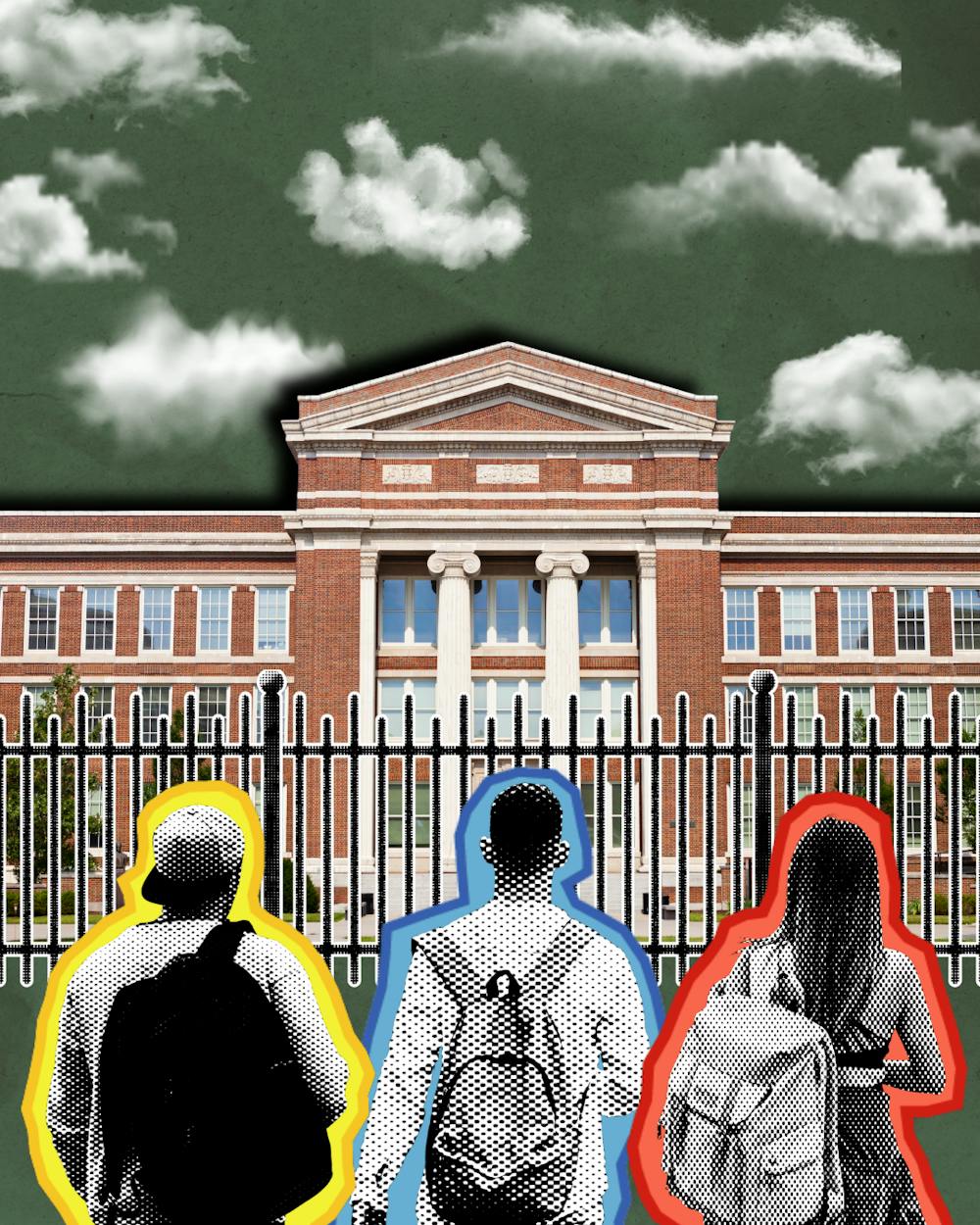
The Florida Board of Governors delivered another blow to undocumented immigrants seeking higher education in Florida during a Thursday meeting in Fort Myers.
The board, which is made up of 17 members, with 14 appointed by the governor, voted to block Florida’s 12 public universities from offering admission to undocumented immigrants starting at the beginning of the 2027-28 school year.
The board unanimously passed the motion without discussion as part of its consent agenda after a 15-minute public comment section.
The vote follows a June 30 decision by the State Board of Education banning undocumented students from pursuing GED programs or attending any of the 28 state colleges, a ruling that includes Santa Fe College in Gainesville and could cost the schools $15 million a year.
Around 60,000 undocumented immigrants are currently enrolled in higher education in Florida, and roughly 8,000 graduate from Florida high schools every year.
In Alachua County, around 15,000 of the county’s roughly 285,000 current residents lack citizenship, according to the U.S. Census Bureau. Across the state, undocumented immigrants make up around 5% of the population, with nearly 1.2 million living in the state.
At UF, 4,788 students were designated as “non-resident aliens” in 2025, meaning nearly 8% of the university’s student population currently lacks U.S. citizenship, although only those without proper documentation would be subject to the new regulation.
Current students won’t be impacted by the ruling, as it applies to students seeking initial enrollment.
Maria Barbero, an associate professor at Florida Gulf Coast University, spoke against the amendment during the public comment period. He said it sends a message of exclusion, not access.
“It’s hard to reconcile how barring a whole group of students from public universities meets our mission and values in the state university and college system,” Barbero said. “Those students were admitted on the basis of their merit.”
Barbero said impacted undocumented students have remained active and successful in the public school system despite constant pressure from the state over immigration status.
Part of that pressure comes from the state’s decision to revoke a policy allowing certain undocumented immigrants to pay in-state tuition rates, which went into effect in July 2025.
The original bill, signed by then-Florida Gov. Rick Scott in 2014, provided a resource to undocumented students who aren’t able to access federal financial aid.
In Florida, there’s a stark difference between in- and out-of-state tuition costs. UF’s financial aid office estimates in-state tuition costs about $6,400 per year, while out-of-state tuition costs an annual $34,620.
Maria Lara, the state deputy director of the League of United Latin American Citizens, said the opportunities Florida offered her as a Cuban immigrant allowed her to graduate from the University of South Florida and attend law school.
Those experiences helped her raise children who entered the public university system themselves. Thursday’s ruling could bar other immigrants from achieving the same success she did.
“I could not do this in Cuba, speak to you like this today,” Lara said during the meeting’s public comment session. “I would urge you not to vote for that regulation.”
Connor Plonka, a 23-year-old FGCU student, also spoke against the proposal.
“No matter their documentation status, no matter what place they’re born, they should be allowed the opportunity for a good education,” Plonka said. “That is the basis for our public K-12 system.”
Roberto Garcia, an FGCU instructor in the department of integrated studies, said students’ immigration status doesn’t determine academic ability, intelligence or character. At Thursday’s ruling, he argued the plan contradicts the message given to many young people: Education is a pathway to opportunities, he said.
Garcia, who teaches sociology courses, spends a lot of time as an educator asking students to think about systems, he said, asking who the systems serve and exclude, along with the values those systems communicate.
“This regulation communicates something unmistakable,” Garcia said during public comment. “‘You may be qualified, you may have worked for this, you may belong to this community. But there are circumstances beyond your control that make the doors of your public university close anyway.’”
15 minutes were allotted for public comment, which were filled by eight people opposing the proposal.
But the board didn’t address the policy before it was unanimously passed because it was part of the meeting’s consent agenda. Consent agendas typically consist of non-controversial items joined into a single block for a collective vote with little to no discussion about individual items among board members.
The meeting ended five minutes after public comment, with the board passing the consent agenda and chair Alan Levine limiting discussion on other action items “in the interest of expediency.”
The ruling won’t impact Florida’s K-12 schools, which are protected by the equal protection clause following landmark Supreme Court case Plyler V. Doe. The case ruled that denying public education to children based on immigration status violated the 14th Amendment.
In Alachua County, K-12 schools do not request students documentation status.
Contact Logan McBride at lmcbride@alligator.org. Follow him on X @logandmcbride.

Logan is a senior journalism student and the Alligator's Fall 2026 Enterprise Politics reporter. He previously served as a reporter on the Alligator's Metro Desk, covering K-12 Education and the City/County Commissions. In his free time, he enjoys watching sports, movies, or spending time with his cat and girlfriend.