
The Florida Board of Governors is one step closer to restricting H-1B visas until 2027.
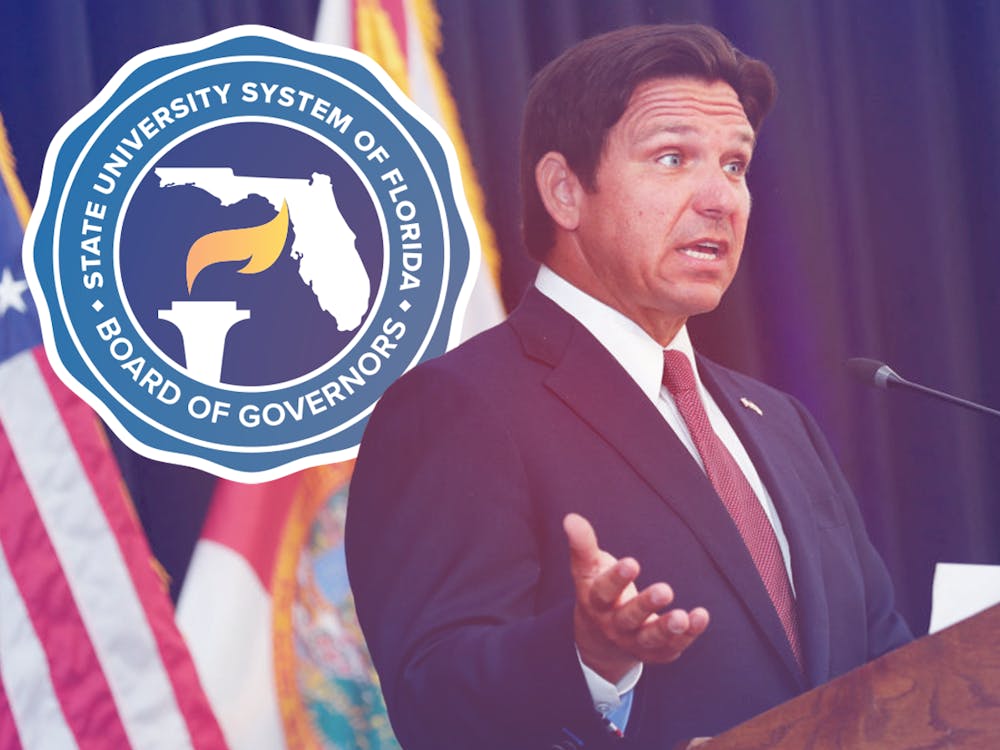
On Thursday, the board moved forward with an amendment that would stop Florida universities from using the H-1B visa program to hire new employees for the remainder of this year. Public comment is available for two weeks, after which the board will officially vote on the policy.
Also at the meeting, UF was approved to receive a bond up to $245 million from the board to build new dorms targeted toward freshmen students.
H-1B visas allow U.S. employers to hire foreign citizens with a college education for up to six years. Employees can apply for permanent residency during this time frame.
The proposed amendment would not stop Florida universities from renewing employees already on H-1B visas, but it would ban them from making new hires under the program through Jan. 5, 2027. The amendment also states each board of trustees’ personnel program “must not discriminate on the basis of race, color, religion, national origin, or sex.”
On Oct. 29, Florida Gov. Ron DeSantis announced plans to “pull the plug” on H-1B visas, and UF Interim President Donald Landry said he’d support a review of the program at UF. University positions currently occupied by visa holders should go to Florida residents, DeSantis said.
UF ranked highly among Florida universities when it came to H-1B visas issuance, approving 253 recipients for the 2025 fiscal year through quarter four. Florida State University approved 110 beneficiaries, the second-highest amount among state universities.
As the amendment was discussed in committee Thursday, the only dissenting comments came from the board’s faculty and student members. Kimberly Dunn, the Florida Atlantic University faculty senate chair and only voting faculty member of the Board of Governors, said she did not want to make decisions that would harm educational institutions.
“Institutions throughout our system rely on our H-1B process to recruit world-class talent,” Dunn said, adding limiting H-1B visa hires could cause long-lasting reputational damage.
Earlier this week, Texas Gov. Greg Abbott ordered a freeze on all H-1B visa hires for Texas universities and state agencies, which will remain effective until May 2027. On Sept. 21, 2025, the Trump Administration implemented a policy incurring a $100,000 fee for each H-1B visa distributed.
Carson Dale, the Florida State University student body president and only student voting member of the Board of Governors, also criticized the amendment Thursday. During its committee discussion, he moved to have it removed from the board’s consent agenda — meaning when the issue came before the full board later that day, members had to separately vote to approve it.
The reform is not neutral, Dale said, but is a restriction on who can be considered for employment, regardless of qualification.
Dale said he understands concerns about misusing H-1B visas in hiring processes, but he still believes candidates should be evaluated based on qualifications.
“We evaluate candidates based on the quality of their scholarship, their capacity for discovery and their contributions to knowledge, not on their country of birth,” Dale said.
Chair Alan Levine encouraged board members to reach out to universities before the regulation comes to an official vote in order to hear and weigh its impact. He’s heard from faculty that the board must emphasize collecting data before making a decision, he said.
During public comment, two people came forward to speak against the H-1B pause. Daniel Fay, an associate professor at Florida State University, said he’s published research on higher education governance. Restricting foreign recruitment, he said, would have a drastic effect on the system’s performance.
“We could see a dramatic decrease in graduation rates across the system,” Fay said. “Total graduation rates would fall by about 10% for each percentage change in H-1B faculty.”
Fay added that an H-1B ban would impact subcommunities, and it could also lead to financial impacts, such as decreased expenditures and opportunities for federal revenue.
Kathryn Jones, a biology professor at Florida State University, also encouraged the board to vote against the amendment. She said a vote in favor of the H-1B ban was “a vote against merit.”
Jones said she served on multiple faculty search committees, where she saw qualified job candidates who were hired under H-1B visas but trained in the U.S.
“By not hiring with an H-1B visa program, we would be giving away the expertise we’ve invested in international scholars,” she said. “We would lose that for the U.S., for the state of Florida.”
Should the policy be formally amended in the next meeting, current H-1B visa holders will still be able to renew their visas as needed this year.
UF student residency plans
The board also unanimously adopted a resolution to build two new UF dorms on Wednesday. The decision authorized a bond no larger than $245 million to finance construction.
The project will be the first of multiple phases, with the plan to revitalize UF housing spanning over 10 years. Two residence halls, each having eight to nine floors, are planned to be built on the university’s main campus.
The project is meant to target first-year students, and it will address UF’s demand for on-campus housing, according to the project summary.
“UF has a perpetual waiting list every year that could fill this project on its own,” said Kevin Pichard, the assistant vice chancellor of finance and facilities, while presenting the project.
It will also replace the 622 beds lost with the demolition of Trusler, Simpson and Graham halls in June of last year. Monthly rent for students will be a little over $1,100, which is higher than the average UF dorm rent of $900 across all residences.
Specific timelines for construction have not yet been announced.
Contact Leona Masangkay at lmasangkay@alligator.org. Follow them on X @leo_amasangkay.

Leona is a second-year journalism student and the Spring 2025 University Administration reporter. They previously worked as the Santa Fe reporter. In their free time, Leona enjoys going to the gym, watching Marvel movies and traveling the country for music festivals.