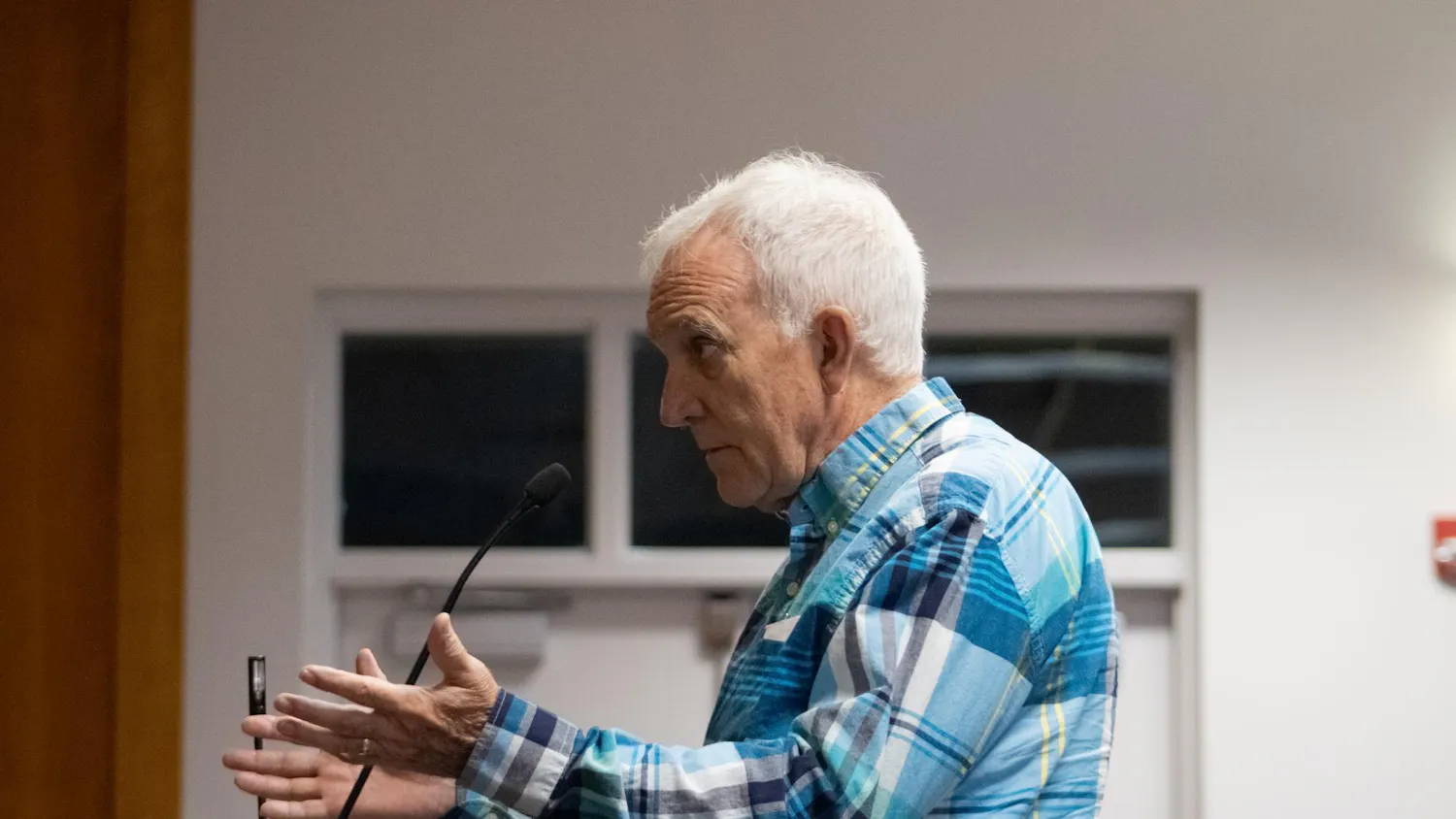

Cyrus Jay became a Gainesville resident 10 years ago when his niece, a truck driver on assignment in the area, dropped him off. When they arrived, he told her he’d catch her some other time.
Now 63 years old, Jay is a member of the homeless community. Following a state crackdown on homeless encampment, he’s calling for aid to change his circumstances.
“I’m not particular,” he said. “Just get me off the streets.”
Calls to action
The Gainesville City Commission passed an ordinance in 2024 prohibiting people from camping and sleeping on public premises. The ordinance came after a bill signed by Gov. Ron DeSantis banned counties and municipalities from allowing public encampment.
While the City Commission “grudgingly accepted” the order, according to previous Alligator reporting, it had to pass it, or create a similar one, to evade legal consequences.
The city created an option in the neighborhood myGNV app for residents to report public camping. In the first year after the ordinance went into effect, Gainesville residents submitted 109 reports of camping on public property or encampment, according to records obtained by The Alligator.
That’s about one report every three to four days, or less than 10 per month, on average. A majority of camping sites reports happen along, or near, North Main Street in downtown.
Under the ordinance, people who appear to be camping will be redirected by law enforcement to legal resting spaces, such as shelters. If they refuse to move, they may face a $25 fine and possible arrest.
Jay said he and his fellow residents “have nowhere to go.” When it rains, he goes to the library for cover. He’s often told to move, he said, even though he doesn’t plan to permanently camp there.
More help for homeless people should be the pillar of change in the community, he added.
“They should be able to give more help than they do,” he said.
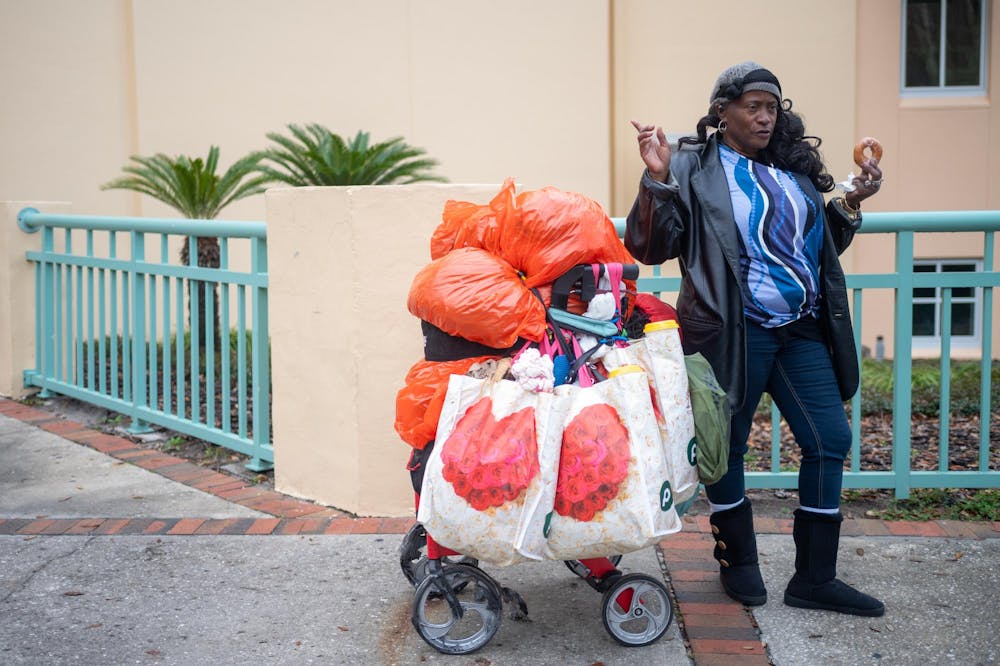
Lifelong Gainesville resident and homeless community member A.D. Hunter said the encampment ban makes it harder to find permanent residence. With the ordinance requiring residents to move around, finding stability becomes difficult.
“I very much disagree with it,” she said.
Hunter hasn’t personally been asked by law enforcement to move, she said, but she knows people who have in the last couple of months — and reactions are mostly very negative, she said.
Hunter wishes a longer-term rehabilitation program existed for homeless people to receive education, earn income and find jobs. A lot of people don’t want to go to school because it doesn’t pay, she said.
People are usually able to get back on their feet within about six months of earning income, Hunter said. An acquaintance of hers was placed in a three-month program instead, and in the end, she found herself back in a shelter because she didn’t have enough time to save money.
People in support of the encampment ban don’t understand the homeless experience, Hunter added.
“They hadn’t had to live it,” she said.
Local enforcement
Upon asking people suspected of camping to move, law enforcement’s approach is to inform them about available services within the city, said Art Forgey, the Gainesville Police Department public information officer.
“I think our goal is helping these folks get the services that they need,” he said. “Our goal is definitely not to intervene in a law enforcement setting.”
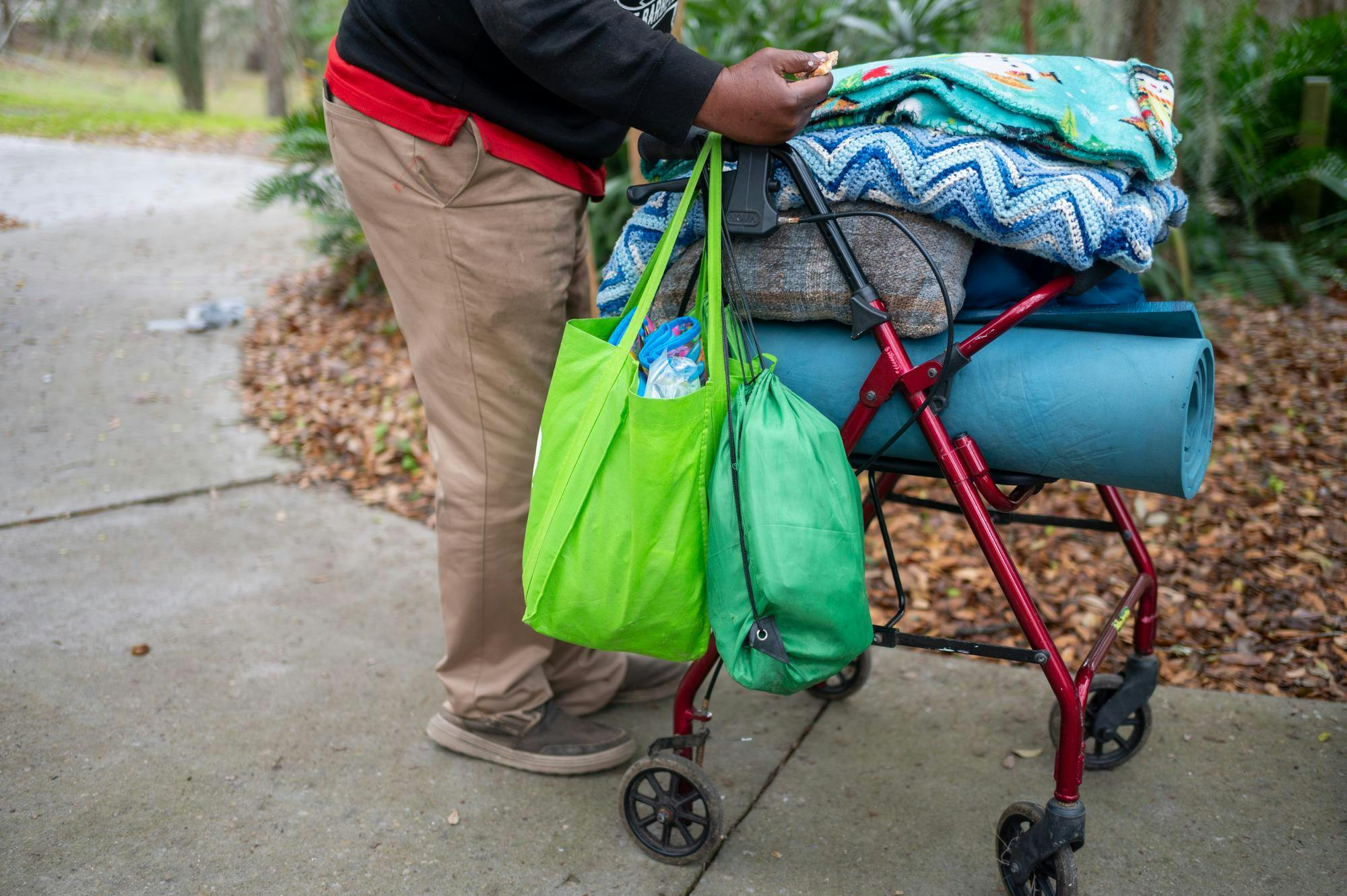
If someone is found in a public setting with a blanket, sleeping bag or other possession that hints they are camping, Forgey said law enforcement makes contact. After the resident moves, the city’s public works department cleans any potential mess left behind.
People usually just move on to a different area, he added. If someone refuses to move, GPD would arrest them for trespassing, though Forgey said that situation has never happened.
GPD has a downtown unit that comes across encampment issues regularly, he said, but officers rarely encounter camping in other city areas.
Forgey added he believes people should lend a helping hand to the homeless community.
“Next time you want to bash the houseless or anything like that, just reflect a minute and see how you think you might be able to help,” he said.
City standpoints
A year into the ban, Mayor Harvey Ward said the city continues delivering the same services it always has, with “as much compassion” as possible. Though the city had to make legal changes to its codes because of the bill, Ward said he doesn’t think law enforcement has changed the way it treats people in the last year.
“I am not aware of major changes to the way we’ve interacted with our houseless neighbors,” he said.
Florida House Rep. Sam Garrison originally wrote the House bill. Ward recalls the representative telling him the legislation wasn’t aimed at cities already providing homeless aid services, like Gainesville. Ward said he believes the bill is wasteful.
Gainesville has two primary shelters: St. Francis House and Grace Marketplace. Grace Marketplace allows guests to bring one bag and stay up to 30 days while waiting for a long-term bed. St. Francis House provides shelter for women and families.
Until both the federal and state governments realize there is a financial part to play in ending homelessness, Ward added, there won’t be a solution. Reasonably priced housing options and destigmatized mental health and addiction recovery services are the two areas where funding is needed, Ward said.
“Until we have that funding abundantly available, we are going to face this issue,” he said.
Contact Maria Arruda at marruda@alligator.org. Follow her on X at @mariazalfarruda.

Maria Arruda is a second-year journalism and political science student, currently working as the City Commission reporter for The Alligator. Previously, she reported on Student Government under The Alligator's University desk. She enjoys running, reading and going to movie theaters!