
CORRECTION: The Alligator previously reported Hongwu Wang is a UF biomedical engineering assistant professor. The article has been updated to reflect that he works in UF's occupational therapy department.
A Gainesville woman, Makeda Evans, sued 49 businesses, including 43 in Alachua County, for failing to comply with ADA accessibility requirements for websites over the course of a year and a half, Mainstreet Daily News first reported in December 2025.
Since then, Evans has filed one additional lawsuit against a Gainesville business, the Korean fried chicken shop bb.q in downtown Gainesville. She’s also expanded beyond Florida, filing two suits Feb. 20 against a hotel and restaurant in Colorado.
Twelve of the businesses Evans has sued since her first filing in September 2024 still have pending lawsuits, while the remainder have settled.
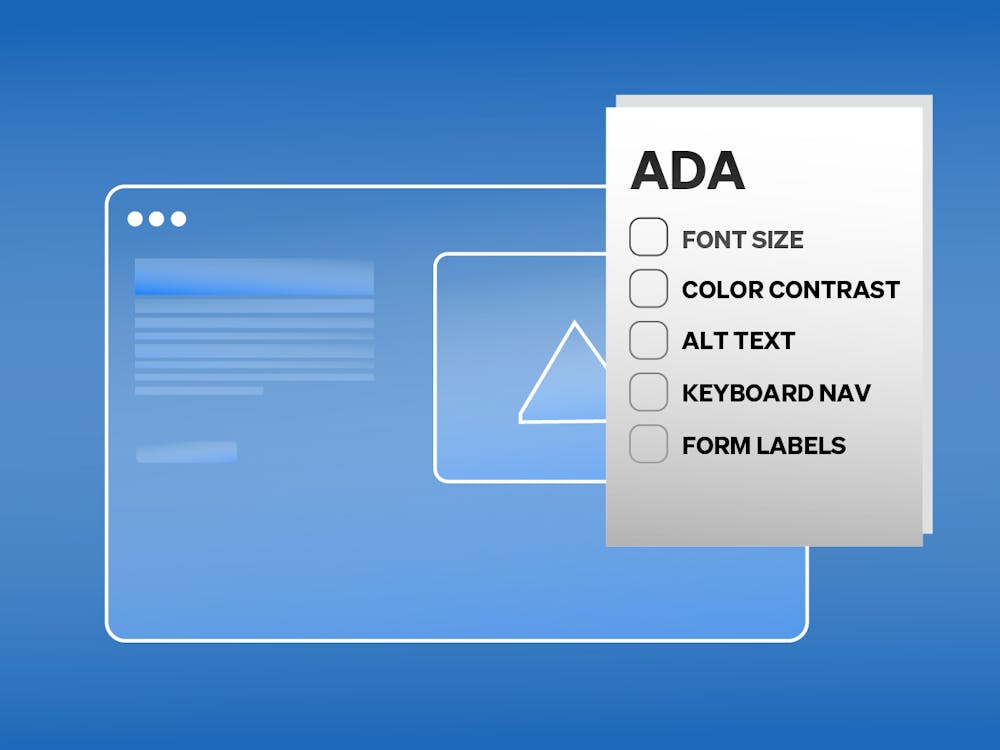
The suits followed an April 2024 ruling from the United States Department of Justice that the Americans with Disabilities Act Title II requires web and mobile accessibility. Websites must have keyboard and mouse navigation, text size and zoom capabilities, as well as alternative texts for images.
Evans, a 33-year-old legally blind woman, sued the businesses for failing to design their websites in an accessible way. Her South Florida-based lawyer, Aleksandra Kravets, is an attorney in 256 ADA lawsuits across Florida, including 89 in the Middle District, 53 in the Northern District containing Alachua County and 114 in the Southern District, as of Feb. 26.
Gainesville businesses, including Satchel’s Pizza and Gainesville Health & Fitness, still have pending lawsuits as of Feb. 26, while others, like Uppercrust and First Magnitude Brewing Company, have settled.
Evans did not respond to multiple requests via phone call for comment regarding the lawsuit.
Gainesville fights back
Satchel’s is one of the few continuing to fight back. In a motion to dismiss filed Feb. 18, the beloved local pizza shop accused Evans of being a “serial litigator who has brought a municipality of Federal lawsuits as an ADA ‘tester.’”
The motion included an analysis from IT professional Nazar Mokrianyn, who wrote Satchel’s website never presented significant barriers to accessibility, and minor bugs have been eliminated.
Satchel Raye, the 58-year-old owner of Satchel’s Pizza, said he was unaware of his website’s accessibility issues. He didn’t know his site wasn’t ADA-compliant until he received an email from a law firm.
Satchel’s Pizza has been in business for 23 years. Now, Raye is trying to spread awareness to other local businesses who haven’t been sued, reminding them to check their sites to see if they meet ADA requirements.
Still, he said, he’s frustrated by the lawsuit. If the complaint was just about ensuring the sites are accessible, Raye argued, a lawsuit wouldn’t be necessary.
“It’s about money, because if we give them money, then the lawsuit goes away,” Raye said. “So how is that about compliance?”
Raye said he removed an external link to 352 Delivery due to complaints the site wasn’t ADA compliant. This creates problems for other customers who want to order online and now have to search for a separate link, he said.
To Raye, the most challenging part of the lawsuit is complying with ADA requirements without removing delivery options and business information for other customers.
‘That’s a lot of croissants’
Ben Guzick, the 35-year-old owner of Uppercrust, wrote in an email to The Alligator that the bakery wasn’t aware its site wasn’t ADA-compliant until September 2025.
Uppercrust uses Squarespace, a website builder, to construct its site. When it was created in 2003, Guzick and his employees weren’t aware that the offered website templates aren’t ADA-compliant. Since then, Uppercrust has made many changes to improve its website’s accessibility.
One of Uppercrust’s servers is starting a master’s program in cybersecurity and helped make the site more accessible, Guzick added.
“He went through a full audit of our website and confirmed that all pages conform to ADA standards,” Guzick said.
Still, he said, full compliance is difficult to ensure. For example, external links to online ordering platforms like Shopify are not ADA-compliant.
Uppercrust settled the case for approximately $6,500, Guzick said, which doesn’t include additional attorney fees.
“Our best-selling product category is croissants, and we serve them for around $5 each,” Guzick said. “That’s a lot of croissants to cover an unexpected cost.”
Currently, multiple congressional bills are being filed to provide a “notice and opportunity to cure” for businesses, according to the American Bar Association.
The goal of these bills is to give businesses enough time to implement solutions before facing lawsuits. But none have gained enough bipartisan support to reach a floor vote in previous sessions of Congress.
Hongwu Wang, a UF occupational therapy assistant professor, said many ADA compliance issues arise because of trial and error, offering short-term solutions.
“A lot [of] businesses have figures, images, but they don’t have alternative text,” Wang said. “So it’s hard for people with lower vision to understand.”
Meeting legal or policy standards doesn’t necessarily ensure accessibility, he added. He explained compliance is the minimum requirement, but it doesn’t guarantee usability.
When facing compliance issues, he said many vendors opt for “quick fixes,” like temporarily removing inaccessible external links.
“We are always trying to fix the issue, patch it, instead of involving the users,” Wang said. “We have to understand what caused the unusability instead of just focusing on compliance.”
These approaches often leave future accessibility issues unresolved, because they only offer temporary solutions — causing users with disabilities to repeatedly encounter the same barriers, he said.
“One way to [improve accessibility issues is to] educate those vendors to make sure they are aware of those users and standards,” Wang said.
Implementing a structured checklist could help vendors meet accessibility standards in a more efficient way, he added.
On the other hand, he also said accessibility needs are constantly changing, requiring frequent adjustments and adaptability to technology.
Contact Lily Hartzema at lhartzema@alligator.org. Follow her on X @lilyhartzema.
Lily Hartzema is a senior journalism student at UF with a minor in geography. This is her third consecutive semester at The Alligator. She previously served as a copy editor in Summer 2026 and is a returning metro reporter. In her past-time, she enjoys reading, exploring new trails and photographing anything that catches her eye.