
Florida’s rules for animal euthanasia, created in the 1990s, span a full page. Its guidance for executions by lethal injection, drawn up almost a decade later, takes up just two sentences. The specific details of the execution process are largely left to the discretion of the Florida Department of Corrections.
That gap is now at the center of legal challenges as two inmates scheduled for execution this month accuse the FDOC of violating the U.S. Constitution by straying from its own lethal injection protocols.
Defense attorneys argue the FDOC’s actions during executions have dangerous inconsistencies — including alleged use of expired drugs, incorrect dosages and unqualified personnel — exposing inmates to unnecessary suffering.
The claims come as Florida executed a record number of inmates in 2025 and is preparing to carry out two executions in February — placing the state at the center of a national debate over whether lethal injection remains a humane and reliable method of capital punishment.
Allegations of protocol failures
Frank Walls, executed in December 2025, was among the first to raise the issue in Florida's current wave of litigation.
Walls appealed for a stay of execution, arguing his medical conditions and the state’s procedures would cause severe pain. In his appeal, his attorneys also alleged execution records from 2025 revealed “a wide range of errors,” including inaccurate documentation, improper drug preparation and the use of expired etomidate.
Courts rejected his appeals, ruling the claims were speculative and raised too late.
Now, Ronald Heath and Melvin Trotter are making similar arguments to halt their scheduled executions on Feb. 10 and Feb. 24, respectively.
Heath’s attorneys warned he faces “a substantial risk of a torturous, drawn-out execution” under current practices, according to the appeal.
On Feb. 3, the Florida Supreme Court denied Heath’s request for a hearing, calling his claims speculative. The court said he failed to demonstrate a “substantial and imminent risk” of serious harm.
Trotter’s case said the FDOC used etomidate with a January 2025 expiration date for the executions of Kayle Bates on Aug. 19, Curtis Windom on Aug. 28, David Pittman on Sept. 17 and Victor Jones on Sept. 30, all over six months after the supposed expiration date.
On Feb. 5, the court denied Trotter’s petition, using Heath’s denial as precedent.
Execution protocol
Florida’s cases mirror decades of litigation nationwide over lethal injection.
The U.S. Supreme Court previously ruled in a case challenging lethal injection procedures in Oklahoma that inmates must show a method poses a substantial risk of severe pain and that a safer alternative exists.
In earlier rulings, the court held that an execution method violates the Eighth Amendment only if it is deliberately designed to inflict pain.
That standard has made successful challenges rare, even as reports of botched executions persist. The Death Penalty Information Center estimates about 7% of lethal injections nationwide have been botched — the highest rate of any execution method.
Critics argue lethal injection persists largely because it mimics a medical procedure, and therefore appears to be humane.
However, almost all major medical associations reject the practice altogether.
“The core of the problem is lethal injection is not based on science,” said Corinna Barrett Lain, a law professor at the University of Richmond who studies the death penalty. “It’s based on the illusion of science.”
Florida’s protocol requires personnel responsible for finding suitable veins and monitoring the IV lines to be certified phlebotomists, registered nurses, paramedics or hold similar certifications.
A “designated execution team member” is responsible for keeping track of the drugs and ensuring they have not surpassed their expiration dates, according to the FDOC protocol. However, it is unclear what, if any, certifications are required to be given this task.
The protocol also mandates the chemicals be prepared by trained physicians or pharmacists.
However, many major medical organizations, like the American Medical Association, World Medical Association and American Pharmacists Association, strongly discourage members’ participation in executions because they say it contradicts medical ethics.
The AMA strictly prohibits physician participation in capital punishment, with its code of ethics stating: “As a member of a profession dedicated to preserving life when there is hope of doing so, a physician must not participate in a legally authorized execution.”
Consequently, most people with experience and training in the medical field will not participate in execution procedures.
Deborah Denno, a Fordham University law professor who studies capital punishment, said states, therefore, often rely on staff with limited medical training or experience.
“[States] were using people who had never actually done this before,” Denno said. “It’s always been highly problematic.”
Florida utilizes an execution team composed of correctional staff and others, but the exact details of who is on that team are unclear.
John Koch, an independent journalist who has witnessed over 100 executions, said the people inside the execution chamber include the inmate, a team warden, a witness from the Florida Department of Law Enforcement and a witness from the FDOC, and sometimes a spiritual adviser if requested by the inmate.
A medical adviser is called in to determine the time of death, a little over 10 minutes after the process is started, he said.
A worsening drug shortage
The death penalty-opposed European Union banned the export of drugs for the purpose of executions over a decade ago, and many pharmaceutical companies abroad and in the U.S. have followed suit in the years since.
As suppliers ran out of drugs or stopped supplying them for use in executions, states sought alternative sources, stopped executions altogether or switched to other methods.
Florida switched drug types in 2017 as the original drug, midazolam, became harder to obtain. Since the passage of a bill in 2022 protecting the identities of any person or entity that participates in an execution, it is unclear where the drugs come from.
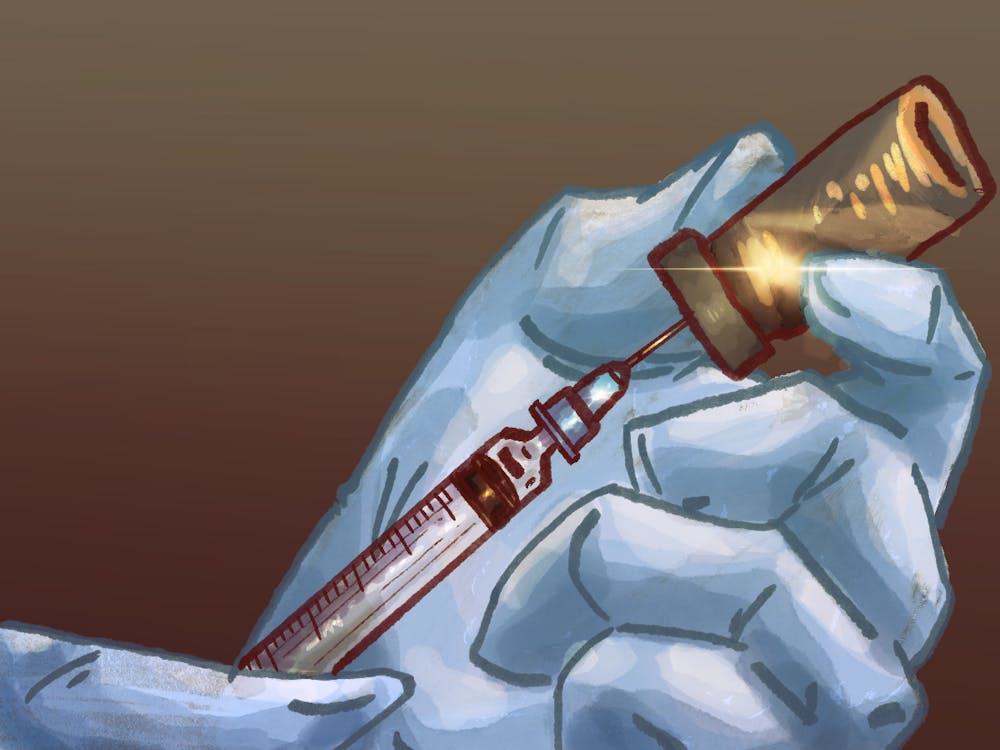
Florida uses a three-drug protocol for executions.
The first drug is an anesthetic, which is supposed to render the inmate unconscious — although some legal and medical experts aren’t sure it does so.
Florida is the only state that uses etimodate, which was criticized when it was first used in 2017 for only providing 10 minutes of sedation.
The second drug is a paralytic, a step banned in animal euthanasia because it prevents physical signs of suffering.
Maria DeLiberato, the legal and policy director for Floridians for Alternatives to the Death Penalty, said the second drug is essentially useless, other than to make the execution more “palatable to viewers.”
The third drug is what purportedly kills the inmate by stopping their heart.
But Dr. Joel Zivot, an anesthesiology professor at Emory University, said autopsy reports suggest many inmates die from suffocation rather than cardiac arrest.
In a 2016 review, Zivot found evidence of pulmonary edema — fluid in the lungs — in 34 executed inmates of the 43 examined.
“The death that people have may be more akin to drowning in one’s own blood than falling off to sleep peacefully,” Zivot said.
Zivot said he has observed similar findings in more recent cases.
Zivot said he thinks the first drug causes the fluid in the lungs, which is exacerbated by the second drug — creating a death he believes is cruel as the inmate starts to regain consciousness while the lungs fill up.
He said the third drug is probably not enough to stop the heart, and the person will die from suffocation caused by the first two drugs.
A large portion of all prisoners, including those on death row, have a history of heavy drug use and vein access issues, making the lethal injection process difficult even for trained medical professionals.
Alternatives to lethal injection include the firing squad and the electric chair. Firing squad executions offer two things lethal injection can’t: trained professionals and an instant death.
The first firing squad execution in the U.S. happened in 1608, and just under 150 others have been executed by shooting since.
The method was largely phased out when other methods like lethal injection and electrocution were introduced, with only six taking place during the modern era of the death penalty, starting in 1976, compared to the almost 1,500 executions by lethal injection during that same period.
However, South Carolina has renewed its use of it, executing three inmates by firing squad in 2025. Utah, Oklahoma, Mississippi and Idaho also authorize the use of this execution method.
People with training and experience in shooting guns, like ex-military members, don’t have an ethical or legal obligation to do no harm, so the state can more easily find individuals qualified to carry out an execution by firing squad.
Michael Conklin, a business law professor at Texas A&M University-Central Texas, refuted claims of the firing squad offering a more humane death.
“There’s a lot of things that could go wrong. There’s a lot more of the human element involved,” he said. “Lethal injection is tried and true.”
An autopsy report from an April 2025 execution by firing squad in South Carolina showed something went wrong, with none of the three bullets fired hitting the inmate’s heart directly.
The man’s lawyers notified the South Carolina Supreme Court in May that the execution was botched, citing an analysis of the autopsy reports, which showed he experienced conscious and severe pain for up to a minute after he was shot.
Contact Alexa Ryan at aryan@alligator.org. Follow her on X @AlexaRyan_.

Alexa is a junior journalism and international studies student and The Alligator's Fall 2026 Enterprise editor. She previously served as the criminal justice reporter and the Enterprise politics reporter. In her free time, she enjoys running, traveling and going on random side quests.