

When Daniel Hogan learned the UF Student Health Care Center would soon stop providing his hormone replacement therapy, he was “shocked, but not surprised.”
Hogan was one of 99 patients who received a message through the MyUFHealth portal Jan. 14 that the center was discontinuing gender-affirming care, according to UF spokesperson Cynthia Roldán. The change takes effect May 1.
In the message, the SHCC encouraged students utilizing gender-affirming care to seek alternative health care providers. It offered assistance in finding alternative providers and transferring medical records.
The change comes about three years after a bill was passed by Gov. Ron DeSantis that banned gender-affirming care for minors. The bill also affected gender-affirming care access for adults; it barred nurses and nurse practitioners from providing those services, only permitting physicians to do so.
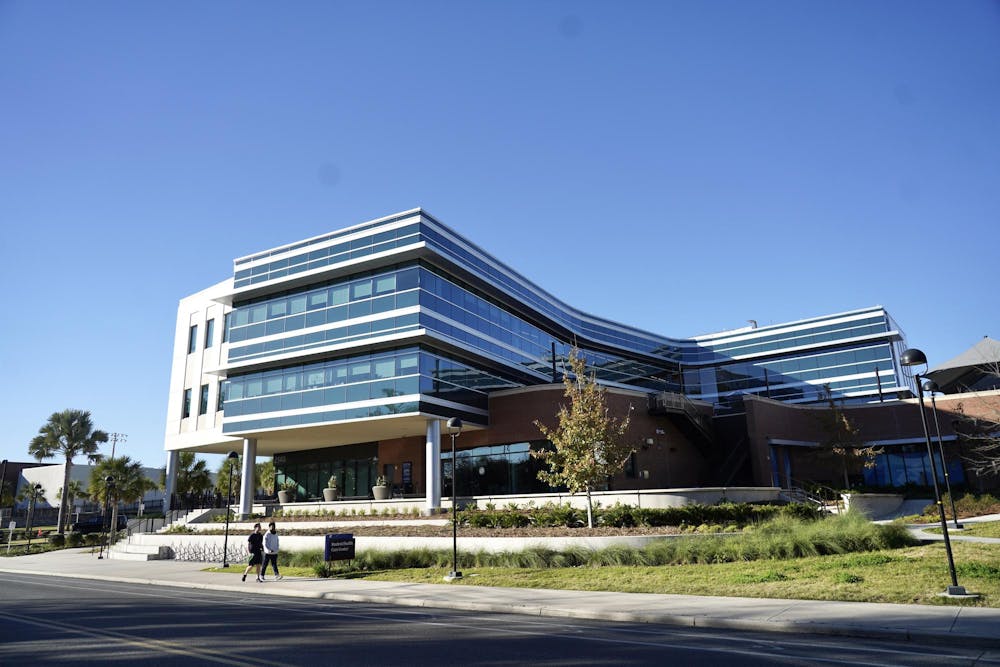
It’s unclear why the SHCC, which is located on UF’s main campus on Stadium Road, is now discontinuing these services. There are five physicians employed with the center as of January 2026, according to its website. Over two-thirds of patients seen in all Gainesville-based UF Health locations reporting gender dysphoria were aged 18 years or older as of 2022, the latest available data via public record request.
UF did not have any further comments on the SHCC’s policy change aside from the message initially sent on MyUFHealth.
Hogan, a 21-year-old UF natural resource conservation junior and transgender man, said he felt the change to gender-affirming care at the SHCC was inevitable.
He began hormone replacement therapy, a process that adds testosterone to his body so his physical appearance better aligns with his gender identity, with Planned Parenthood in 2022.
After Florida began putting pressure on doctors to halt gender-affirming care, Planned Parenthood stopped providing hormone replacement therapy, and Hogan was redirected to his primary care provider. His primary care provider stopped providing his services shortly after, leading Hogan to seek care at the SHCC.
There, Hogan’s provider told him the center would not discontinue gender-affirming services during their first conversation together in Spring 2025.
“That specific conversation came to mind, just because I didn’t believe her then,” Hogan said. “I hate to say that it turned out the way that it did.”
Hogan said he plans to continue receiving hormone replacement therapy from the SHCC until May 1.
In 2022, UF Health facilities in Gainesville saw 465 patients with gender dysphoria, according to records obtained by The Alligator. Additionally, 275 patients underwent a form of hormone replacement therapy in those same facilities in 2022. Those numbers include patients seen across all UF Health-Gainesville entities, not only the SHCC.
In addition to hormone blockers, gender-affirming care can include puberty blockers, which stop the body from producing estrogen and testosterone, as well as procedures like breast augmentations or mastectomies, which add or remove breast tissue. These treatments address gender dysphoria, which the DSM-5 defines as distress resulting from an inconsistency between one’s expressed gender and their sex assigned at birth.
Another UF student, who’s also receiving hormone replacement therapy through the SHCC, said he felt blindsided by the policy change. The Alligator granted this student anonymity because he’s not publicly out as a transgender man.
“I just didn’t think that it could happen to me, as selfish as that sounds,” the student said.
After receiving the message, the student called the phone number provided by the SHCC, where he thought he would receive specialized aid. Instead, he said, the number directed him to the administrative office, and the responses to his questions seemed “automated.”
The student said he felt like there were no resources or plans for patients using gender-affirming services, which he found frustrating.
The student asked if there was a specific law behind the policy change. In response, he said, a SHCC employee told him UF made the decision to discontinue gender-affirming care.
“I love being a Gator, like, I love all that stuff,” the student said. “This makes me not happy. It makes me feel less proud of my school.”
Alexis Williams, the 26-year-old deputy director of the Queer Trans Project, said she thinks the university’s decision will have serious consequences.
The Queer Trans Project, based in north Florida, is a nonprofit organization dedicated to increasing access to gender-affirming resources for transgender and genderqueer people.
The organization sends gender-affirming resources — such as binders, which are meant to reduce breast visibility for transmasculine individuals — to those in need, and it helps people find clinics that provide gender-affirming care, which are sometimes located out-of-state.
“A flagship university like UF should not be outsourcing student health care to Google searching and GoFundMe pages,” Williams said. “Health care shouldn’t require a plane ticket.”
When medical institutions limit gender-affirming care, organizations like the Queer Trans Project may see a larger workload and have to fill in any gaps, she said.
Cielo Sunsarae, the 27-year-old founder and director of the Queer Trans Project, said the SHCC’s policy changes fit with compliance patterns across the country.
“A lot of these institutions are complying in advance, and a lot of that is fear mongering,” Sunsarae said.
Sunsarae added that they felt as though transgender people were being singled out through restricted health care access, as people who aren’t transgender are not facing the same issues.
“It’s not like we’re taking away the same options for cisgender people,” Sunsarae said. “When they hear the buzzword ‘gender-affirming care,’ they attribute it to trans people.”
Abbie Aldridge, a 39-year-old mental health counselor based in California, said the SHCC’s policy change could cause transgender patients to feel a sense of abandonment.
Aldridge is the owner of Healing Village, a therapy service with a specialization for transgender clients.
With the introduction of the law banning gender-affirming care for minors in Florida, mental health practitioners saw increased mental strain in their transgender clients, Aldridge added.
Restrictions on gender-affirming health care impacted therapy sessions, Aldridge said, as patients’ primary concerns shifted to how to get access to care.
“We weren’t able to be working on their genuine therapy goal,” Aldridge said. “We were focusing more on accessing basic care and needs.”
While Aldridge used to live in Florida, changing legislation about transgender people led to them to move to California, where they currently live.
“It’s really been gut-wrenching to see this process happening, not only in Florida, but across the U.S., and also to see the impact that it's had on mental health providers,” Aldridge said.
Contact Leona Masangkay at lmasangkay@alligator.org. Follow them on X @leo_amasangkay.

Leona is a second-year journalism student and the Spring 2025 University Administration reporter. They previously worked as the Santa Fe reporter. In their free time, Leona enjoys going to the gym, watching Marvel movies and traveling the country for music festivals.


