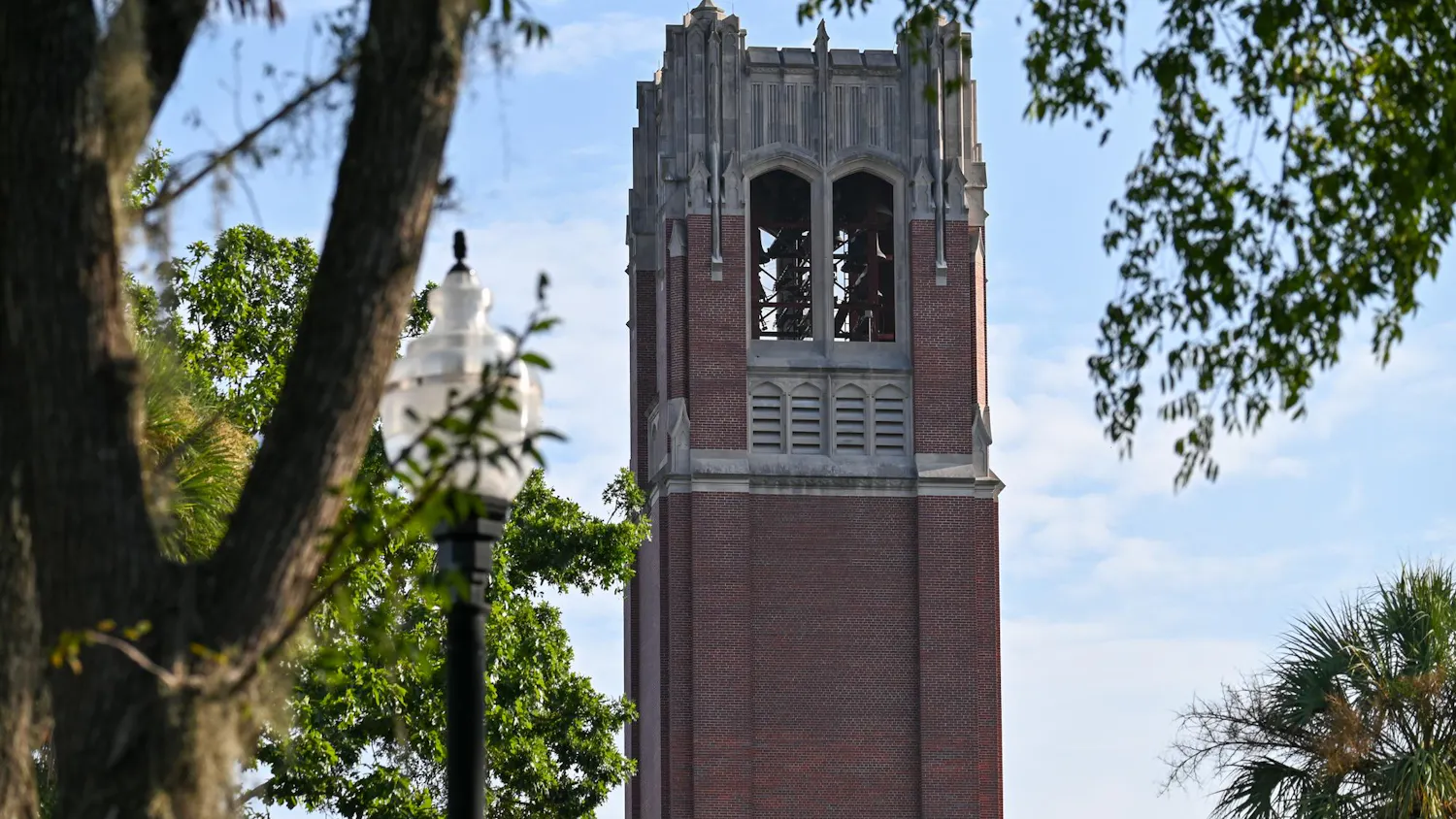

Six years ago, the city of Gainesville set an ambitious goal: to go zero waste by 2040.
As part of that Zero Waste Initiative, Gainesville’s Food Waste Ordinance went into effect in 2022. It requires commercial establishments to collect and properly dispose of food waste separate from other waste.
Food waste is kept separate so it can be converted into compost or animal feed; that way, it won’t end up in landfills, where it can produce harmful gases.
As the ordinance approaches four years since its establishment, some Gainesville residents say they find its enforcement lacking.
Business perspectives
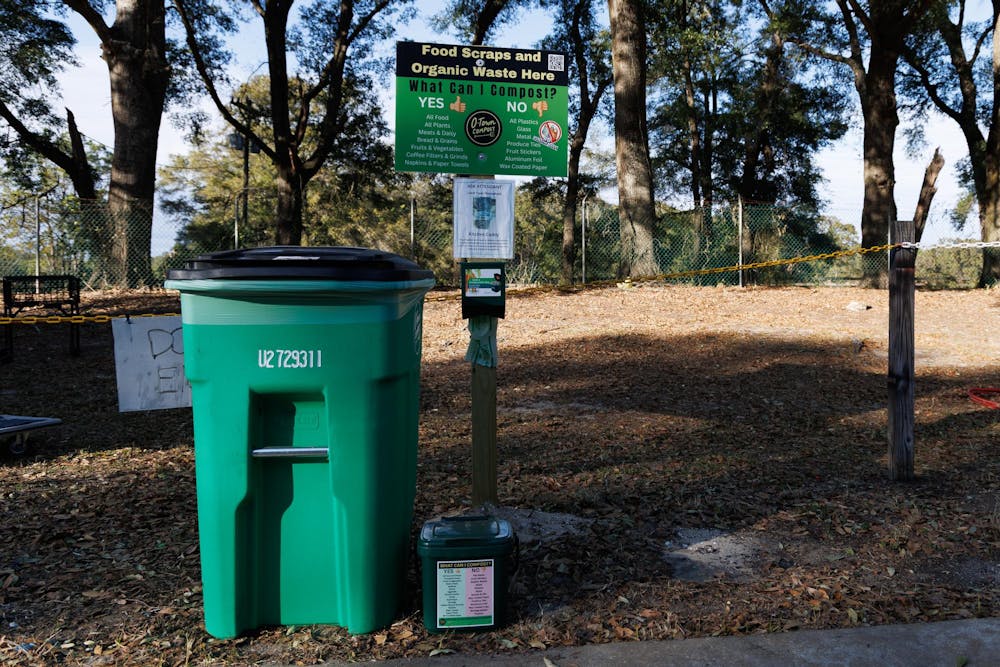
Richard Devereaux, a 70-year-old general manager at O-Town Compost, said he’s frustrated by the city’s lack of adherence to the ordinance. The Orlando-based company expanded to Gainesville in 2022.
Promoting the company’s services to businesses can be difficult in Gainesville, Devereaux said, because the city’s lack of enforcement leads businesses to assume composting isn’t necessary.
“A very common reaction I’ve received is, ‘When the city enforces this, come back and talk to me,’” he said.
Alachua County reported over 35,000 tons of food waste and natural foods in 2024, according to a data report by the Florida Department of Environmental Protection. Only 3% — roughly 1,000 tons — was recycled. For reference, that’s the equivalent difference in weight between 25 and 880 fully loaded semi-trucks.
Statewide, only 4% was recycled, according to the same data report.
While recycling rates remain low statewide, local businesses are working to increase diversion rates, meaning the percentage of waste diverted away from landfills.
Financial benefits can encourage apartments and businesses to get on board, Devereaux said.
“We help to offset,” Devereaux said. “They can pay their garbage haulers less, because they’re not sending so much stuff to [landfills].”
Ellis Chambers, a 27-year-old head chef at Superette, said the restaurant was actively reducing food waste before the ordinance was established.
The restaurant offers compostable ramekins, reducing single-use plastic, Chambers said. It also finds ways to include less-appealing items in dishes.
“In the restaurant industry, we use every scrap piece of ugly vegetable that we can possibly use, because we don’t have the margins to be able to pick and choose,” Chambers said.
Chambers previously worked in Tennessee and said Gainesville does a better job in waste diversion initiatives — but there are still ways for the city to improve, especially in promotion. He’s lived in Gainesville for the past three and a half years but only recently found out about the ordinance.
Thomas Douglas, the city of Gainesville’s recycling coordinator, wrote in an email to The Alligator the initiative is being implemented in phases.
“The city also tracks program implementation activities such as inspections, outreach visits, and participation levels using internal systems,” Douglas wrote.
Since the initiative took place, Douglas wrote, participation is growing as food waste collection services become more available, which was a challenge when the ordinance was first implemented.
Businesses like Publix and Walmart work with Organix Recycling, a national food waste collection company, he wrote. O-Town Composting, meanwhile, offers a local approach.
“The continued growth of these service providers is helping increase access to food waste diversion services for businesses and multi-family properties throughout Gainesville,” Douglas wrote.
In 2022, the city launched a residential food waste collection pilot program. It diverted about 52 tons of food waste from landfills in the 2024-25 program year, Douglas wrote.
But after the program ended in December 2025, the city is requesting new proposals for plans to expand food waste collection in residential areas and municipal facilities.
UF’s role
To address food waste, the university has implemented a campuswide compositing initiative.
Carrie Bush, a UF spokesperson, wrote in an email to The Alligator that UF implemented its food waste composting program in 2024 to support the university’s own goal of increasing waste diversion.
Approximately 18% of the university’s waste is food waste generated from daily campus operations, Bush said.
“It also costs the university less to compost food waste than to dispose of it, making it the economically and environmentally responsible choice,” she wrote.
UF Dining coordinates with its contracted food service provider, Chartwells Higher Education, and UF Health Shands Hospital to collect food waste from on-campus facilities three days a week.
Bush said UF diverts an average of 24 tons per month and 288 tons per year — roughly the weight of more than 190 cars.
“Working with our campus partners, we train staff to accurately identify and divert these materials,” she wrote.
Contact Lily Hartzema at lhartzema@alligator.org. Follow her on X @lilyhartzema.
Lily Hartzema is a senior journalism student at UF with a minor in geography. This is her third consecutive semester at The Alligator. She previously served as a copy editor in Summer 2026 and is a returning metro reporter. In her past-time, she enjoys reading, exploring new trails and photographing anything that catches her eye.