

When my pediatrician offered me the HPV vaccine in middle school, I remember being annoyed at my mom. In my mind, that just meant two extra shots and arm soreness for a couple of days.
Looking back, I’m so grateful my mom made that decision for me.
Your parents may have agreed to the vaccine like my mom did, or maybe they declined it. Maybe, you have no idea if you received it or not. Either way, it’s an important decision many parents make for their young children, and one young adults should make for themselves.
So, what even is HPV?
Human papillomavirus, as the name implies, is a virus. HPV isn’t transferred from person to person via airborne droplets or particles, like COVID-19 and the flu. Rather, it’s a sexually transmitted infection that’s transferred via intimate skin-to-skin sexual contact. So, don’t worry — you’re not going to catch HPV from your classmate coughing and sneezing up a storm. But add HPV to the list of reasons to use protective barrier methods like condoms.
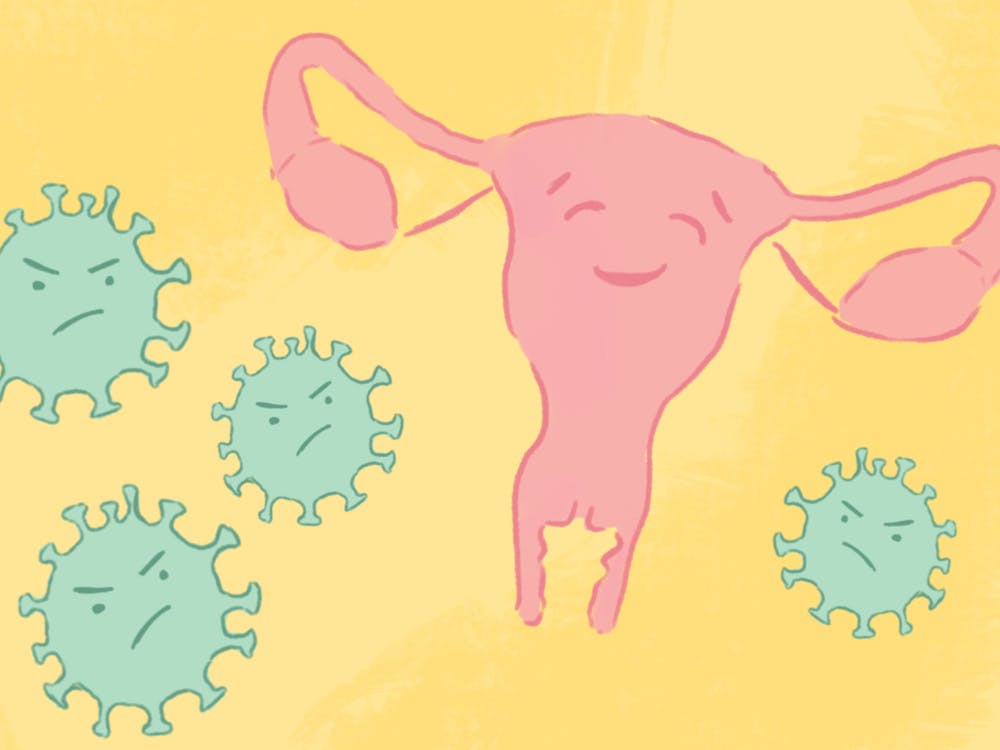
HPV isn’t just one virus. It’s actually a group of related viruses that can be split into two groups: low-risk and high-risk. High-risk strains can directly cause several types of cancers, including cervical, anal, oropharyngeal, penile, vaginal and vulvar cancers. In fact, over 90% of cervical cancer is directly caused by HPV.
Low-risk strains rarely cause cancer, but they may cause warts around your mouth, genitals or throat. Infection with high-risk cancer-causing strains is often asymptomatic, meaning an affected person would have no reason to suspect they were infected.
But how many people actually have it?
It might surprise you just how common HPV is.
It’s estimated that more than 80% of men and women in the U.S. will be infected with HPV before they reach 45. But as I mentioned before, most people don’t have any symptoms, and their immune systems clear the infection before any lasting consequences.
However, not everyone who gets HPV is that lucky. Every year, approximately 600,000 women and 70,000 men across the world are diagnosed with cancer caused by HPV.
This direct link to cancer is what makes HPV such a significant global health concern, and it's why prevention is so important.
Thankfully, we have a vaccine.
What is the HPV vaccine?
In fact, the vaccine is why I wanted to write this column in the first place.
The series vaccine used in the U.S. is Gardasil 9, which protects against seven high-risk strains and two low-risk strains. It’s typically two to three shots depending on your age at the time of getting the vaccine. Gardasil 9 vaccination can prevent 90% of cancers caused by HPV.
The minor inconvenience of the shot can quite literally save your life.
Unlike many immunizations, such as polio and MMR, the HPV vaccine is not required by most states for children to attend school. This gives parents the opportunity to decide for their children when offered by their pediatrician around 9 to 12 years old.
Why do some people decline the vaccine?
The vaccine is often passed up by parents who don’t deem it necessary because their child isn’t sexually active at the time. However, because HPV is so prevalent, it’s very important to give the vaccine prior to any sexual contact, which is why it’s offered starting at age 9.
As with many other vaccines, some parents cite safety concerns for declining the shot. A common misunderstanding of the HPV vaccine is that it will affect fertility. However, the Centers for Disease Control and Prevention and the World Health Organization have not found any proof of the HPV vaccine causing reproductive problems.
In fact, treatments for cervical cancer, like removing the uterus, chemotherapy and radiation, can cause infertility. So, if anything, the prevention of cervical cancer through the HPV vaccine protects women’s fertility.
The risk isn’t in getting the HPV vaccine — it’s in skipping it.
If your parents passed up the vaccine when you were offered it as a preteen, you still have the chance to protect yourself — the vaccine is recommended up to age 26, and it’s approved until 45.
You might not have had the chance to decide for yourself when the HPV vaccine was offered to you, but it’s not too late. If you’re interested in learning more about the HPV vaccine, please reach out to your primary care provider.
Your health is now in your hands.
Lara Caglayan is a 21-year-old nutritional sciences senior.