
When people picture a cowboy, they often imagine popular depictions like Clint Eastwood with white skin and a grizzly beard, lassoing on horseback in classic Western films.
Images like this have shaped how generations of agriculturalists’ stories are told. In North Central Florida, Black agriculturalists continue to challenge those portrayals, preserving an often overlooked legacy. Historians say up to one in four cowboys in the American West were Black.
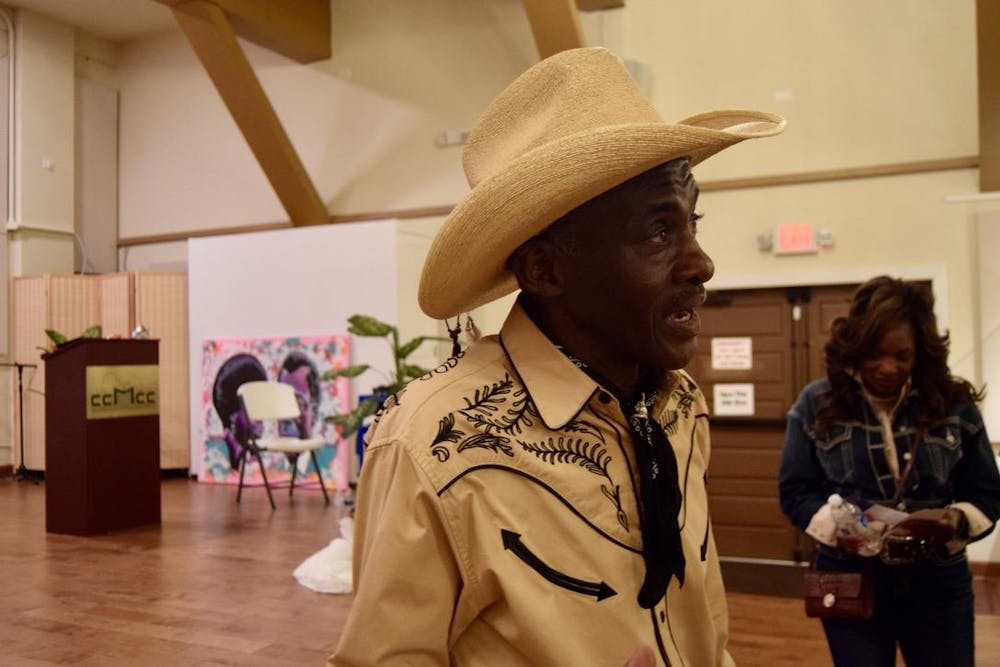
For generations, Black people have taken part in this culture as cowboys, ranchers and farmers. John “Ronnie” Nix, a third-generation rancher and Alachua native, has played a significant role in bringing light to the culture’s niche in North Central Florida. Nix has a career in agriculture that not only spans his farm in Rochelle, but across the state of Florida.
At the Cotton Club Museum and Cultural Center, Nix continues to raise awareness of his family’s agricultural history and clarify misconceptions about American farming — and the role Black farmers have played in it.
The event unfolded over two days, beginning with educational presentations that used slides and videos to explore Black agricultural history. On the second day, attendees gathered outdoors to support local vendors, enjoy regional food and watch live horseback riding demonstrations.
“I think that we’re in a stage today when modern media has portrayed the Black farmer or Black cowboy in a very minority type of way,” Nix said.
The term “cowboy” was often used to describe Black slaves who penned cows, Nix said, but white farmers eventually claimed the title and dismissed their Black counterparts from the narrative.
The number of farms owned or tenanted by Black families dropped from 20% in 1925 to 5% in 2022, according to the Department of Agriculture.
Nix elaborates that events like those at the Cotton Club Museum help provide a proper perspective on Black farmers’ success. Taking part in the culture has never been about fame or money, he added, but rather the legacy he strives to leave for future generations.
“By coming out here, they can see the real people that are doing these things, understand the background and the reason why,” Nix said. “We make sure people understand our history and legacy from which we come.”
Despite their lack of coverage, Black cowgirls are just as prevalent as their male counterparts and have become more outspoken about their presence in recent times. That includes Nix’s youngest daughter, Mikaela Nix-Walker, a domestic relations judge at the Orange County Courthouse in Osceola County, Florida.
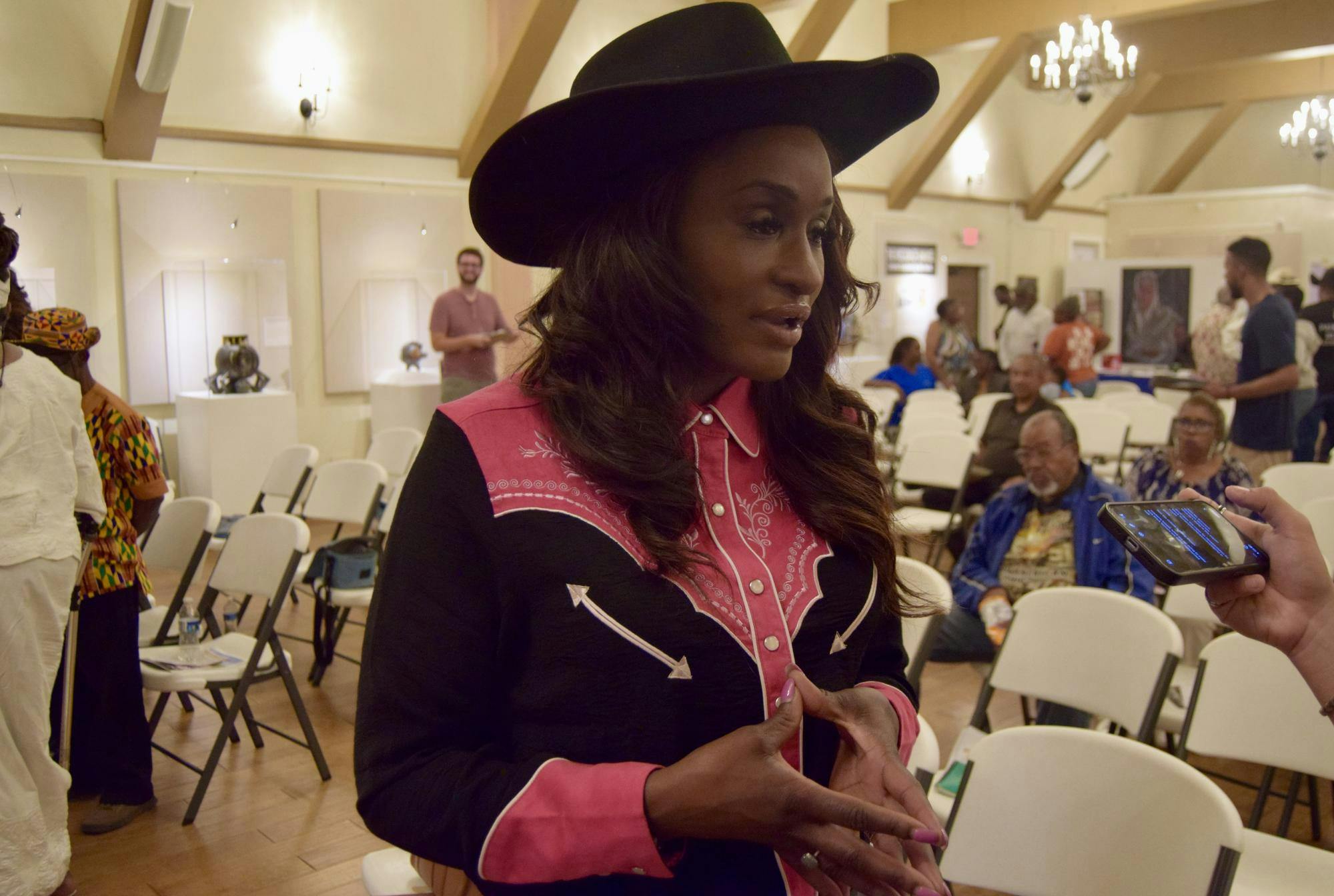
“We need to get people more excited about seeing the cowgirls,” Nix-Walker said. “Whether that's through social media … whether that means me talking to kids, sponsoring young girls, giving them the ideas that they can do it.”
Just like in any other sport, she said, male cowboys are favored over women because they bring in more money.
“I make sure that I advocate that there is a special arena for young ladies in this industry, because it’s not a just male-dominated industry,” Nix-Walker said.
Farmer Rick Wallace spends his time working at the Beef Teaching Unit at UF’s Institute of Food and Agricultural Sciences.
On his off time, though, he’s taken to teaching a new generation of ranchers to keep rodeo culture alive in North Central Florida — like his nephew, rodeo champion Tayelen Seabrook.
“This is just kind of my side deal,” Wallace said. “When [Tayelen] graduated high school, I figured I was done, and then I looked up, and there were four girls standing at the door … and then more kids started showing up.”
At his farm, Wallace continues raising the next generation of cowboys and cowgirls. During a visit to his land in Williston in early April, a group of three girls and three boys took turns simulating rodeo activities like lassoing goats and bulldogging, which requires human strength to wrestle down a steer by the neck and horns.
The children — the youngest being a 9-year-old girl — would continue practicing through sundown.
But despite growing participation and advocacy, Wallace wasn’t the only one to point to a gap between reality and representation. As young cowboys and Black farmers continue to shape the culture, portrayal in mainstream media continues to leave much of this legacy untold to wider audiences.
Members of the Black agricultural community and the greater North Central Florida Black community know how the media can better advocate for their culture and history.
Vivian Filer, the founder and board chair of the Cotton Club Museum and Cultural Center, voiced concerns about modern media representation of Black agriculturalists.
Filer said preserving the history of the "little people" means creating space for community members to share their stories and cultural traditions. Through advocacy, she hopes to encourage media coverage that elevates these histories and presents a more complete picture of Black agricultural communities.
“If the media is truthfully given our story in the way it exists, it may then draw more people into the reality of what actually happened,” Filer said.
Joaquin Benigno Garcia is a contributing writer for The Alligator.
Contact Gian Giron at ggiron@alligator.org. Follow him on X @_giron_gian_.