

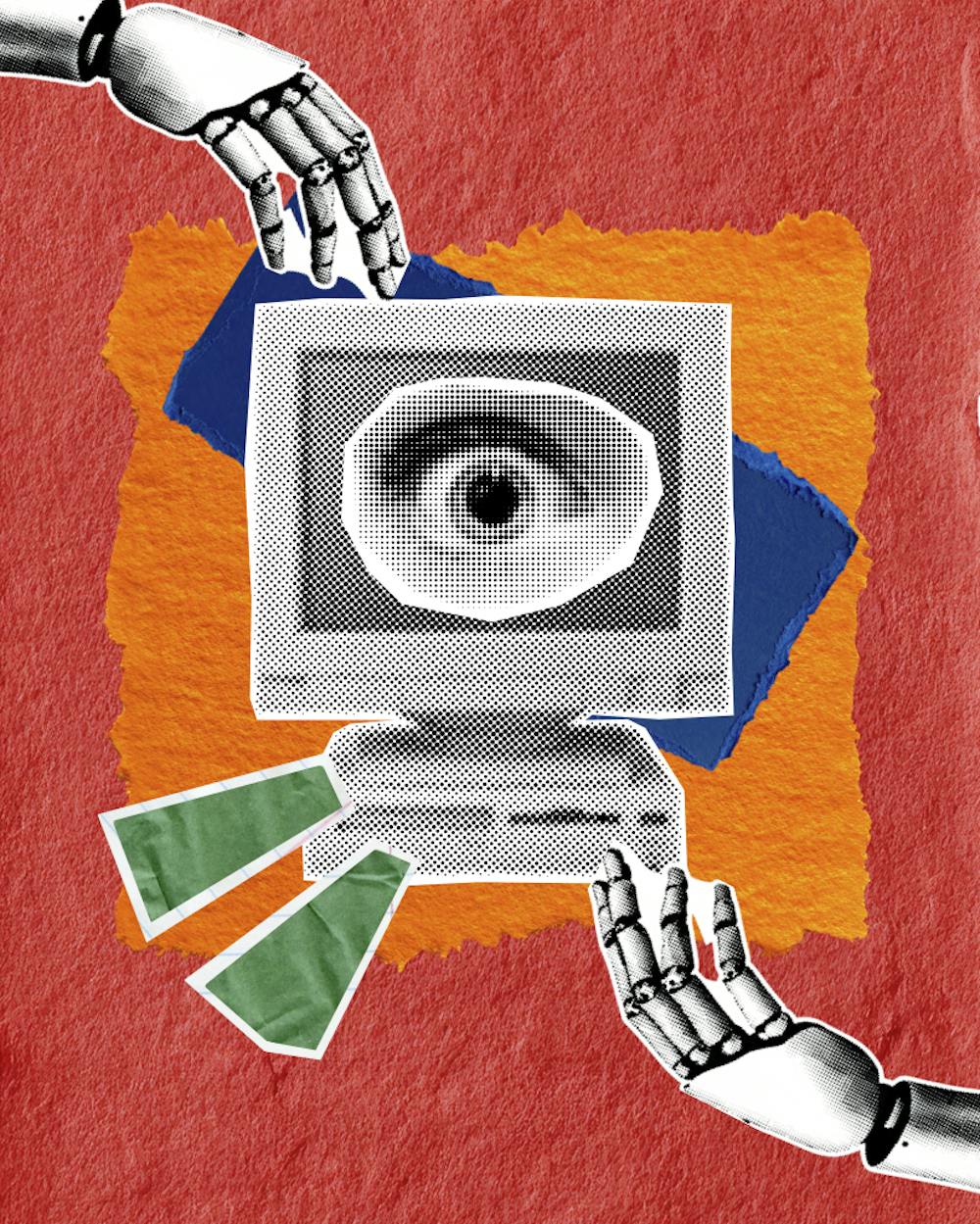
It might be hard to imagine daily life without technology, but there was once a time when an embarrassing moment could simply fade away. There was no Instagram story documenting the night, no Snapchat memory resurfacing years later and no public profile for someone to analyze before they met you. Now, anyone can know anything about anyone — or at least anything they’ve chosen to preserve online.
Our relationship with phones wasn’t always this consuming. Only about one-third of American adults owned a smartphone 15 years ago, according to the Pew Research Center. But as of last year, nine in 10 have one.
The devices themselves aren’t the enemy. I love being able to take a burst of pictures on a night out so I can reminisce the next morning. I love that I can keep up with friends hundreds of miles away, find practically anything in seconds and preserve pieces of my life that previous generations had to leave to memory. But having the ability to remember almost everything has also made it incredibly difficult to forget.
Growing up is inherently embarrassing. Before you become good at something, you usually have to be bad at it. Figuring out who you are often means experimenting with how you express yourself in ways you’ll cringe at five years later. We change how we dress, how we act and how we talk. Our beliefs evolve, and the people we surround ourselves with change alongside them. We say stupid things, and we dance awkwardly. It’s nice to look back at those moments with embarrassment. It means we’ve changed.
Things become more complicated when our mistakes can be revived and analyzed long after we’ve outgrown the person who made them. For past generations, moments like that had an expiration date. Now, though, an awkward phase or bad take can outlive us online. Someone you meet for the first time can search your name and find a version of you that you haven’t been in years. Social media hasn’t just given us a record of our lives; it has made our identity something we can curate.
A 2025 systematic review of studies involving nearly 20,000 adolescents concluded that online interactions and presentation can play a role in identity development. Participants associated authentic self-presentation with a clearer sense of self, while they associated social comparison with greater identity exploration and distress.
That makes sense. Social media gives us a place to experiment with who we are, find people we relate to and discover interests we might never encounter otherwise. But experimenting with how you express yourself becomes a little different when you have people watching. Growing up has always meant caring about what other people think. Social media didn’t invent insecurity or embarrassment — but it did give us an audience that follows us home. We can edit what we post, delete what we don’t like and curate the best parts of ourselves until thinking about how we appear to other people becomes almost second nature.
And I wonder how easily we can leave that mindset online.
We don’t just experience our lives from our own perspective anymore. Sometimes, we experience them while simultaneously imagining how they look to everyone else. Would I look stupid if I danced right now? Does everyone else have someone to talk to? Should I check my phone so I don’t look like I’m here alone?
When did existing become a full-time job in risk analysis?
Even if no one’s recording me, I’ve already imagined how I would look on their screen if they were. Maybe that’s what we’ve underestimated about growing up alongside smartphones and social media. The camera doesn’t have to be pointed at us for us to behave like it is. Maybe we’ve become our own cameras, constantly viewing ourselves from the outside and debating whether something is too awkward, too enthusiastic, too weird or simply too “cringe” before we decide to do something. Growth requires risk, but social media has complicated the consequences enough to dissuade us from gambling.
Day-to-day life is full of taking risks — approaching a stranger, trying something new, admitting you care about something or someone — that can be uncomfortable, but discomfort is often the price of becoming someone you haven’t been before. How can you know something works if you haven’t tried it?
None of this means we should stop documenting our lives. Some things deserve permanence. Media can record history, create accountability and allow us to revisit loved ones long after they’re gone. But documentation and surveillance are not the same thing.
Not every bad outfit needs to follow someone for a decade. Not every stupid comment a teenager makes should represent the adult they become. Not every failed attempt deserves an audience, and not every ordinary mistake needs an archive. Sometimes, we can only change after letting things go.
Maybe that’s what I envy most about life before smart technology became a social necessity. Moments were allowed to simply be moments. You embarrassed yourself. Your friends laughed. You went home. And eventually, everyone forgot.
We deserve to regain some of that impermanence, dance badly without caring how it looks on someone else’s screen, try things before we’re good at them and change our minds without every previous version of ourselves hanging over us.
Technology has given us an extraordinary ability to remember. But maybe growing up still requires the possibility to forget.
Contact Shirin Khizzar at Skhizzar@alligator.org. Follow her on X @Shirinkhizzar.

Shirin Khizzar is a sophmore studying Public Health. This is her first semster working on the Alligator staff. In her free time, she enjoys reading, listening to music, and watching movies.


