

As Florida implements new policies targeting undocumented students and residents, Gainesville’s immigrant community has to navigate the impacts in day-to-day life. Meanwhile, local advocacy groups work to keep up with a shifting legal landscape.
Leah Cohen, a member of the Gainesville Immigrant Neighbor Inclusion Initiative, said she advocates for “common-sense protections” for immigrants. She added that she’s seen how policies have created fear among Gainesville immigrants.
Some have told her they’re worried they might be detained by immigration enforcement when they leave their homes, she said.
When it comes to immigration, Cohen said most people don’t have firsthand experience, so some may think immigration is easy and inexpensive. In reality, she said, it isn’t. The process can take years and may require complicated applications before naturalization can be considered.
Cohen said Florida law enforcement has been more than willing to comply with demands to act as Immigration and Customs Enforcement agents. Law enforcement has been able to use traffic stops to detain immigrants without creating public noise for activists to protest, she added, and a simple traffic stop could turn into a whole family being taken into custody.
“There’s an assumption that immigration enforcement is not happening or happening at a much lower level than it actually is because they’re not seeing the big dramatic ICE raids that we’re hearing about on the news,” Cohen said. “I think it’s really important for people to understand that’s intentional.”
She said her advocacy is about recognizing immigrants’ humanity, including children, parents, teachers, healthcare providers and others who serve vital roles in the community.
“In reality, we all know and rely on somebody who is navigating the immigration system,” Cohen said. “I think that's not something that people realize when they’re listening to misinformation that’s intended to divide us.”
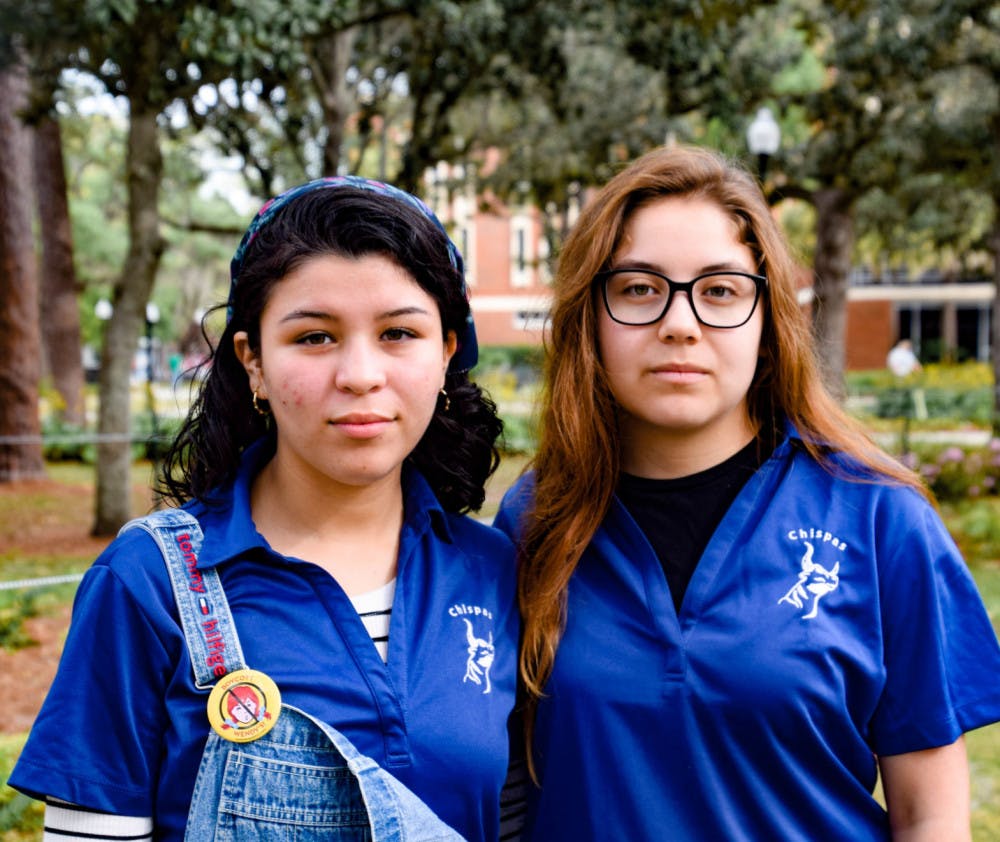
Daniela Gonzales, a 24-year-old UF sustainable development graduate student, works to support immigrants and combat misinformation through local protests. She is the external director of Chispas and an active member of UF’s Students for Socialism, which often hosts anti-ICE protests.
Chispas is UF’s only registered student organization that advocates for immigrant rights through protests.
“For any of us to have the rights we do, we need to fight for each other,” Gonzales said.
Last month, Florida’s Board of Governors banned undocumented students from attending 12 public universities, including UF, starting next school year.
Gonzales’ parents are Nicaraguan and Bolivian and met while attending UF, and she said her father being an undocumented student makes the topic of immigration hit close to home.
“If a country is trying to demonize people and criminalize them from coming but doesn’t want to acknowledge the harm and terrorism it's caused, that’s just ignorance and hypocrisy,” she said.
Chispas is working to ensure it can continue reaching undocumented students when they’re no longer allowed to attend UF, said Stifi John, a 19-year-old UF political science and criminology sophomore.
Born in India, John first immigrated to Kuwait at 3 years old, where she wasn’t allowed to attend school with Kuwaiti students. Her parents were paid less because they were immigrants. She said this was the first time she experienced anti-immigrant discrimination and laws firsthand.
When she immigrated to South Florida 10 years ago, John said she struggled to speak English and connect with others.
John is creating a Chispas support group to ensure immigration status doesn’t hinder people from building relationships, she said. The group is still in the planning phases, but Chispas aims to launch it this year.
“Maybe you’re not an immigrant, but your friend could be and it’s really important that they’re taken care of, too,” John said.
Angie Pleitez, a 21-year-old UF psychology and women’s studies senior and daughter of Honduran immigrants, carries her parents' experiences with her and takes pride in them. She serves as Chispas’ vice president of internal affairs.
As a first-generation student, Pleitez said it’s surreal to be achieving the dreams of success her parents came to the U.S. in search of.
Most immigrants are coming to the U.S. for a better life, she added, and banning undocumented students from public Florida universities limits their access to higher education and the opportunities that come with it. Immigration is much more than the stereotypes seen on social media, she said.
“Immigration to me means people who are strong, resilient and have an infinite drive in making sure they’re achieving a better life not just for themselves but for the people they care about,” Pleitez said. “That takes a lot of will and courage.”
The sense of resilience among immigrants is part of what Chispas hopes to support, said Atqiya Labibah, a 20-year-old UF microbiology and cell sciences junior and the vice president of external affairs.
Chispas regularly holds “Know Your Rights” events to provide information about community resources, including what to do if one encounters ICE. Other workshops cover legislative updates, English and citizenship classes, health care clinics, food pantries and clothing closets.
Labibah’s motivation for advocacy comes from her parents. Their decision to immigrate to the U.S. from Bangladesh gave Labibah access to higher education and financial aid, she said.
“If it weren’t for my parents immigrating, I would not have the life I have today,” Labibah said.
Contact Emily Medina-Finsen at emedina-finsen@alligator.org. Follow her on X @EmilyMedFinZ27.
Emily is a UF journalism senior and The Alligator's Fall 2026 El Caimán reporter. This is her second semester working with The Alligator and enjoys reporting on the community and stories surrounding Hispanic culture. Emily adores horses, teaching and riding in her spare time, adores reading and picking up new hobbies.


