
Winston Churchill famously quoted, “Democracy is the worst form of government except for all those other forms of government that have been tried.” That’s how I feel about capitalism. It’s clearly a flawed system, but there doesn’t seem to be a better option.
Proponents of capitalism proclaim it is the greatest economic system in the history of mankind. But in my opinion, our capitalist system is not living up to its promises.
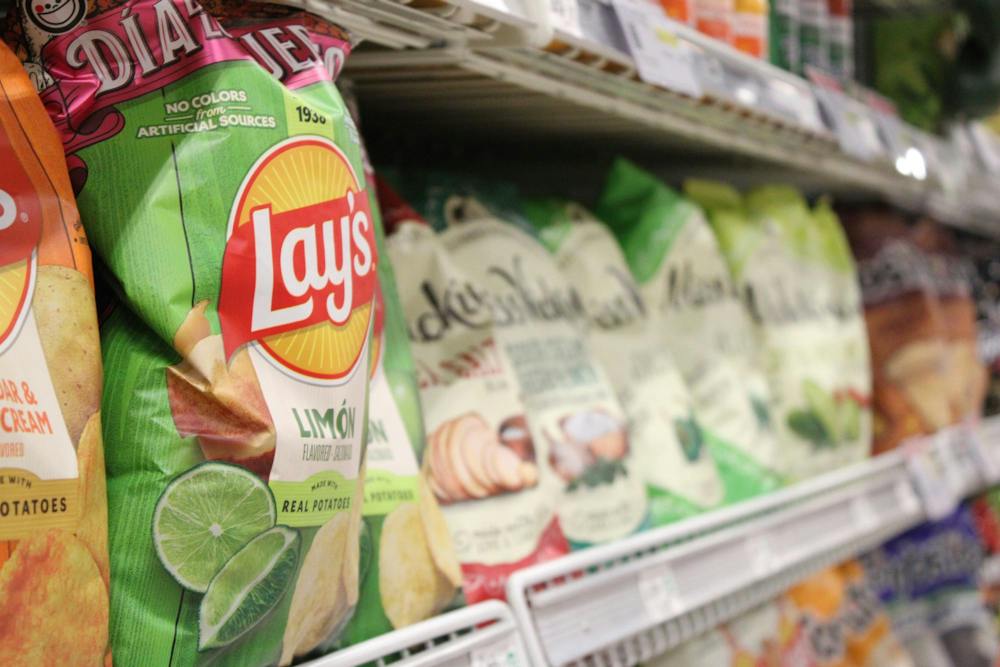
Capitalism’s failure manifests itself in modern grocery stores. The premise of capitalism suggests rigorous and free competition among companies will lower prices, increase innovation and raise wages for most people. By balancing supply and demand, capitalism seeks to ensure people are paying the lowest possible price. But corporate consolidation has only created an illusion of competition, and it has prevented prices from flowing naturally. The modern grocery store is only posing as a free capitalist marketplace.
The U.S. government has allowed food corporations to grow to massive sizes by buying or merging with other companies. For example, PepsiCo, which created Pepsi soda, also owns brands like Gatorade, Frito-Lay, Jack Link’s and Aquafina.
The meat industry is another prime example. The four largest companies — Cargill, Tyson Foods, JBS and National Beef — control around 80% of the beef market. Over half of the poultry industry is similarly concentrated in Tyson Foods, JBS, Sanderson Farms and Perdue Farms.
An investigation by The Guardian and Food and Water Watch found only a few companies control almost 80% of grocery store items bought regularly. It pointed out more than nine in 10 sodas are owned by three companies: Coca-Cola, PepsiCo and Keurig Dr Pepper. PepsiCo owns nearly 90% of dips, and Barilla alone controls nearly a third of the pasta market.
About 72.8% of cereal brands are owned by General Mills, Kellogg Company or Post Holdings. Two beer companies, Anheuser-Busch and Molson Coors, control nearly two-thirds of the market.
And it’s not limited to products — it also extends to the stores that sell them. The recently attempted merger of Kroger and Albertsons would have meant nearly half of the U.S. grocery market would have been controlled by Kroger, Albertsons and Walmart.
This breaks the illusion of rigorous competition in the grocery store, disproving the idea there are “thousands of products all competing against one another for your dollars,” as Emma Camp of The Wall Street Journal would have you believe.
The monopolistic trend in grocery stores over the past four decades has also contributed to the rising prices we all face, and it prevents those prices from falling because companies are not pressured to lower them. Other economic factors, like tariffs and inflation, contribute to rising prices as well.
Capitalism supporters will argue less government intervention ensures greater prosperity. When corporations operate freely, their costs are lower, which is supposed to lower prices for us in turn. But this lack of intervention is what has allowed these corporations to consolidate and keep prices high.
Capitalism has the ability to make people wealthy, but we should not accept that possibility at face value. Our government must ensure capitalism can operate as it is supposed to: with free and rigorous competition among more than a few companies.
If capitalism were operating properly, we would not have seen massive price hikes during the COVID-19 pandemic while companies recorded higher profits. This disparity points to a disconnect between our capitalistic system and the makeup of our marketplaces.
We are faced with less competition; therefore, we face higher prices. This era of massive corporate consolidation rivals that of the Gilded Age. If we want to make grocery prices — and our lives as a whole — more affordable, we need to break up these colossal conglomerates.
Capitalism requires competition to work, and corporate consolidation has weakened the competition we experience. Government intervention does not constrict capitalism — it is what keeps capitalism alive.
Contact Evan Dressel at edressel@alligator.org. Follow him on X @EvanD_Alligator.

Evan Dressel is a senior studying Political Science and Criminology. He plans to go to law school. He loves Gator basketball and football as well as the Green Bay Packers. This is Evan's first semester writing for The Alligator.