

The University Police Department states its mission is "to preserve a safe, secure campus environment where diverse social, cultural and academic values are allowed to develop and prosper." But UF's continued cooperation with U.S. Immigration and Customs Enforcement directly undermines these stated values.
ICE has become increasingly aggressive and indiscriminate in its tactics over the past year. Immigration officers have fired on at least nine people across five states in the last four months.
Most recently, ICE officer Jonathan Ross fatally shot 37-year-old Renee Nicole Good, a U.S. citizen, wife and mother, as she attempted to pull away from a traffic jam in Minneapolis. Before conducting any meaningful investigation, Department of Homeland Security officials characterized her as a domestic terrorist. Bystander videos, however, refute this conclusion and raise serious questions about officer Ross' immediate use of lethal force.
The federal immigration crackdown has exposed a widening rift between local and federal authorities. Minnesota investigators initially launched a joint probe into Good's shooting, but the effort collapsed within two days when federal officials blocked state investigators' access to evidence and witnesses. This behavior is not unusual for an administration that resists and stymies even congressional oversight.
While these events occurred in Minneapolis, their effects resonate at UF. In April 2025, the university signed a 287(g) agreement formalizing its partnership with ICE. The agreement authorizes local law enforcement to interrogate individuals and make warrantless arrests for civil immigration infractions. This controversial decision followed closely after the arrest and deportation of UF student Felipe Zapata Velasquez for driving with an expired license.
Rather than fostering a safe, inclusive learning environment, the 287(g) agreement creates fear and distrust. The agreement neither improves law enforcement nor enhances campus safety.
Crucially, UF entered this agreement voluntarily. While Florida law requires all county law enforcement agencies with operating jails to participate in 287(g) programs, no provision imposes this requirement on universities. UF actively chose this partnership — and it was wrong to do so.
Research demonstrates that 287(g) agreements endanger communities. When law enforcement acts like ICE, victims and witnesses become significantly less likely to report crimes or cooperate with police. One study reported that survivors of domestic and sexual violence, as well as witnesses, frequently withdraw from cases due to fear of deportation. Another study found that immigrants in communities with 287(g) agreements are 61% less likely to report crimes they witness and 43% less likely to report being victims themselves. As a university with about 5,000 international students and a spotty record of combatting nonconsensual sexual contact, UF cannot afford to ignore this problem.
Moreover, "cooperation" with ICE is a one-way street that diverts local resources to federal immigration enforcement with little in return. While ICE covers limited initial costs, it offers minimal training and oversight. ICE also does not pay for program implementation or lawsuits arising from civil rights violations. Instead, local law enforcement agencies are left to fit the bill for these programs. In the past, these agreements have saddled local agencies with bills in the tens of millions.
University leaders argue these agreements ensure campus police remain "in the driver's seat" during any enforcement actions that take place on campuses. This is not true. Immigration officials’ actions reap no limitations or imposition under 287(g) agreements. Moreover, ICE’s emboldened enforcement actions in Los Angeles, Chicago and Minneapolis suggest that these thin contracts will not insulate campuses from this rogue paramilitary force.
The bottom line: UF must withdraw from its 287(g) agreement with ICE. The university cannot legitimately claim to champion diversity and safety while partnering with an agency that terrorizes U.S. citizens and noncitizens alike. True campus security comes from trust, an asset that ICE has systematically destroyed. UF should not sacrifice its own in this misguided partnership.
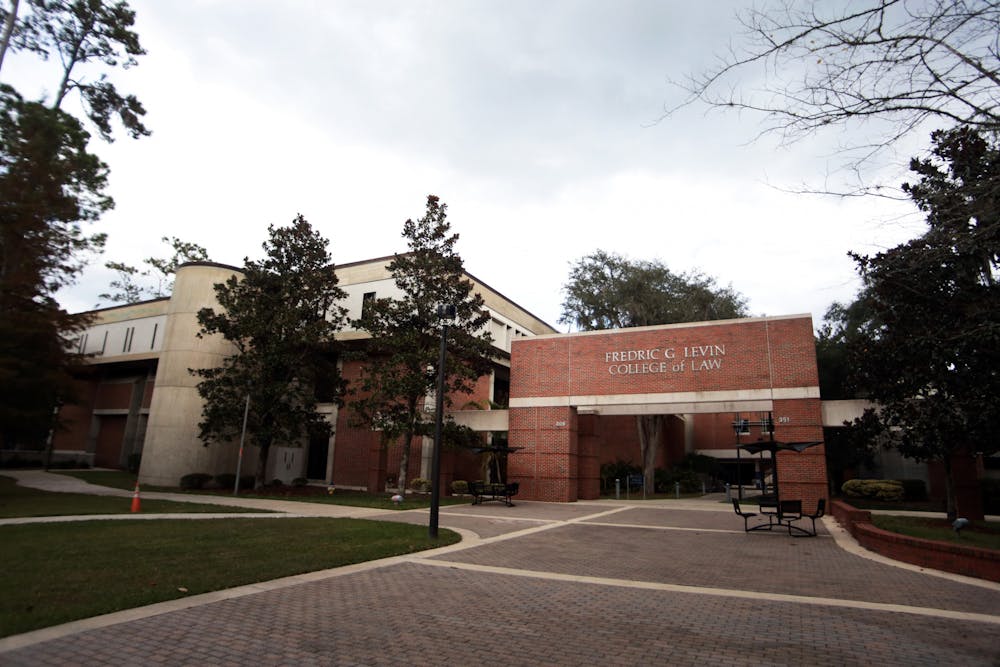
Juan Caballero is the director of the immigration law clinic at UF Levin College of Law.