
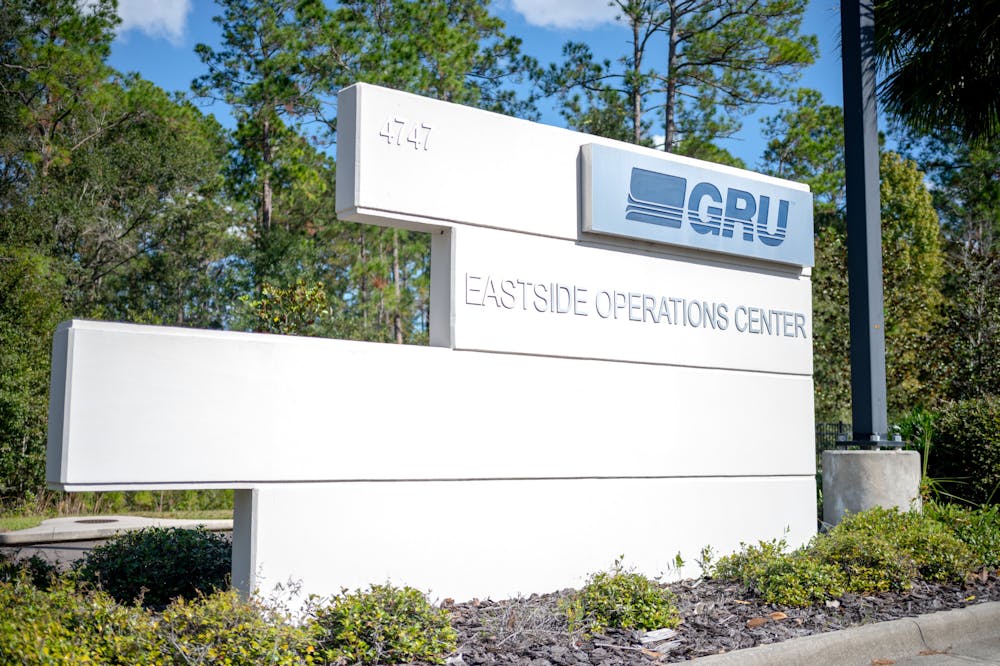
Gainesville has a long history of showing up when local democracy is threatened. Last November marked the third time residents went to the ballot to reclaim control of Gainesville Regional Utilities.
From standing-room-only GRU authority board meetings to packed public comment sessions, people across Gainesville and Alachua County have continued to show up, speak out and demand a say in decisions that shape their daily lives.
In Gainesville, many families have had their electricity shut off for falling behind on unaffordable bills, while others are forced to choose between keeping the lights on and having money left for rent, food or medication. Energy decisions are never neutral, and when control is removed from the people most impacted, inequity deepens.
That sustained turnout is not political fatigue — it’s resilience. It’s a community refusing to accept an unelected authority in place of democratic control, and Gainesville’s vote to regain control of its public utility adds to that momentum. It’s a testament to the importance of local democracy and a test of whether the state of Florida will honor it.
GRU has earned a reputation among residents for pricey rates and power shutoffs. In 2023, those frustrations grew after a bill placed GRU under a governor-appointed authority board, taking control away from the city.
As a municipal utility, GRU allows Gainesville to own and operate its energy without seeking profit, unlike private utilities like Florida Power & Light and Duke Energy. This dynamic offers opportunities for more local control, such as making investments into renewable energy to increase affordability or strengthening Gainesville’s energy efficiency programs.
For decades, residents could set policy on power, water and environmental goals through their elected city commission. Now, an authority board has not only stripped the city commission of its jobs, but also community members of their rights.
Citizens argued the law upended the close relationship between the electors and their utility systems, replacing democratic oversight with an unelected, unrepresentative board. In 2024, a referendum to dissolve the board passed with 72.5% support; however, the results were later nullified for “misleading language.” Last November, voters returned to the polls, and the result was unmistakably clear.
On Nov. 4, 2025, Gainesville residents voted 75% in favor of bringing GRU back under city control. This marked Gainesville’s second decisive referendum, demonstrating that residents clearly want energy decisions made by those who actually live here, not by political appointees.
Much like the other two attempts to pass this referendum, it was challenged just two days later by the Florida First District Court of Appeal, which issued an injunction allowing the board to remain in power while the courts “settle the underlying legal issues.”
Even after three separate referendums in 2018, 2024 and 2025, Gainesville still doesn’t control its own utility. That gap between the blatant needs of voters and the rule of law is exactly why this movement matters. The key to advancing clean energy in Gainesville is having a locally controlled utility company.
The injunction keeping the GRU authority board in power effectively puts Gainesville’s democratic choice on pause. Although the case reached Florida’s appellate court on Feb. 10, any ruling is still months away, echoing the drawn-out legal delays repeatedly slowing this process.
This clear disconnect between the desires of Gainesville residents and those appointed by Florida’s governor should concern anyone who believes in democracy. When voters act decisively, and the result is stalled by procedure, faith in civic participation weakens. That’s why students need to join this wave, and all Gainesville residents need to keep showing up, speaking out and holding officials accountable.
The passing of the referendum last November is just the beginning. With local control back in the hands of Gainesville residents, there’s now an opportunity to advocate for cleaner, more affordable energy by encouraging the city to eliminate the possibility of any new gas plants and instead invest in renewable energy.
If the court ultimately sides with the city, GRU will return to the hands of the citizens it serves. Yet the work is only beginning. Energy equity and the transition to clean, renewable power remain challenges that Gainesville has faced under both city commission oversight and the authority board.
genCLEO UF will continue to fight for clean energy, utility equity and climate justice here in Gainesville, and we are committed to a campaign that bridges the student body with community members. Follow us on Instagram for information on our upcoming events and other ways to get involved @gencleo_uf.
Chloë Smith is a 20-year-old UF political science sophomore and policy and justice intern for genCLEO, a youth-led climate justice organization.