
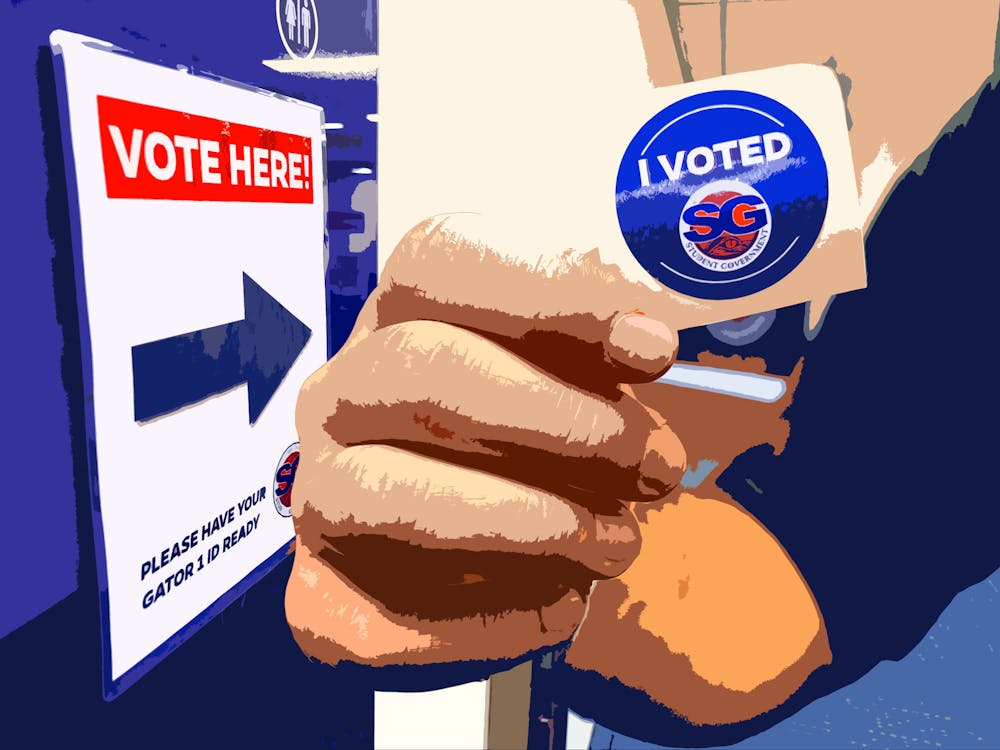
UF Student Government elections are rampant with problems: gerrymandered maps, the exchange of alcohol and food for “I Voted” stickers, and select fraternities and sororities effectively controlling SG agencies. However, the most prominent problem is low voter turnout.
In Fall 2025, roughly 8,000 students voted in the SG election. Meanwhile, there are over 60,000 eligible voters — any undergraduate or graduate student can vote. That means only 13% of eligible voters turned out for the election, which is consistent with voter turnout in both Fall and Spring elections.
For reference, in the 2024 presidential election, over 60% of eligible American voters showed up to vote. Even this percentage, which is remarkably larger than UF’s voter turnout, is shockingly low when compared to other democratic countries.
So, why do UF students not show up to vote in student government elections?
For one, it may be the disillusionment so many students have regarding their vote’s ability to enact meaningful change. After all, this Spring’s election provides literally no option, as every seat is only contested by Vision Party senators. Even in years with high voter turnout, the results were still tilted towards Vision.
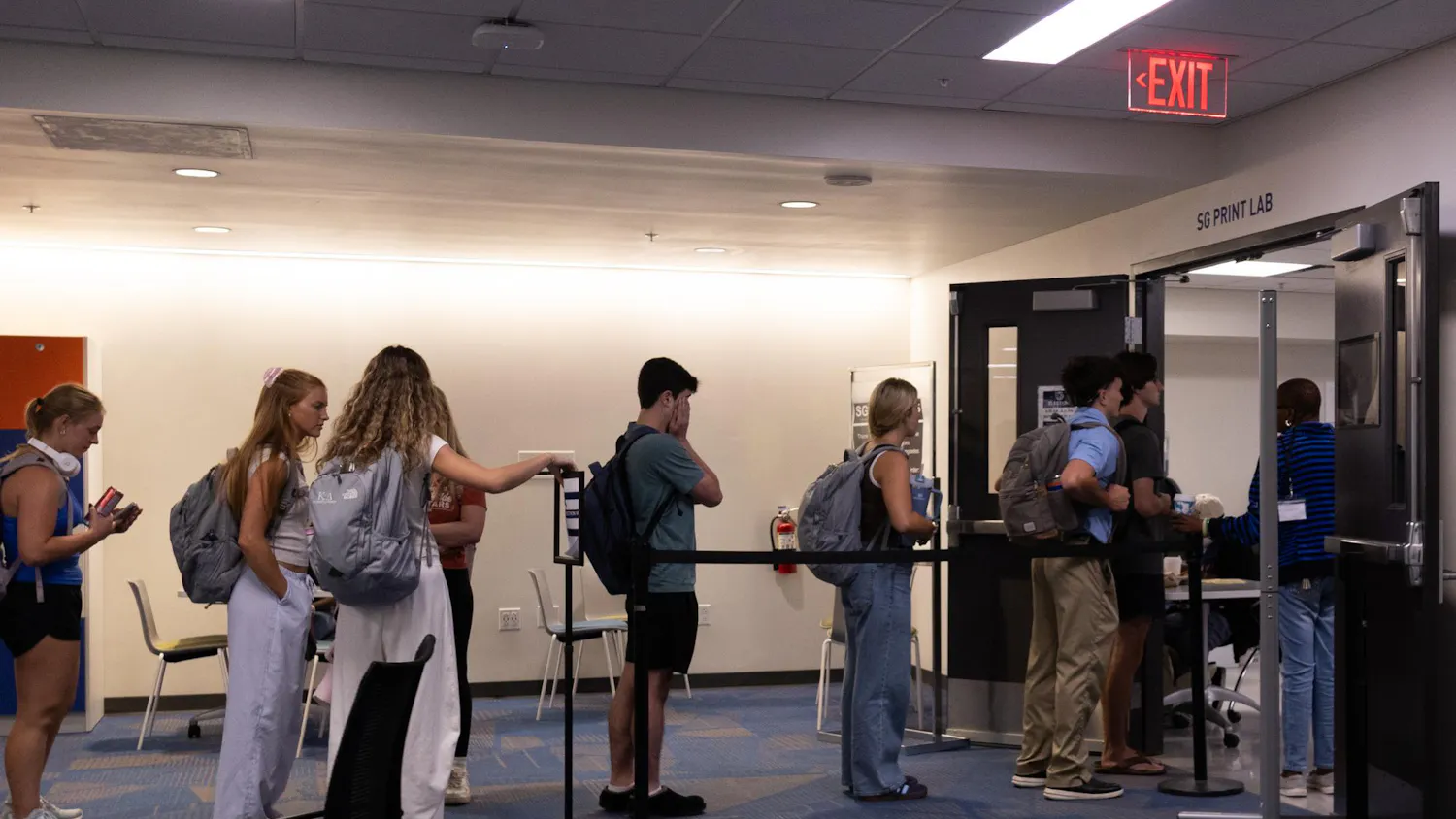
However, I would argue a more influential reason is the inconvenience of voting. Elections are placed halfway through the semester, when papers, readings and exams from classes pile up. How many students have time to wait in long lines to vote?
To remedy this inefficient problem, UF SG should implement online means of voting in elections.
The implementation is simple, because you already vote by computer when you go to the “ballot box.” All SG needs to do is extend this method to student computers, allowing busy students to vote wherever they want.
Online voting in student government elections is not unheard of. Florida State University already utilizes online elections.
Implementing online voting would provide a case study in how improved access to voting — though I don’t recommend online voting for local, state or national elections — can raise turnout. UF SG would be lauded for its commitment to democracy.
So, why hasn’t this happened?
It’s because SG is overinfested with Vision Party senators who have a supermajority — 98 of 100 seats — and enjoy its low voter turnout.
High voter turnout means competition. It isn’t a coincidence that Change Party’s best results came in Spring 2023, when almost 12,000 voters showed up, and Change won 30 of the 50 seats. It was in response to those results that the Gator Party rebranded into Vision Party and gerrymandered the following Fall election map.
For the time being, we are stuck with the current voting system — taking unnecessary time out of the day to wait in line to vote on poorly planned election days. And until an independent party forms, mobilizes a significant enough number to win a majority, and takes advantage of its time in power to fix the election maps and implement online voting, the cycle of Vision dominance will continue.
Contact Timothy Dillehay at tdillehay@alligator.org. Follow him on X @timothydilleh.
Timothy Dillehay is a political science and history sophomore and a Spring 2026 Opinions Columnist for The Alligator. He writes on issues related to university administration and student government. In his free time, Timothy enjoys journaling, reading comics and classics, and reviewing films on his Letterboxd.