

Read other stories from the "These stories were not AI-generated" special edition here.
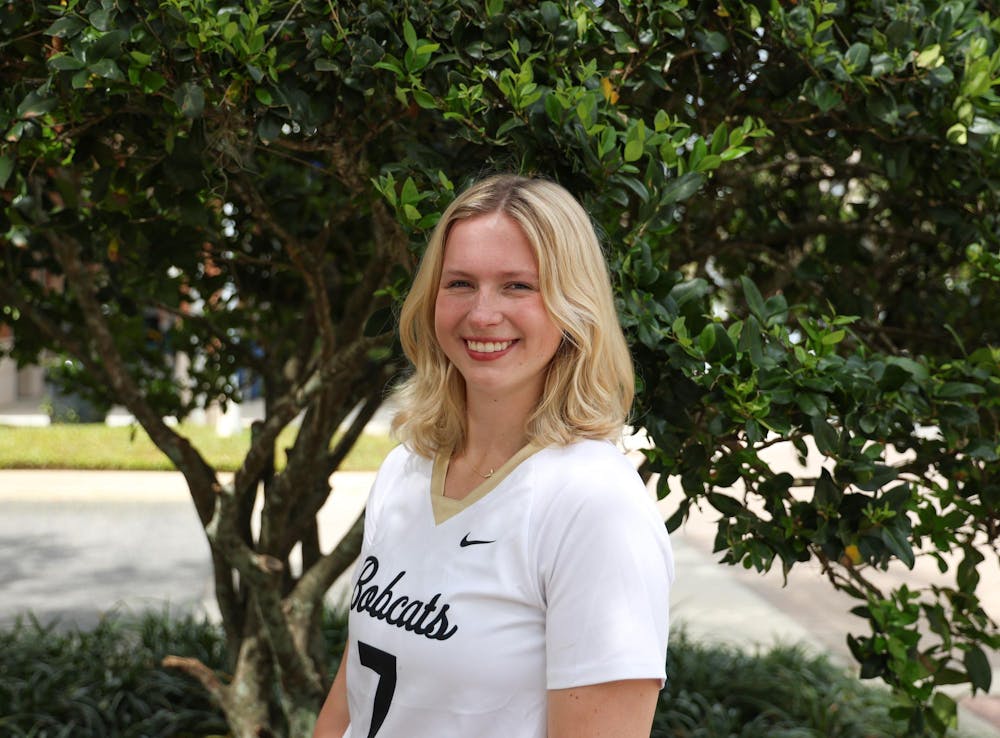
After Avery Oyenarte scored a goal during a recent lacrosse game, she credited an unusual source of advice.
“I asked ChatGPT, ‘How can I score better in a game when I feel I’m cutting right?,’ and I just did what it said, and it got me a goal,” Oyenarte said.
Artificial intelligence chatbots like ChatGPT are filtering into the routines of athletes like Oyenarte across the globe.
Professional U.S. leagues, including the NFL and NBA, have long been vocal distributors of machine learning and computer vision-based tools. Now, use of the technology to predict injury and optimize performance has trickled into high school and college programs.
The global AI in sports market is expected to increase from just over $10 billion in 2025 to about $61 billion a decade from now, with North America dominating revenue, according to a 2025 research report.
Training plans
For Oyenarte, a Buchholz High School lacrosse player, the impact has shown up on and off the field. The junior credits ChatGPT with assisting her in making the jump from JV to varsity.
Her journey with the most-used chatbot goes back to her time in middle school, when she used it to build workout routines for each body part. When freshman year of high school came along, the stakes heightened. Her usage of ChatGPT became rampant, especially when she joined the girls’ weightlifting team, she said.
“I remember it formulated a girls’ weightlifting workout that was centered on clean jerks and just mainly including presses and pushups,” Oyenarte said.
On the lacrosse side of things, she started using the technology her freshman year only for workouts, such as formulating wallball routines. Then, the right-handed attacker started using the technology to improve her play by asking how to read the field better, improve her left-handed throws and shoot in the right spot.
“ChatGPT really helped me figure out what I needed to do and the steps I needed to take to be on varsity, and then I went to varsity the next year,” Oyenarte said.
The rise of AI in athletics hasn’t come without concerns, though. Some worry that relying too heavily on tools like ChatGPT could take away from traditional in-person training and camaraderie.
Richard Blalock, the CEO of RADDSports, a company that works with youth athletic programs and companies, said while AI could be useful for nutrition building, it shouldn’t replace the traditional aspects of team sports.
ChatGPT could have a massive impact on locker room culture, creating isolation among athletes, he said.
“You lose that aspect of socialization. You lose that aspect of teamwork,” Blalock said.
AI also introduces disparities between higher- and lower-funded programs, he added. Schools with fewer resources may miss out entirely, meaning AI could potentially widen the gap between more and less privileged schools.
Equity concerns have increasingly appeared as the technology becomes more common.
A study by the Brookings Institution’s Center for Universal Education found richer communities and schools will be able to afford more advanced, accurate AI models — meaning programs could have to pay more for more accurate information.
Another report, released by College Board and drawing on data from more than 10,000 surveys, found private high schools were substantially more likely than public school teachers to report network access to GenAI tools.
“That kid that's in the rural community doesn't have access to the internet, doesn't have access to a laptop, doesn't have access to everything else to be able to keep up," Blalock said.
Injury prevention
Still, advantages from AI present themselves in the world of college athletics.
Every workout, game day or practice poses inherent risks for injuries. According to Sport Journal, approximately 40% to 50% of collegiate athletes sustain at least one injury requiring either medical attention or a participation restriction during their careers.
College athletics programs are now turning to AI programs to increase injury prevention and optimize athlete performance.
At UF, AI isn’t being used to collect data; it's being used to understand it.
Spencer Thomas, director of the sports performance and analytics division at Florida, is among those leading the shift.
“I always think of AI as something that's a tool that's really useful,” Thomas said. “Something that can take all the information that we have and maybe pull out something that I wasn't necessarily thinking of."
The process starts by collecting data and identifying patterns in injury records.
Each athlete requires their own recovery and prevention plan to avoid further complications. Those complications may stem from ACL or meniscus tears, shoulder or back injuries, concussions or even demanding surgeries.
As each injury occurs, patterns start to form. Analysts can use AI to identify certain movements that lead to, for example, recurring ACL tears or overuse in specific muscle groups. That’s when the real work of prevention can begin.
When large loads of data are eventually collected, they are categorized into data streams. From there, analysts can build predictive models that identify which athletes are more susceptible to injury and how to reduce time-loss injuries, Thomas said.
It’s a long and complex process, Thomas said, which requires detailed information about each athlete in order to draw meaningful conclusions — from demographics and workload to injury history.
But once a solution is identified and action is required, AI analyzes. It serves its main role: acting as another set of eyes to identify vantage points that doctors, trainees or specialists may not have considered.
UF doesn’t use AI to collect data, instead leaving that task to repositories and online databases. But the university does use AI to sift through what’s known, collect insights and explore fresh ideas for transforming training and workout regimens.
While UF is in the beginning stages of AI implementation, there already are some institutions that use AI models to generate injury prevention methods and optimize training habits.
The University of California San Diego created a model driven by generative AI that generates videos of motions. Athletes can mimic the videos to avoid injury when they train.
At the University of Delaware, researchers have developed a model that can predict an athlete’s likelihood of sustaining a lower-body injury after a concussion.
Even at the University of Michigan, researchers are using artificial intelligence to help predict the long-term health impacts of sport-related concussions on college athletes. Five of their AI models outperformed a standard benchmark in predicting how concussion-related effects develop over time.
At UF, coaches and physical therapists collect data through more traditional processes, like force plates, GPS sensors and tailored test movements. AI then transforms the raw data into suggestions, giving trainers a new layer of insight to work with.
Through these processes and with the help of broader medical personnel, Thomas said his department has seen reductions in soft-tissue injuries in recent years and months.
“I would say you can have association with who's at highest risk,” Thomas said. “Then we can kind of identify who's most susceptible, and that's where I think you can really kind of help preserve health and wellness.”
Contact Colby Kistner at ckistner@alligator.org. Follow him on X @colbykistner22.
Contact Ethan Feinberg at efeinberg@alligator.org. Follow him on X @thefeinline.

Colby is a junior sports journalism student in his first semester with the Alligator covering golf. He has experience covering Buchholz and Santa Fe High School sports. He also worked in UF's innovation center where he wrote and created radio content for WRUF. He is an avid hockey fan with his teams being the Seattle Kraken and Florida Panthers. He is looking to minor in business administration.

Ethan Feinberg is a senior sports journalism student and the Spring 2026 men’s tennis reporter. He has previously written stories and produced audio sessions for WRUF, covering high school football. Ethan enjoys watching and playing sports like football and basketball, working out, fishing, cooking, and having a good laugh with his friends and family. His favorite sports teams are the New England Patriots, Miami Heat, Florida Panthers, and the Miami Marlins. (Drake "Drake Maye" Maye is the GOAT.)