
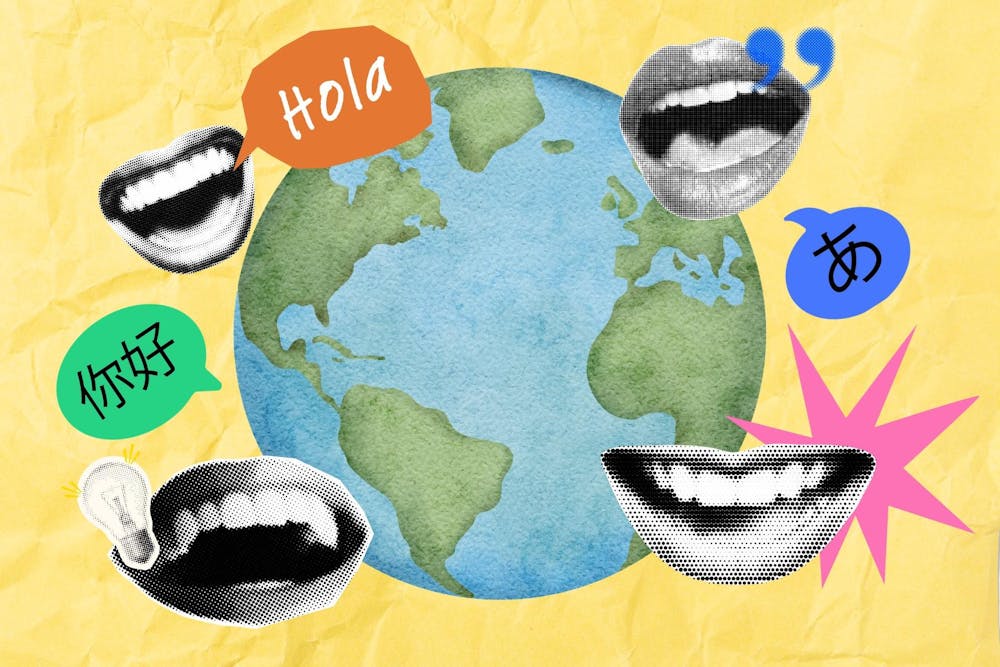
Many of us know a couple of words in another language, enough to say “Hello” or ask for the nearest bathroom or library.
But there’s a difference between knowing a few words and actually understanding the people who speak them.
Learning another language isn't just about expanding your vocabulary. It's about expanding the number of people, cultures and experiences you can understand without requiring someone to translate the world for you.
I was introduced to Spanish, French and even Mandarin in elementary school. That early exposure sparked my fascination with language, and by high school, AP Spanish classes gave me the opportunity to take the language more seriously. Despite years of sitting in classrooms, I didn't feel like I truly understood Spanish until I started speaking outside of them.
Duolingo lessons turned into Spanish music. Spanish music turned into TV shows, online research and, most importantly, actual conversations. None of these changes felt dramatic on their own, but together they did more for my Spanish than memorizing another vocabulary list ever could.
Now, I use Spanish while working as a translator at a medical clinic. There’s something profoundly different about being able to speak to someone directly rather than waiting for their words to pass through someone else. Language does more than communicate information. It conveys humor, hesitation, frustration, gratitude and personality — things that can easily get lost in translation.
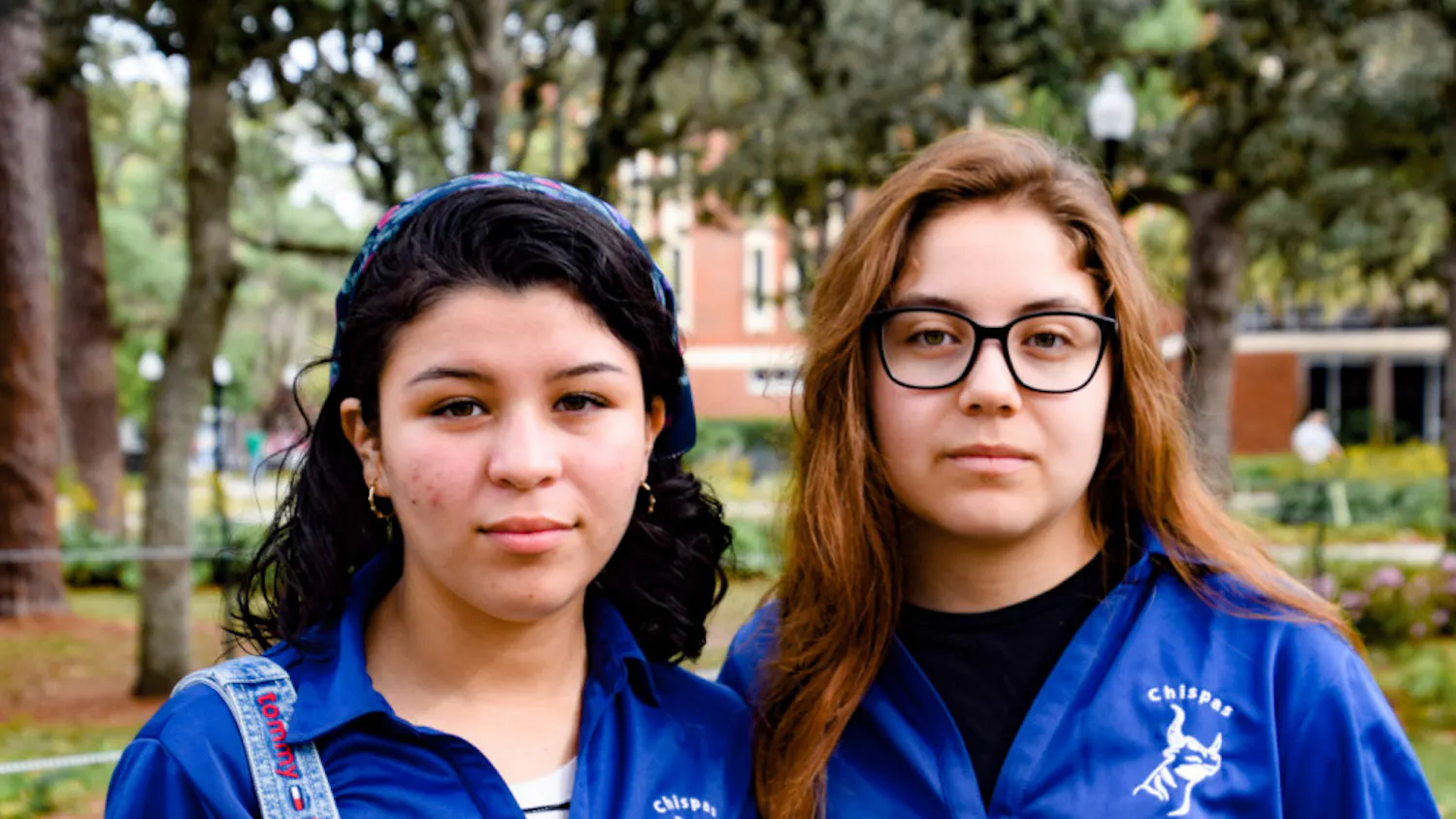
Gian Perez grew up speaking both Spanish and English. The 19-year-old UF psychology sophomore said even the smallest interactions — like communicating with a waiter in Spanish — create connections. He said knowing another language “opens more doors” and gives you a wider worldview. Swearing in Spanish “feels better,” he added, and jokes even “feel funnier.”
Gian’s experience reflects what I began to realize when learning Spanish: Language becomes most valuable when you use it to connect with people. Google Translate can never fully capture the humor, intention and personality you pick up when speaking the language yourself.
Elena Arauz, a 21-year-old UF biology senior from Nicaragua, experienced a similar shift after learning English as a child. Although classes gave her a foundation in the language, she said using English outside the classroom offered an entirely different experience.
“It's one thing to learn it in the classroom when you have your textbook in front of you and you know what the person is trying to tell you,” Arauz said. “Whereas, coming to the states, and then if you go to Texas and then you're still not very acclimated with the language and you hear that southern accent, it gets you for sure.”
Even the language she uses to express herself can depend on the experience. Elena said expressing her feelings feels more natural in Spanish, while aspects of her university life can sometimes be easier to explain in English because that’s the language she associates with those experiences.
Besides the communication benefits, research suggests bilingualism may be associated with greater cognitive reserve, stronger executive functioning and a delayed onset of dementia, while learning a second language may support memory and other cognitive functions.
Some people believe it’s impossible to learn a new language, especially one so different from their native tongue, when they’re past a certain age. But learning a new language doesn’t belong exclusively to adolescence. According to Lourdes Ortega, a Georgetown University linguistics professor who studies language learning, adults may have the advantage when learning a language because they can be more intentional and disciplined about how they learn.
Age can affect language learning, but meaningful exposure remains essential. Ortega argues learning can’t happen without being exposed to the language. Whether it be in childhood or adulthood, she encourages people not to limit themselves to learning just one language, because different languages can offer new experiences and perspectives.
At 19, I’ve been testing that idea myself as I start a new language: Turkish. The more I learn, the more I realize how much I don't know — and that only makes me want to learn more.
Learning a new language doesn’t mean waiting for the perfect class, time or opportunity to live abroad. Sometimes learning a new language starts with opening Duolingo and practicing 10 minutes each day. I’m nowhere near having a conversation in Turkish yet; for now, I’m mostly just celebrating when I don’t get humbled by that green owl.
With everything else competing for our time, learning another language can easily feel secondary. But learning one doesn't mean becoming fluent within a year. You don’t need to learn how to discuss politics in Mandarin for your efforts to “matter.” Simply ordering at a coffee shop, understanding song lyrics or even making a stranger laugh in their native language is more than enough.
I’m not saying everyone needs to become bilingual, but the more of a language you learn, the more of the world opens up.
Besides, you don’t have to be perfect. Language isn’t a vocabulary worksheet, and you won’t be graded on punctuation.
I’m still learning Spanish, just beginning Turkish and improving my English every day. There will always be a tense I misuse, a word I mispronounce or a sentence that sends me straight to Google Translate — and I like it that way.
The goal doesn’t have to be fluency. Every new word gives you access to something you wouldn’t have understood before.
So, whether your first word is “hola,” “merhaba” or something else entirely, just start.
There’s a whole world speaking around you. You just have to learn how to listen.
Contact Shirin Khizzar at Skhizzar@alligator.org. Follow her on X @Shirinkhizzar.

Shirin Khizzar is a sophmore studying Public Health. This is her first semster working on the Alligator staff. In her free time, she enjoys reading, listening to music, and watching movies.