

I missed UF’s famous fall football season, so my first real glimpse of American sports culture didn’t come through tailgates and Saturday kickoffs. Instead, it showed up in smaller moments: the way people talk about games while in line for coffee, the way a logo on a sweatshirt becomes a conversation starter and the way the Super Bowl can turn a normal Sunday into something that feels closer to a national holiday.
Back home in Ireland, sport is tied first to geographic location. Even if you never played, you usually belong to something: a club, a parish or a county. The Gaelic Athletic Association organizes Ireland’s main indigenous sports, Gaelic football and hurling, through local clubs. Because it relies on volunteers and local pride, sport ends up woven into ordinary social life.
At UF, what struck me is that the identity is less about place and more about the institution. Being a “Gator” is not something you keep for game day. It shows up everywhere. People wear UF gear like it’s a neutral outfit choice, the way we might throw on a county jersey at home. I have seen it in lectures, at brunch or buying toothpaste.
Supporting the team is not always about being from Gainesville. It’s about being part of UF’s community. That shifts the feeling. Irish sports’ loyalty can look inherited. Here it often looks chosen, then proudly displayed.
The social side differs, too. In Ireland, sport lives in the pub. Match day is a shared room where strangers react together, and you can walk in alone but still feel part of something within five minutes.
In the U.S., the centre of gravity seems to be the house watch party. Someone hosts, someone brings wings and someone becomes strangely invested in the dip.
Then comes the Super Bowl, which is where this evolves to its final form. It’s not just a game. It is an appointment. Even people who couldn’t tell you the rules still know where they are “watching.” The build-up starts days in advance. Who’s hosting? What food are we doing? Are the ads going to be good this year? Who is the halftime performer?
And it works because the Super Bowl is one of the rare moments when the country actually watches the same thing at the same time. This year, the Super Bowl averaged about 124.9 million U.S. viewers and peaked at roughly 137.8 million, with the halftime show averaging about 128.2 million. At that scale, it stops being just a game. Everyone is watching together.
In Ireland, we have massive sporting days, too: All-Ireland finals, Six Nations deciders and Champions League nights. But the extra layers are different, as the Super Bowl comes with a second storyline. The ads are part of the entertainment, and the halftime show is treated like a headline.
The whole thing is sport, but it is also pop culture, marketing and a social ritual rolled into one.
Contact Evelyn at eocarroll@alligator.org. Follow her on X @evelynocarroll.
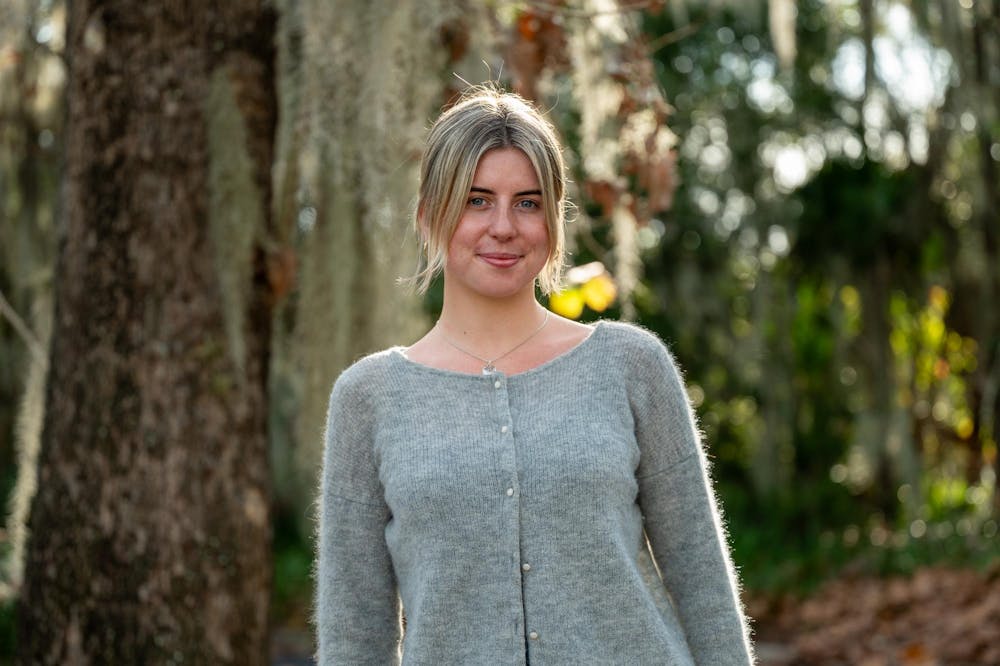
Evelyn O’Carroll is a junior Political Science and Social Policy student from Trinity College Dublin, currently on international exchange for this semester. She writes a column documenting her experiences of studying abroad at the University of Florida.


