

While leading an art therapy workshop, Sarah Falk taught young girls how to make vision boards and prayer boxes — helping them set boundaries and build self-esteem with an activity called “creating your own Garden of Eden.”
She couldn’t have expected her nonprofit, Spirit Led Art Therapy, would soon place her under the microscope of a scathing state audit.
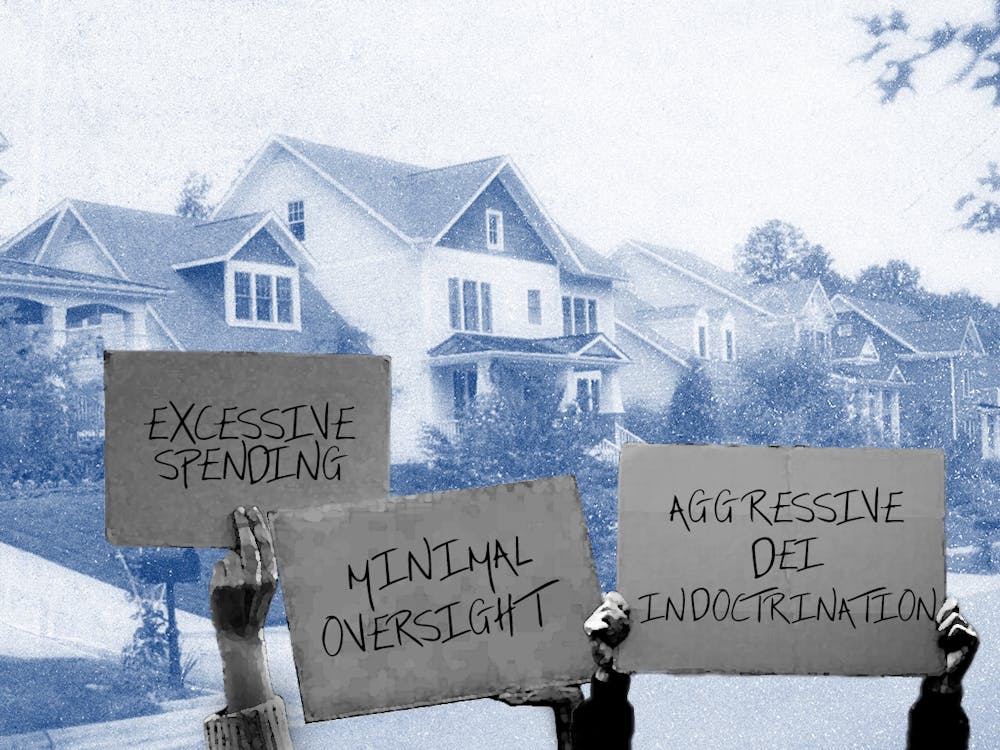
Falk’s organization was one of two county grant recipients mentioned by name in a report released by the Florida Department of Government Efficiency Jan. 28. The state labeled her $2,500 in grants as excessive spending with minimal oversight on the county’s part.
“When I read that, it makes me sad, because it was such a gift to get,” Falk said.
The bullet point mentioning Falk was just one item on a 23-point list of criticisms for Alachua County. The Florida DOGE report claimed the county misused funds on excessive expenditures and diversity, equity and inclusion training, driving up property taxes and engaging in “aggressive” doctrination.
County sources refuted the claims, saying there is much more context involved surrounding the state report.
General fund spending
The DOGE report stated that since fiscal year 2016-17, Alachua County’s general fund nearly doubled, while the population only rose 15%.
Mark Sexton, the director of communications for Alachua County, confirmed the increase but noted it’s natural to see a change in the budget over the years. The county’s general fund budget reflects larger changes in costs nationwide, he said.
“Our general fund budget has gone up that much since 2016, but it's not surprising in lieu of what's gone on in the United States,” he said. “I think most places, most counties or cities that you looked at nationwide, you would see similar increases.”
The general fund is the county’s primary operating fund, which pays for essential services like law enforcement, fire rescue, the county jail and environmental protections, according to the county’s online series “Cents & Sensibility: Alachua County’s Budget in Eight Chapters.”
Some of these services are “unfunded mandates,” meaning the state requires the county to provide the programs but doesn’t provide enough, or any, funding to pay for them. As a result, Alachua County funds many entities it doesn’t actually operate — including county agencies like the clerk of the court and state agencies like the district medical examiner.
Revenue for the general fund largely comes from property taxes and ambulance fees, Sexton said.
“One of the largest sources of revenue for [the fund] is ambulance rides, which we bill people's insurance companies,” he said. “There's also revenue from the communications services tax that the state allows counties to collect.”
The communications services tax is a Florida-wide tax imposed on each sale of communications services in Florida, including mobile communications, cable and satellite television and music and video streaming services, according to the Florida Department of Revenue.
Supply-chain difficulties during the COVID-19 pandemic also contributed to the increase in the general fund, Sexton said. Prices of materials the county purchases, such as asphalt for road repairs, increased significantly, causing the county’s expenses to climb.
He added it’s important to note that even when the general fund increases, it doesn’t mean property tax increases congruently.
“Our property tax revenue that we collected only went up 27%,” he said. “It went up less than the rate of property values.”
Of the $321.6 million in the fiscal 2025 general fund, a little over half came from the property tax for services provided countywide, according to the county’s budget series. The county ranked 41st among Florida’s 67 counties for its millage rate, or amount of tax payable per $1,000 of a property’s value, in the same fiscal year.
Art Tag Grant Program
The DOGE report stated Alachua County misused funds by providing “numerous small grants to which the county provides minimal oversight.” The Art Tag Grant program was specifically mentioned in the report.
The program aims to increase accessibility of arts experiences to underserved communities, according to a press release. The grant includes a list of what the money can be used for, which includes art supplies, music supplies and costumes. Activities of the grantee will be monitored as needed throughout the project, the release notes, and the grantee must provide a final detailed report of funds.
Two recipients of the grant were also mentioned in the DOGE report: the Florida Coalition for Peace and Justice and Falk’s Spirit Led Art Therapy.
The Florida Coalition for Peace and Justice was awarded $2,500 in 2024 for Gainesville’s Flying Pig Parade. Community arts organizations collaborated for the event, making costumes and large puppets to accompany theatrical performances in a downtown Gainesville parade.
Eduardo Arenas, the president of the Florida Coalition for Peace and Justice, said the event fit the criteria of the Art Tag Grant.
“This was a legitimate, transparent and fully appropriate use of the grant funding for a well-established, family-friendly cultural event that brings together artists, performers, musicians and residents from all walks of life, reflecting the vibrant diversity that makes Gainesville such a special place to live,” he wrote in a statement to The Alligator.
Spirit Led Art Therapy’s $2,500 award went toward numerous free art therapy workshops for women and children, according to Falk, a High Springs resident. Funds sponsored three workshops centered on faith-based art therapy, she said.
“I'm so grateful for that grant, and I'm so grateful for all the good that came out of it,” she said.
In addition to her Spiritual Growth Workshop for Girls, Falk also led a Unique Expressions Workshop. This event allowed neurodivergent children at Canvas Church to express their emotions through art, she said, while art therapy groups at Anew were aimed at helping women who have been affected by sex trafficking.
To prove the money was being used wisely, Falk said, she had to return all of her receipts to the county. She also had to compile a final report of expenses.
“I was able to purchase supplies for these events and set myself up to start my own business,” Falk said. “Without this opportunity, I would not be where I am right now.”
Without the grant, she said, she wouldn’t have been able to serve her community. She was disappointed when the state framed her organization in a bad light in the Jan. 28 report, she added.
Diversity, equity and inclusion
The DOGE report stated Alachua County’s diversity, equity and inclusion initiatives and training for staff were “indoctrination” and an overall waste of resources. DOGE cited multiple examples, including the DEI training for Alachua County firefighters.
“Alachua County Fire Rescue’s firefighters were diverted from their mission to study ‘racial statistics in Alachua County,’ discuss so-called ‘systemic sexism, racism, discrimination, and inequality,’” the report stated.
County communications director Mark Sexton addressed claims, saying DEI is an “unfair advantage.”
“There’s been these vague assertions that somehow that is about hiring people who are not qualified,” he said. “We always hire the best applicant for our jobs.”
Alachua County will continue to uphold its community values, he added, even though they may not align with the state.
“We see diversity as beautiful and as a real strength of the organization,” he said. “We understand that the majority in Tallahassee doesn't value diversity, equity andinclusion programs, but some local governments do, and it's our decision unless we hear otherwise from legislation.”
Contact Kaitlyn McCormack at kmccormack@alligator.org. Follow her on X @kaitmccormack20.
Kaitlyn McCormack is a senior journalism student serving as the County Commission Reporter for The Alligator's Spring 2026 metro desk. In her free time she enjoys journaling and drinking too much coffee


