

Haitian Creole is the third-most-spoken language in Florida, but the resources for learning it are scarce, outdated and often lack lessons on day-to-day conversation. Among those who speak the language, there are also many who cannot read or write in it.
To address these issues, a UF researcher co-published a Haitian Creole textbook designed to improve learning at the university and beyond.
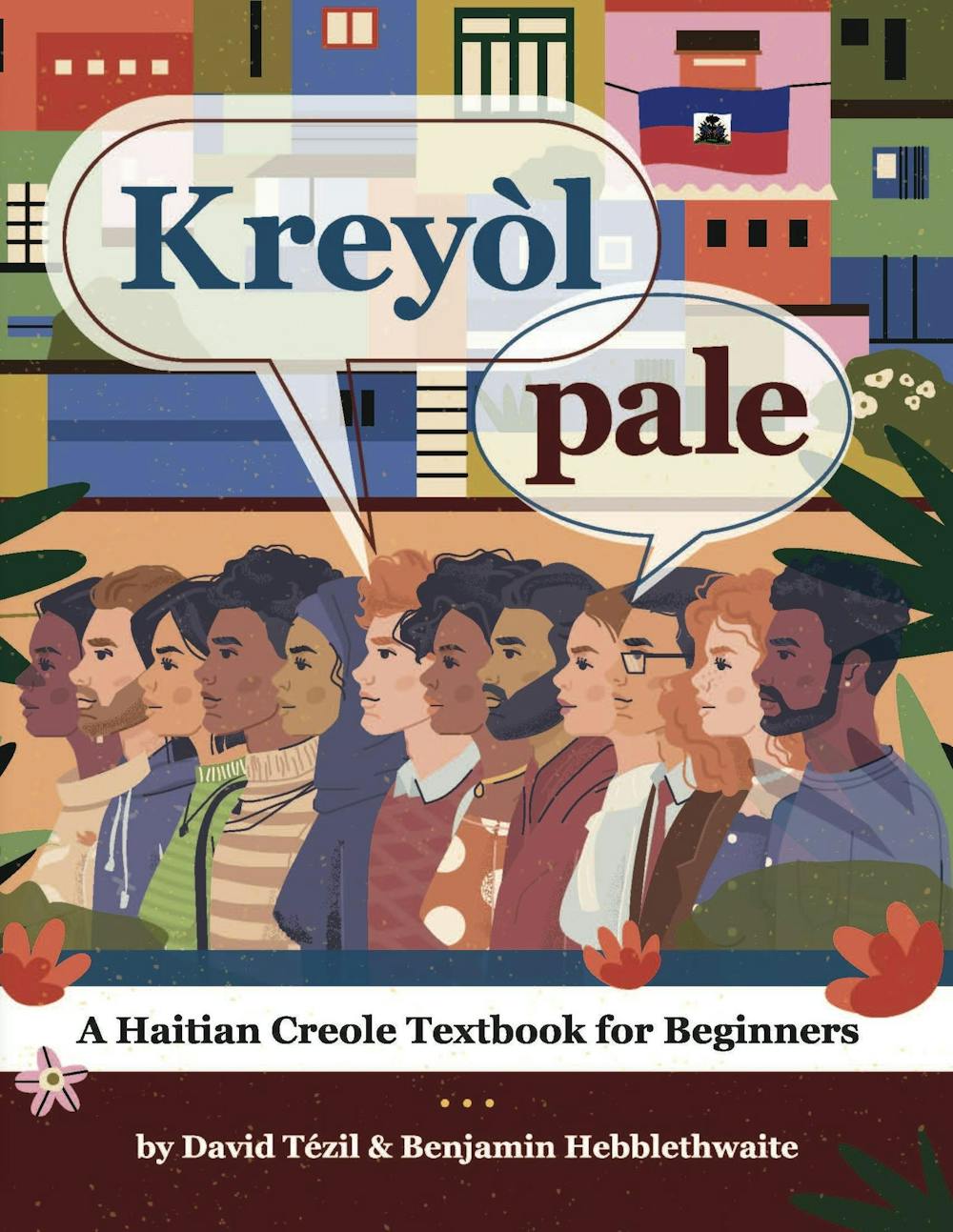
The book, “Kreyòl pale,” was co-written by UF professor Benjamin Hebblethwaite and University of Alabama assistant professor David Tezil over nine years and published in print August 2025.
Hebblethwaite, a professor in UF’s Department of Languages, Literatures and Cultures, said he saw how underdeveloped Haitian Creole resources were as an instructor of the language.
“The textbook we were using until this particular book came out was quite outdated in terms of its content, its methodology,” Hebblethwaite said.
Aside from outdated content, Hebblethwaite said older textbooks also presented Haitian Creole through a narrow lens. They didn’t represent the country in a respectful way, he said; instead, they emphasized “poverty and vulnerability.”
The modern textbook focuses on bridging the gap between formal and outdated Haitian Creole and the language used by modern Haitians, addressing topics like how to order food, dating and job hunting.
“We wanted to bring some more balance where we showed the culture in a more well-rounded, a more representative way,” Hebblethwaite said. “Rather than focus on a narrow aspect of the country, as well as a sort of a smaller group of users.”
The book consists of 29 chapters with over 60 exercises and open-ended activities to encourage conversations and critical thinking, meant to ensure readers receive diverse experiences in vocabulary, grammar and culture.
Haitian American students at UF say they see the book as important in supporting Haitian language and culture.
Georffrey Pierre, a 19-year-old first-generation UF English sophomore from a Haitian family, said Haitian Creole defines his everyday life and is part of who he is. The language is a form of connection and communication with his family and roots, especially as many of his family members are not fluent in English, he said.
He said learning Creole is a way to preserve his connection to his roots and foster a community where Haitians support and share family values.
“I do think it is a vital resource, especially having a Haitian textbook, because learning [Haitian] Creole is not really accessible,” Pierre said. “Even in Google Translate, there's no speaker option to hear anything spoken back to you, so I feel like it could help if it were more widespread and well known.”
Duchnah Richard, a 19-year-old first-generation UF educational sciences sophomore from a Haitian family, said she is excited to see Haitian Creole represented in language learning academics.
Though a Haitian Creole speaker, Richard said she cannot write in the language. Her main exposure to reading in Haitian Creole is through the Bible, which causes her to miss out on many modern aspects of the language, she said.
“I think having a resource for people who do struggle with the language or struggle between switching through languages is a good idea and a sick support system for people,” she said. “Especially if they feel kind of ashamed about asking for help.”
"Kreyòl pale” is available online in a no-cost, PDF format through UF Digital Collections.
Contact Dulce Rodriguez-Escamilla at drodriguez@alligator.org. Follow her on X @DulceRodrigueze.
Dulce Rodriguez is a sophomore Journalism Major with a Public Relations minor in her first semester at The Alligator, working as El Caimán's general assignment reporter. She loves to dance and bake in her free time, and she also enjoys watching murder mysteries and documentaries.