

In recent years, Republican political strategy has often paired strong policy agendas with confrontational messaging. President Donald Trump demonstrated that a divisive, combative style can mobilize voters and dominate the national conversation. In Florida, Gov. Ron DeSantis combined assertive rhetoric with policy-focused governance, helping solidify the state’s conservative direction.
Divisive leadership can be effective. It clarifies who stands where and energizes supporters who want firm conviction. But those same sharp edges can push others away, alienate moderates and create tension within a party’s own ranks.
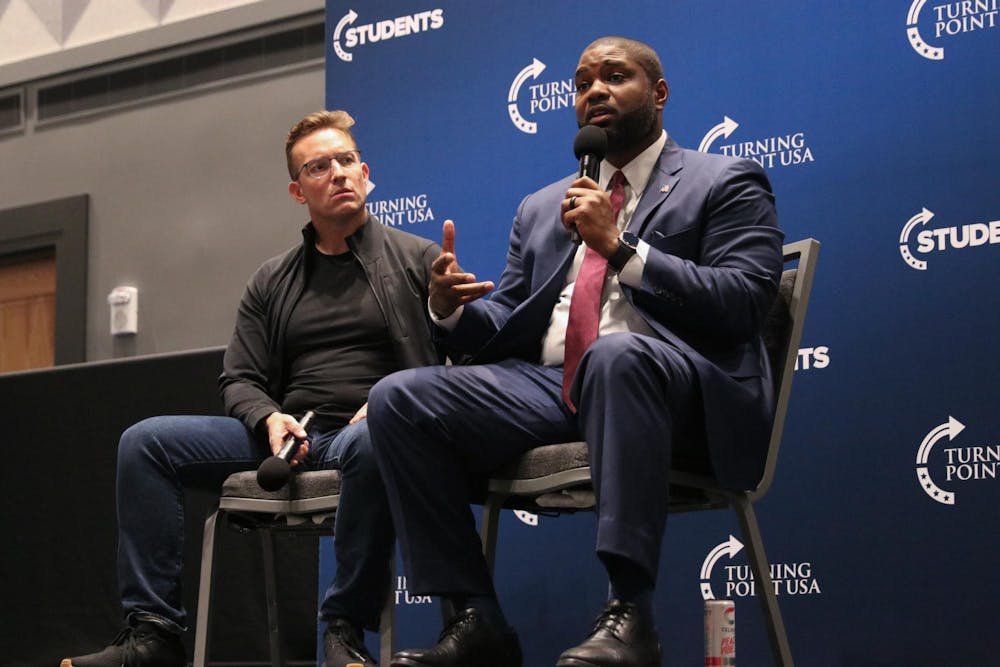
Byron Donalds, a Republican congressman from Southwest Florida who has secured Trump's endorsement for the state's 2026 gubernatorial race, has emphasized his legislative experience and commitment to continuing Florida’s conservative policy agenda.
James Fishback, an investment executive and another Republican gubernatorial candidate, has campaigned with a sharp, confrontational tone. His messaging emphasizes bold proposals and a willingness to challenge both Democrats and fellow Republicans.
But a primary is a different test than a general election. The tone that rallies a party against its opponents doesn’t function the same way when candidates are competing with one another.
Nationally, the Pew Research Center found that 53% of voters in 2024 said they wished both major presidential candidates had been different, and only about 31% reported feeling satisfied with the choices.
In Florida, recent Mason-Dixon polling shows 49% of Republican primary voters remain undecided in the 2026 gubernatorial race. Dissatisfaction and indecision are not identical, but both suggest that voters may not have total confidence in the available choices.
Donalds has emphasized his experience in Congress by highlighting his positions on spending, border security and support for Florida’s conservative reforms. He also signaled he would continue the direction the state is already heading.
Fishback, by contrast, has leaned more heavily into sharp messaging and attention-grabbing proposals, including his call for a 50% tax on earnings from platforms like OnlyFans.
Both approaches operate within the same conservative moment, but they signal different emphases. One centers a legislative record and policy continuation; the other centers forceful disruption and bold positioning.
In Florida, Republicans are not fighting for relevance — they are fighting for direction. In a state where the GOP controls the governor’s mansion and the legislature, the 2026 primary is less about defeating Democrats and more about defining what Republican leadership looks like next.
In the gubernatorial primary, a divisive, confrontational campaign style does more than energize voters; it tests the party’s internal cohesion.
Contact Alannah Peters @apeters@alligator.org. Follow her on X @alannahjp777.
Alannah Peters is a junior majoring in journalism and minoring in public relations. In her spare time, she can be found trying new coffee shops with friends, traveling the U.S. or going on hot girl walks at Lake Alice.


